A wall-mounted TV takes weight off furniture and cords out of a toddler's reach, but only when the mount, hardware, and cable routing are matched to how kids actually move through a room. This guide covers the exact steps The TV Mount Men uses on every kids' bedroom and family room install across metro Atlanta, GA in 2026.
- Mounting into studs with a weight-rated bracket is the single fix that prevents 2026's most common tip-over risk: drywall-anchor-only installs.
- A full-motion or fixed mount rated for at least 1.5x the TV's actual weight is the buy; anything closer to spec is a skip.
- In-wall cord kits beat surface raceways for how to childproof a wall mounted tv in a nursery or playroom.
- Mounts installed below 40 inches from the floor need a locking bracket if toddlers are in the house.
Why this matters
A TV that falls off a wall mount is a different injury pattern than a TV that tips off a dresser, but the outcome is the same: blunt trauma from 15 to 60 pounds of glass and plastic landing on a child. Wall mounting removes the tip-over risk that furniture-top TVs carry, but it introduces a new one if the mount, wall anchors, or cords aren't matched to the load and the room. Getting how to childproof a wall mounted tv right in 2026 means treating the mount like structural hardware, not a shelf bracket, and treating the cords like a hazard zone, not an afterthought.
Most of the risk shows up in three places: undersized or drywall-only anchoring, exposed cords a crawling child can pull, and mounts installed low enough for a toddler to grab and rock. Fix those three and a wall-mounted TV in a kids bedroom or nursery is safer than almost any other TV placement in the house.
What you'll need
- Stud finder (magnetic or electronic)
- Drill with a torque setting, plus lag bolts rated for the mount's weight class
- A full-motion or fixed mount rated for at least 1.5x the TV's actual weight
- In-wall cord management kit (low-voltage cable plates, not just a raceway)
- Cable ties or a cord channel for anything that can't go in-wall
- A second person to hold the TV during the final hang
- 15-20 minutes per step once studs are located; plan for 60-90 minutes total on a standard drywall wall
If the TV is going into a nursery or a child's room specifically, a nursery or kids room mount built for low-profile, locked installs is worth the extra $20-40 over a generic bracket.
The steps
1. Confirm the mount's weight rating against the TV, with margin
Check the TV's actual weight (on the box or manufacturer spec sheet) against the mount's rated capacity, and don't buy to the exact number. A 50-inch TV weighing 30 pounds on a mount rated for 33 pounds has almost no safety margin once you factor in tilt stress and years of thermal expansion in the wall. Buy a mount rated for at least 1.5x the TV's listed weight. Skipping this step is the most common reason a mount pulls loose within the first two years.
2. Locate studs and anchor into wood or metal framing, not drywall alone
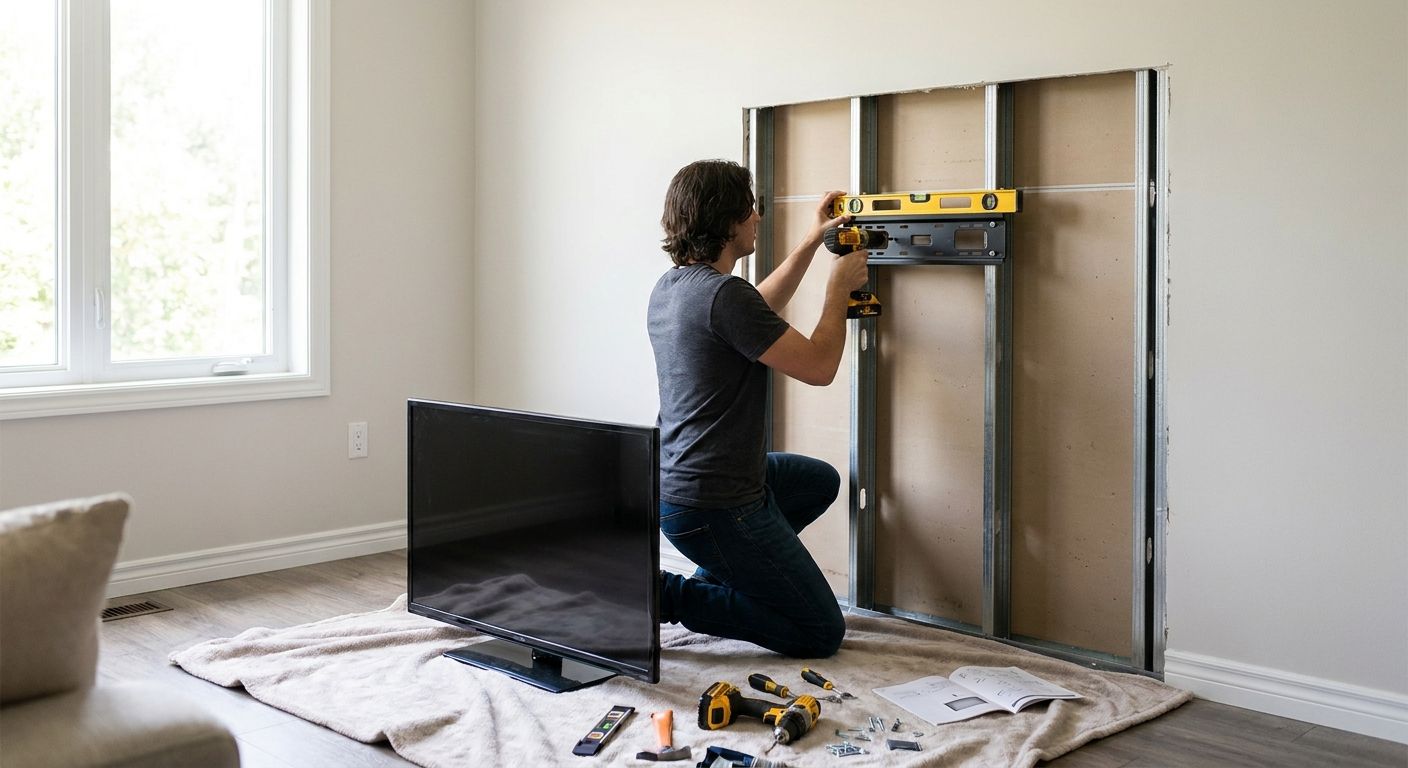
Run the stud finder across the full width of the mounting area and mark at least two stud centers, ideally 16 inches apart on standard framing. Drywall anchors alone are not rated for TV loads over roughly 20-25 pounds in most manufacturer specs, and even rated anchors fail faster under repeated tilt and torque from kids bumping the screen. Every lag bolt should land in a stud or, on metal-stud construction, use hardware built for metal stud walls. Expected outcome: zero flex when you push firmly on the mounted plate before hanging the TV.
3. Set mount height below reach zones only if it locks
Mount height is a judgment call in a house with kids. A TV at 42-48 inches to center is comfortable for adult seated viewing, but that same height puts the bottom edge within grabbing range of a standing toddler. If the room is a nursery, playroom, or a bedroom shared with a child under 6, mount low only with a bracket that locks the tilt or swing arm in place so a pulled screen doesn't swing free. Common mistake: mounting at adult eye-level in an adult room, then moving the TV to a kid's room later without re-checking the mount's lock function.
4. Route power and HDMI cords inside the wall
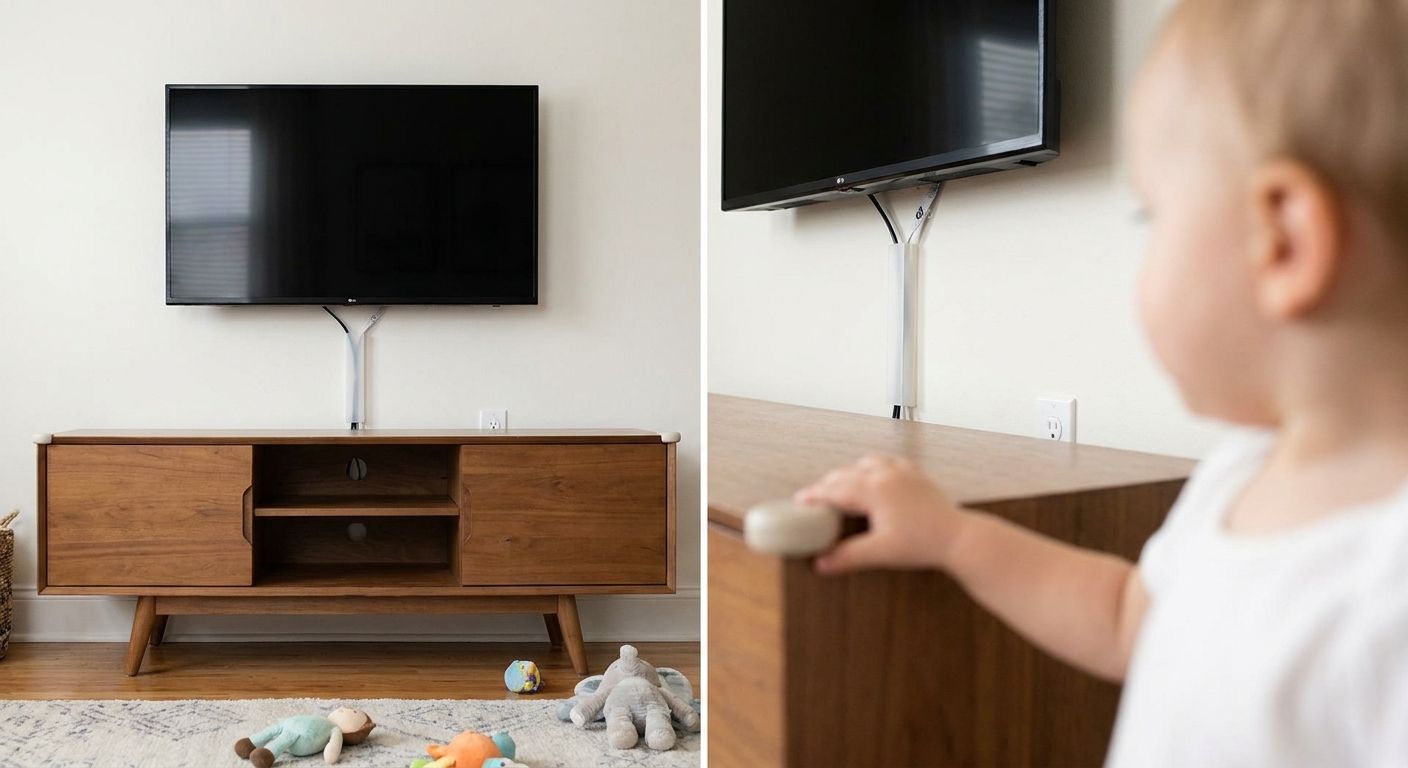
Cut two low-voltage boxes, one behind the TV and one near the outlet or power strip below, and run an in-wall rated cord kit between them. This removes the single biggest crawling-toddler hazard in a wall-mounted setup: a dangling cord a child can grab and pull, bringing the TV down with it. A cord left exposed on the surface, even taped down, is still a pull hazard within 12-18 months as tape adhesive fails. Expected outcome: a clean wall face with no visible cable between the TV and the outlet.
5. Add a cable cover for anything that can't go in-wall
Some installs, especially in rental apartments where wall damage isn't allowed, can't use in-wall cord kits because they require cutting into the wall. In those cases, use a rigid cable channel mounted flush to the wall, not a soft raceway a child can peel back. Run the channel from the TV straight down to floor level or to the nearest outlet, whichever is shorter.
6. Push-test the mount before calling it done
Once the TV is hung, apply firm downward and forward pressure on the bottom corners, simulating what happens when a child pulls or climbs on it. A properly anchored mount shows no visible flex, no popping sound from the wall, and no shift in the tilt angle. If you feel any give, the mount is not anchored into a stud correctly, and it needs to come down and be re-hung before the TV goes back up.
7. Recheck the setup annually, especially after any wall repair
Drywall settles, lag bolts can loosen with seasonal humidity swings common in Georgia, and cords get re-routed when furniture moves. An annual push-test and cord check catches loosening before it becomes a fall. This matters most in basements and finished lower levels, where humidity swings are more pronounced than upstairs rooms.
Get a childproof TV mount done right
Licensed and insured installs across metro Atlanta, backed by a 5-year warranty.
Troubleshooting
- Mount wobbles when pushed: the lag bolts likely missed the stud. Remove, relocate to true stud center, and re-anchor before hanging the TV again.
- TV tilts down over time: the tilt bracket's tension screws have loosened. Re-torque per the mount's spec, and check again in 30 days.
- Cords still visible despite in-wall kit: the low-voltage boxes weren't sized for both power and HDMI runs together; a second box or a slightly wider plate usually solves it.
- Drywall cracked around the anchor points: the mount was likely anchored to drywall instead of studs, or the stud finder missed true center. Patch, relocate to verified studs, and re-drill.
- TV mounted too low after room converts to a nursery: re-mount higher, or swap to a locking bracket if height can't change, since a fixed low mount with no lock is the highest-risk configuration for a crawling child.
- Textured or plaster walls won't hold a standard anchor: use hardware designed for uneven or textured plaster walls rather than forcing a standard drywall kit.
Tools and resources
- Stud finder and drill with torque control
- Weight-rated full-motion or fixed mount, sized to 1.5x the TV's actual weight
- In-wall cord management kit rated for low-voltage power runs
- Nursery or kids room mount guide for locking, low-profile hardware options
- Kids bedroom and nursery installation guide for room-specific placement rules
What to do next
If the room in question is a small living room or a shared family space rather than a dedicated kid's room, sightlines and mount profile matter as much as safety hardware. Check the low-profile TV mounts for small living rooms guide before buying hardware, since a flush mount changes both the reach zone and the push-test outcome. New homeowners setting up multiple rooms at once should also read the TV mounting guide for new homeowners in metro Atlanta before scheduling separate installs room by room.
FAQ
How do I childproof a wall-mounted TV?
Anchor the mount into wall studs rated for at least 1.5x the TV's weight, route cords inside the wall, and push-test the mount before letting kids near the room. A locking bracket is required if the TV sits within a toddler's reach.
Is a wall-mounted TV safer than a TV on a stand for kids?
Yes, a properly anchored wall mount removes the tip-over risk a furniture-top TV carries, since there's no dresser or stand for a child to pull the TV down onto themselves. The mount and cord routing still need to be done correctly for that safety benefit to hold.
What height should a TV be mounted in a kids room?
Standard adult viewing height is 42-48 inches to center, but any TV within a standing toddler's reach needs a locking tilt or swing bracket. Lower the mount only if the hardware locks in place.
Do TV anchor straps work for wall-mounted TVs?
Anchor straps are designed for freestanding TVs on furniture, not wall-mounted units. A wall-mounted TV's safety comes from the mount's weight rating and stud anchoring, not a strap.
Can drywall anchors alone hold a TV safely?
No, drywall anchors alone are generally not rated for loads over roughly 20-25 pounds and fail faster under the repeated tilt stress a child can cause. Lag bolts into studs are the standard for any wall-mounted TV over that weight.
How much does it cost to childproof a wall-mounted TV installation?
Cord concealment kits and locking brackets typically add a modest amount over a standard mount and cord job; exact pricing depends on wall type, cord run length, and TV size. Get a quote based on the specific room and TV before assuming a number.
Should I use a fixed mount or full-motion mount for a kids room?
A fixed mount has fewer moving parts for a child to grab or destabilize, making it the safer default in a nursery or young child's bedroom. Full-motion mounts work fine once a locking mechanism is confirmed and the room's traffic pattern keeps kids away from the swing arm.
How often should I recheck a wall-mounted TV for safety?
An annual push-test and cord inspection catches loosening before it becomes a hazard, especially in Georgia's humid basements and lower levels. Check sooner if the wall has had any repair work done near the mount.
One last thing
The detail most people skip isn't the mount, it's the outlet. Installing a new outlet behind the TV, the way it's done on jobs like the 100-inch TV mount in a Woodstock, GA basement, removes the need for a power strip or extension cord sitting on the floor below a wall-mounted TV, which is the last exposed cord most childproofing checklists miss entirely.