Renters and condo owners across metro Atlanta need a TV mount that holds a 32-inch to 75-inch TV without leaving a hole a landlord can bill for. This guide ranks the mount types that actually work under a lease, and the ones that get security deposits docked.
- The best TV mount for apartments in 2026 is a low-profile fixed mount with rated drywall anchors — Buy.
- No-stud mounts work for TVs under 43 inches; they buckle on 55-inch-plus screens — Hold.
- Full-motion articulating mounts need a stud behind the plate; skip them in most rental walls — Wait.
- Adhesive-only mounts aren't rated for TV weight and risk a wall-mounted TV falling — Skip entirely.
- Professional installation with anchor-and-patch service protects a deposit better than a DIY drywall mount.
Why this matters
Most US interior walls use half-inch drywall over studs set 16 inches on center. A mount that lands between studs relies entirely on the drywall anchors bundled in the box, and most of those boxes are built for a house, not a lease.
A 2026 renter has three separate problems stacked on top of each other: the TV has to stay on the wall, the hole pattern has to be small enough to patch in five minutes, and the install has to survive a move-out inspection. TV mounting for apartments and rental properties covers the lease-specific version of this problem; this guide ranks the hardware itself.
The same logic applies to short-term rentals. A host running a unit through Airbnb and short-term rental TV mounting faces the identical anchor-versus-stud decision, just with guest turnover instead of a lease renewal.
How we ranked these
Each mount type below is scored on four things a renter actually cares about: weight rating relative to common TV sizes (32-inch to 75-inch), damage footprint on move-out, whether it needs a stud, and whether a licensed installer can back the work with a warranty. The Tv Mount Men has completed 10,000-plus installs across metro Atlanta and backs its work with a 5-year warranty and 300-plus five-star reviews, which is the basis for how these categories hold up in real rental walls, not showroom demos.
The ranked list
1. Low-profile fixed mount with rated drywall anchors — the safe pick
This is the standard for a 32-inch to 55-inch TV in a bedroom or living room where the wall isn't guaranteed to have a stud in the right spot. The mount sits flush, the profile clears most baseboards, and a properly rated anchor set holds well past what a 40-pound TV needs.
The patch footprint on move-out is four small holes, roughly a quarter-inch each, spackled in minutes. Verdict: Buy.
2. Tilt mount with drywall anchors — the flexible pick
A tilt mount adds a few degrees of downward angle, which matters in a bedroom where the TV sits above eye level on a dresser-height wall. It uses the same anchor system as a fixed mount, so the damage profile doesn't change.
Condo and HOA buildings sometimes restrict what can go on a shared wall; condo and HOA TV mounting covers what's usually allowed before you buy anything. Verdict: Buy for bedrooms and above-dresser installs.
3. Full-motion articulating mount — the overkill pick
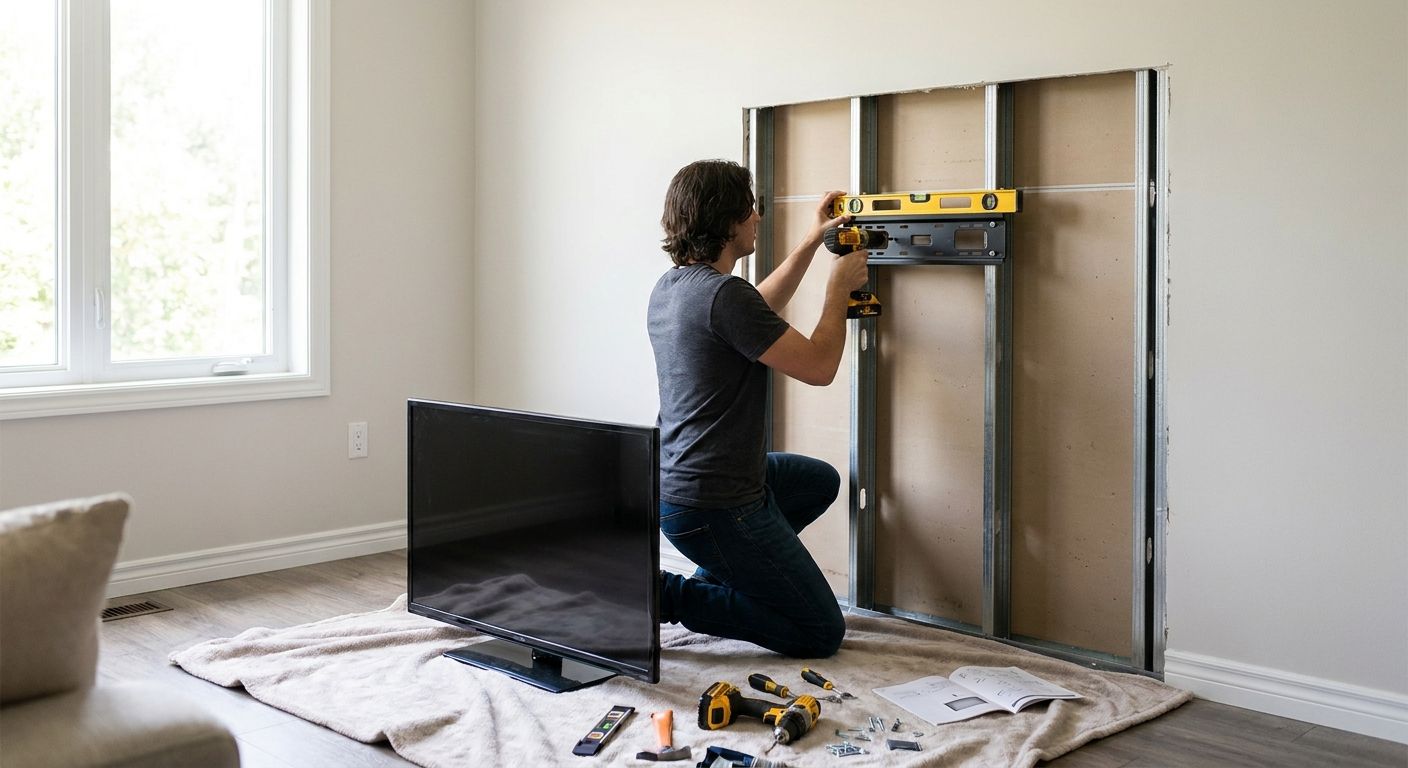
A full-motion arm extends 15 to 20 inches off the wall and needs the plate anchored into a stud, not just drywall, because the leverage on an extended arm multiplies the pull on the wall. Most rental walls don't have a stud exactly where the TV needs to sit.
It's the right mount for a 65-inch-plus TV in a den where you can confirm stud placement first. Without a stud, it's the wrong call in a rental. Verdict: Wait unless a stud lines up.
4. No-stud (stud-optional) mount — the deposit-safe pick
This category relies on a wider spread of drywall anchors instead of a single stud, and it's common in dorm rooms and small apartments for exactly that reason. It works well for TVs up to roughly 43 inches; push past that and the weight starts testing the anchor spread past its comfortable margin.
For a 32-inch or 40-inch bedroom TV, it's a reasonable no-drama option. Verdict: Buy under 43 inches, Skip above it.
5. TV floor stand or cart — the zero-risk pick
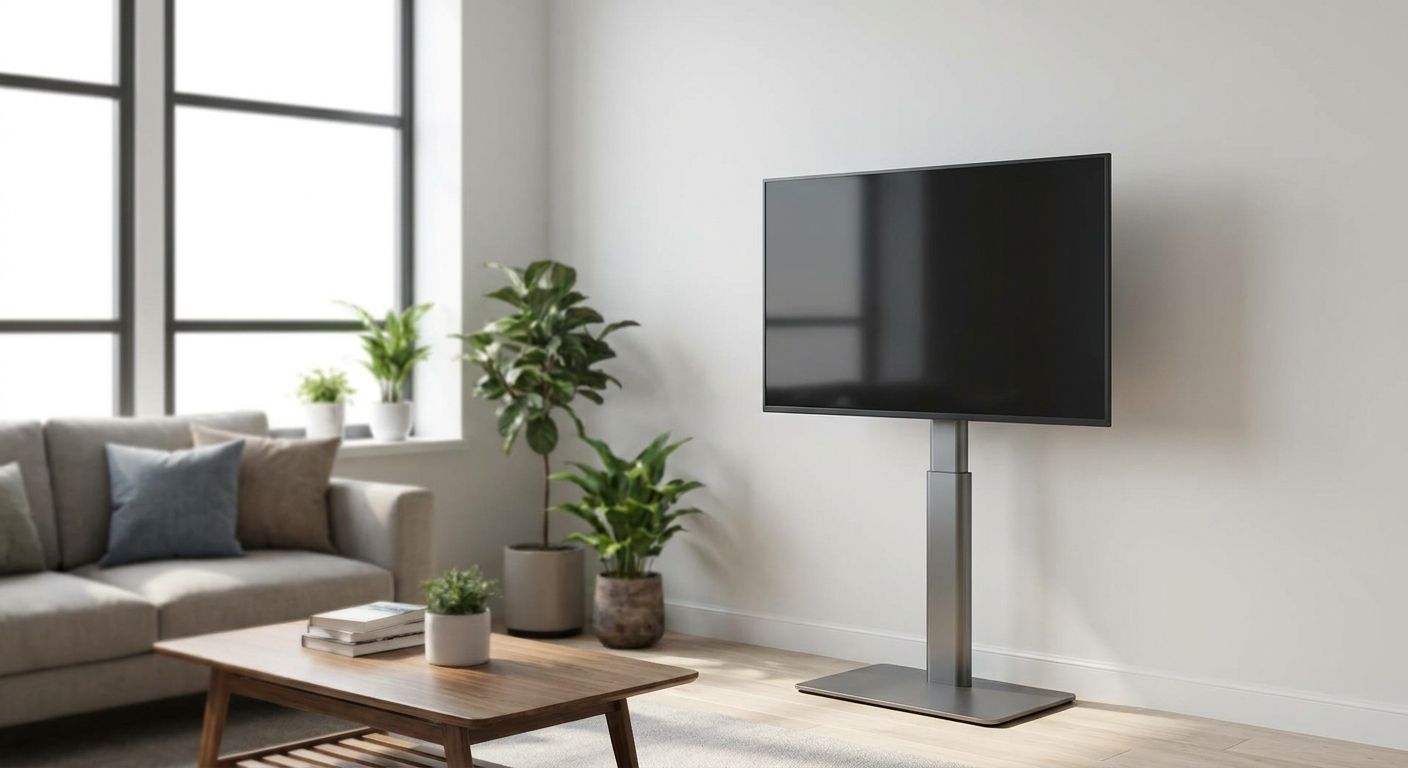
No holes, no anchors, no inspection risk. A stand works for any TV size the base is rated for and moves with you at the end of the lease.
The tradeoff is floor space and a lower, less deliberate viewing height than a wall mount. Verdict: Buy for strict no-holes leases.
6. Adhesive-only mount — skip this one
Adhesive mounting hardware is built for picture frames and light decor, not a 20 to 60-pound television held at a fixed angle against gravity for years. There's no drywall anchor rated for TV weight through adhesive alone.
This is the one category on this list with a real fall risk attached. Verdict: Skip entirely.
“If the mount needs a stud and your wall doesn't have one where the TV goes, the mount is wrong for the wall, not the other way around.”
Comparison table
| Mount type | Best TV size | Needs a stud | Patch footprint | Verdict |
|---|---|---|---|---|
| Fixed, drywall anchors | 32-55 in | No | 4 small holes | Buy |
| Tilt, drywall anchors | 32-55 in | No | 4 small holes | Buy |
| Full-motion arm | 65+ in | Yes | 4-6 holes | Wait |
| No-stud mount | Up to 43 in | No | Multiple small holes | Buy under 43 in |
| Floor stand/cart | Any | No | None | Buy |
| Adhesive-only | Not recommended | No | Adhesive residue | Skip |
How to source the right mount
- Measure your TV's VESA hole pattern in millimeters before buying anything; a mount rated for the wrong VESA spacing won't bolt on regardless of weight rating.
- Buy anchors rated for drywall specifically, not the generic hardware bundled with a discount mount kit — the anchors matter more than the bracket.
- If the lease requires professional installation, or you can't confirm stud location yourself, a licensed installer can anchor, level, and patch in one visit instead of guessing.
Get your apartment TV mounted right
Licensed, insured installation with a 5-year warranty across metro Atlanta.
What to avoid
- Skip any mount without a printed weight rating. If the packaging doesn't state a number in pounds, the anchors weren't tested for a TV load.
- Skip mounting into a single anchor point on a full-motion arm. The leverage from the extended arm needs a stud, not drywall alone, no matter what the box claims.
- Skip drilling before checking your lease. Some buildings, especially HOA-governed condos, have specific rules on wall penetrations that a 5-minute call avoids arguing about later.
FAQ
What's the best TV mount for apartments that won't damage walls?
A low-profile fixed or tilt mount using rated drywall anchors is the best TV mount for apartments in 2026 because it leaves four small, easily patched holes and doesn't require a stud. No-stud mounts work too, but only for TVs under about 43 inches.
Is a no-stud mount strong enough for a 55-inch TV?
Most no-stud mounts are built for TVs up to roughly 43 inches, and a 55-inch TV pushes past the comfortable margin of the anchor spread. Use a stud-anchored mount or a floor stand instead.
Can I mount a TV in a rental without hitting a stud?
Yes, with a fixed or tilt mount rated for drywall-only anchors, which is standard for TVs in the 32 to 55-inch range. A full-motion arm is the exception because the extended leverage needs a stud.
Do landlords allow TV wall mounts in apartments?
Most leases allow wall mounting as long as the damage is minor and repairable, but some HOA and condo buildings restrict what goes on shared walls. Check the lease or building rules before drilling.
Is a full-motion mount worth it in a rental?
Only if a stud lines up exactly where the TV needs to sit, since the extended arm multiplies pull on the wall. Without a confirmed stud, a fixed or tilt mount is the safer call.
What size drywall anchors are safe for a TV mount?
Use anchors specifically rated for drywall and for the TV's weight class, not the generic hardware bundled with a budget mount kit. The anchor rating matters more than the bracket's marketing.
Should I mount my own TV or hire a professional in a rental?
DIY works fine for a light TV with rated anchors, but a licensed installer anchors, levels, and can patch in one visit if the lease requires professional work or the wall type is uncertain.
Are adhesive TV mounts safe?
No. Adhesive hardware isn't rated for the sustained weight of a television and carries a real fall risk over time, unlike a drywall-anchor or stud-anchored mount.
One last thing
The detail most renters miss isn't the mount, it's the outlet. A wall-mounted TV with visible cords running down to a floor outlet is the giveaway that screams "non-professional install" during a walkthrough — running power behind the wall or through a cord channel is what actually makes an apartment installation look finished, and it's a separate decision from which mount you buy.