Plaster and lath walls crack under the wrong anchor, and drywall-rated mounting kits often can't grab enough solid material to hold a television safely. This guide ranks the mount types and anchoring methods that actually hold on textured, uneven, and original lath-and-plaster walls found across metro Atlanta homes in 2026.
- The best tv mount for plaster walls is a heavy-duty tilting mount anchored straight into studs, not into the plaster coat itself.
- Full-motion arms add repeated torque that lath-and-plaster can't absorb without a stud-fastened backing plate.
- Adhesive or plaster-only anchor kits fail on true lath walls thicker than 3/4 inch once a TV over 32 inches is hung.
- French cleat mounts spread load across a wider strip of wall and suit prewar Atlanta homes with 24-inch stud spacing.
Why this matters
Plaster is brittle in a way drywall isn't. Homes built before 1950 in neighborhoods like Grant Park, Kirkwood, and Candler Park still carry original lath-and-plaster walls, where a wood lath grid holds a 3/4-inch to 1-inch coat of hard plaster. Texture on top of that coat scrambles a standard stud finder's reading, which is exactly why so many DIY mounting jobs end with a TV listing sideways six months later.
The TV Mount Men has run into this exact wall type across metro Atlanta enough times to know which mount categories hold and which ones crack the plaster on install day. Licensed and insured crews backing every install with a 5-year warranty gives a clean baseline for comparing mount types on their actual failure points, not their marketing copy.
How this list was ranked
Each mount type below is scored against four things that matter specifically on plaster: anchor load rating, how forgiving the mount is of stud misalignment, how it handles wall texture and minor bow, and which TV size classes it's rated to hold safely in 2026. Rental-friendly and old-house-specific options get flagged separately since plaster shows up in both prewar bungalows and postwar apartment buildings around Atlanta.
The ranked list
1. The Space-Saving Pick: Low-Profile Fixed Mount on Stud-Anchored Plaster
A fixed, low-profile mount sits within an inch of the wall and puts almost all its load straight down through the lag bolts into the studs. On plaster, that matters because there's no leverage pulling on the anchor points the way a tilting or articulating arm creates.
This works well for TVs up to 55 inches when the mounting hole pattern lines up with studs on the standard 16-inch spacing. Check the best low-profile TV mounts for small living rooms breakdown for hole-pattern specifics before buying. Verdict: Buy when your stud layout cooperates.
2. The Workhorse: Heavy-Duty Tilting Mount With Stud-Anchored Brackets
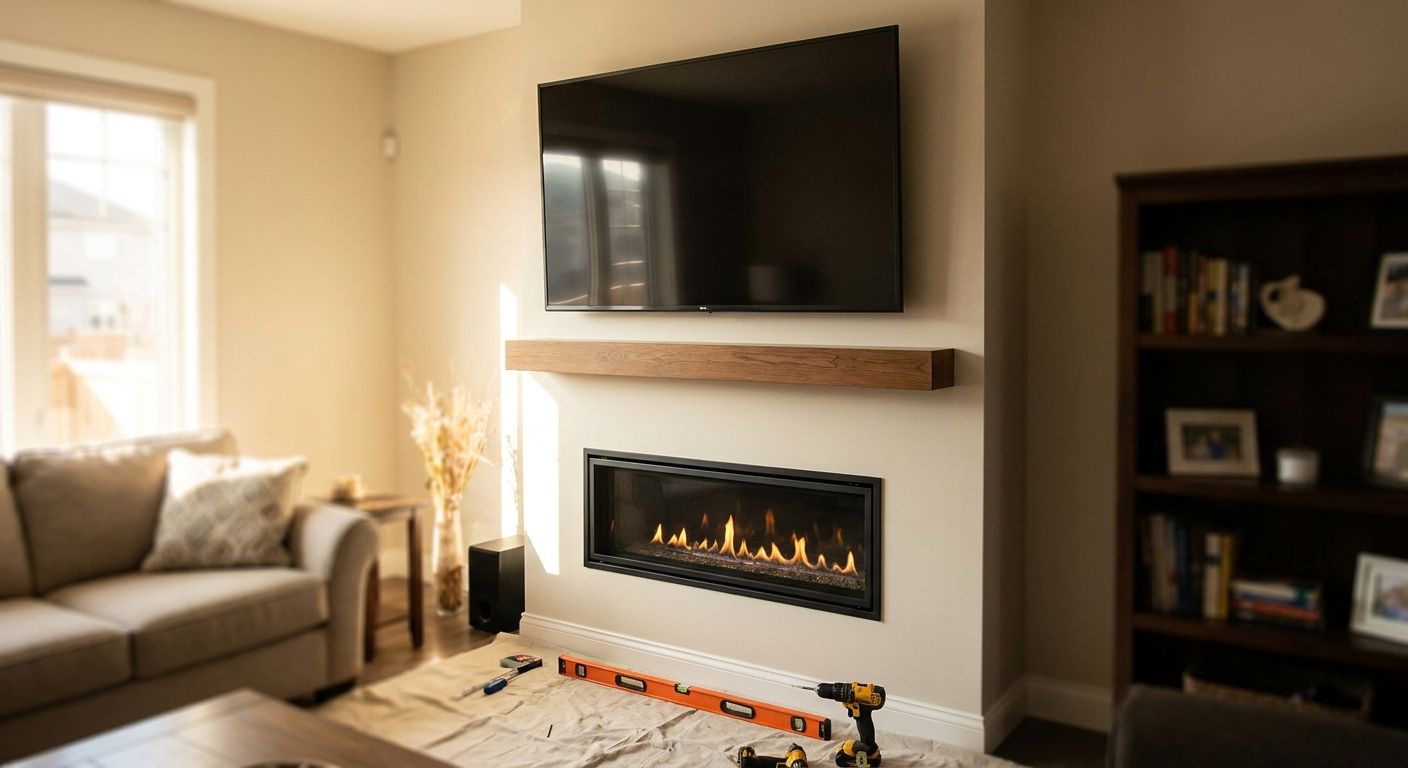
A tilt bracket lets an installer compensate for wall bow, which shows up constantly in old plaster where a wall can be out of true by half an inch or more across an 8-foot run. This is the mount category installers reach for most often on 55-to-85-inch TVs going above a fireplace or into a finished basement.
Because the tilt mechanism does the compensating instead of the anchor, load stays vertical and predictable even on an uneven surface. Verdict: Buy for most plaster-wall installs in the 55-to-85-inch range.
3. The Flexible Pick: Full-Motion Articulating Arm With Backing Plate
Full-motion arms extend a TV 20-plus inches off the wall, and every pull, swivel, or tilt transfers torque back into the anchor points. On drywall that's manageable with the right toggle anchors. On lath-and-plaster, repeated torque loosens the plaster around a point anchor over time.
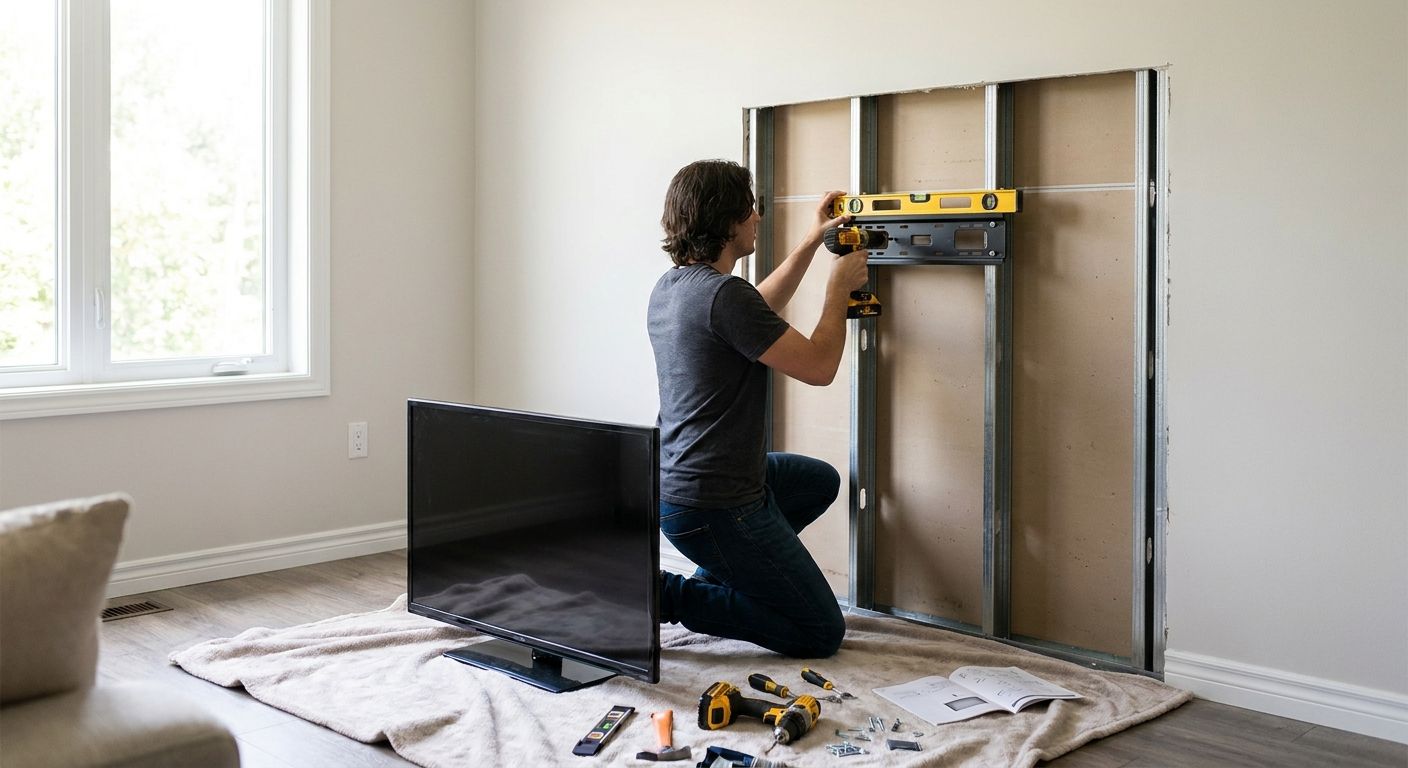
The fix is a stud-fastened backing plate rather than anchors alone, spreading the pulling force across a wider mounting surface. Verdict: Consider only when a licensed installer confirms stud placement and adds the backing plate.
4. The Renter's Pick: No-Damage Tension Mount
Tension or no-drill mounts wedge floor-to-ceiling or use minimal point contact, working on plaster and drywall alike without a full anchor bolt pattern. They're rated for TVs under 50 inches and leave holes closer to nail-sized than lag-bolt-sized.
That makes them the practical option for lease agreements that restrict wall drilling. Verdict: Consider for rental situations, Skip for anything over 50 inches.
5. The Impulse Buy: Adhesive Strips or Plaster-Only Anchor Kits
Adhesive mounting strips and generic plaster anchor kits are rated for picture frames and light shelving, not TVs. The plaster around the anchor site crumbles once vibration or repeated angle adjustment works the hole wider, and there's no way to catch that failure before the mount is already loaded.
Verdict: Skip on anything larger than a 32-inch TV, and skip entirely on original lath-and-plaster regardless of size.
6. The Old-House Specialist: French Cleat Mount Anchored Through Lath
A French cleat distributes weight across a wider strip of wall than point anchors do, which is useful when studs land 24 inches apart instead of 16 — common in some prewar Atlanta framing. The cleat also lets a TV lift straight off the wall without redrilling, handy for staging, moves, or seasonal furniture swaps.
Verdict: Buy for lath-and-plaster walls where removability matters as much as holding power.
Get your plaster wall mount installed right
Licensed, insured installers who know old Atlanta lath-and-plaster construction.
Comparison table
| Mount type | Best TV size | Plaster compatibility | Verdict |
|---|---|---|---|
| Low-profile fixed | Up to 55" | High, if studs align | Buy |
| Heavy-duty tilt | 55"-85" | High, forgives wall bow | Buy |
| Full-motion articulating | 55"-85" | Medium, needs backing plate | Consider |
| No-damage tension | Under 50" | High for renters | Consider |
| Adhesive/plaster-only anchors | Under 32" | Low | Skip |
| French cleat | 55"-100" | High on lath walls | Buy |
Getting a level, secure mount on textured plaster
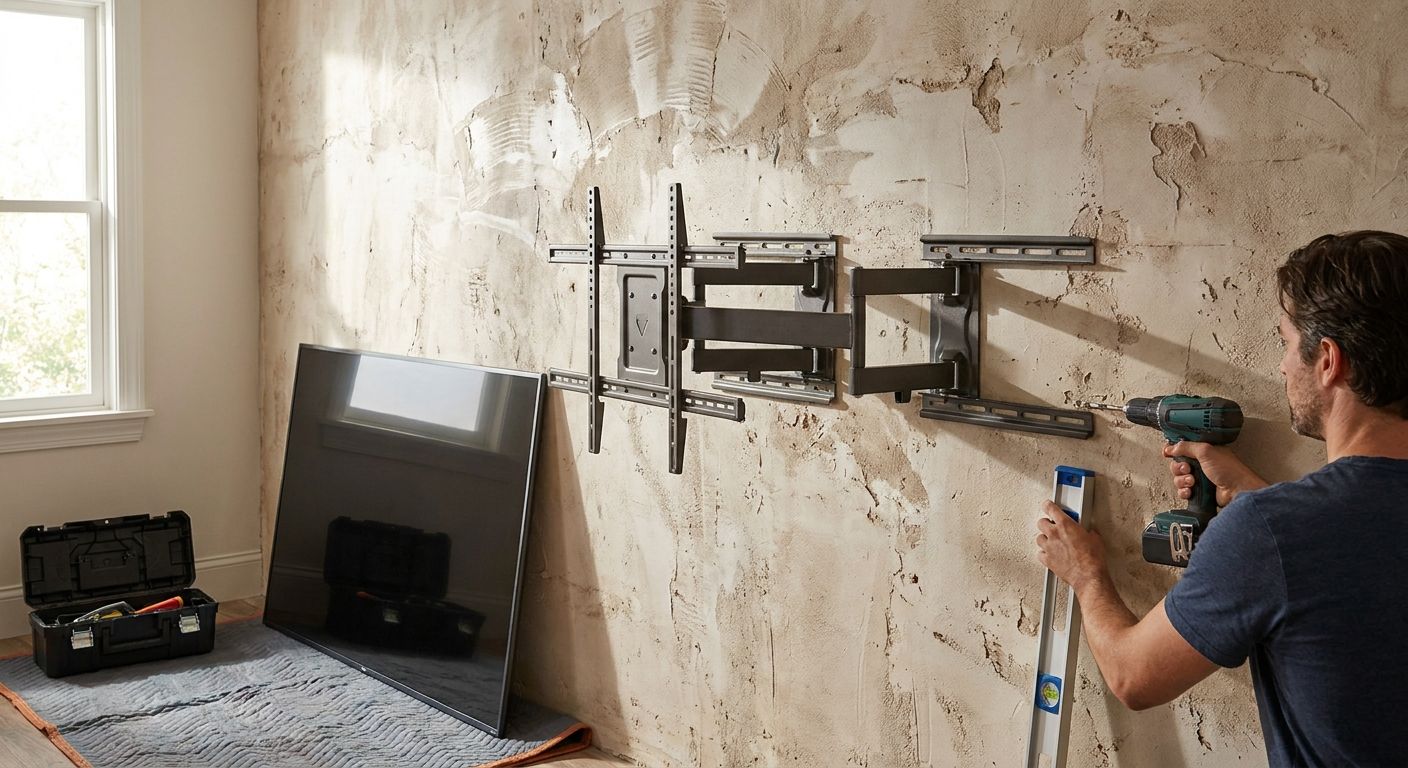
Texture is the part most DIY installs get wrong. A skim-coated or heavily textured plaster surface throws off a standard bubble level held flush against the wall, because the surface itself isn't flat even when the studs behind it are plumb. Installers working on these walls in 2026 generally reference off the stud line itself rather than the wall surface, then double-check the bracket against a level line rather than the plaster texture.
A laser level solves this directly by projecting a straight reference line across the texture instead of relying on contact with an uneven surface, and using a laser level for TV wall mounting removes the guesswork that a bubble level introduces on bumpy walls. Skip this step and a heavy TV mounted even a quarter-inch off level becomes visibly crooked at eye height.
Where to source the right hardware
- Buy lag bolts and toggle anchors rated for the specific TV weight class, not a generic "universal" kit that lists a size range without a load rating.
- Match anchor length to plaster thickness plus lath — a 3/4-inch plaster coat over lath needs longer anchors than the same anchor sized for 1/2-inch drywall.
- For anything over a 65-inch TV or a full-motion arm, get a licensed installer to confirm stud location with a stud-rated finder or exploratory hole before committing to hardware.
FAQ
What is the best tv mount for plaster walls?
A heavy-duty tilting mount anchored directly into wall studs is the best tv mount for plaster walls in 2026, since it keeps load vertical instead of pulling on the plaster coat. Full-motion arms work too, but only with a stud-fastened backing plate.
Can you mount a TV on plaster without hitting a stud?
Not safely for TVs over 32 inches. Plaster-only anchors are rated for light loads and crumble under a TV's weight over time, especially with any tilt or motion in the mount.
Is lath-and-plaster stronger or weaker than drywall for mounting?
Lath-and-plaster is often thicker than drywall, but it's more brittle and cracks around anchor points instead of flexing. Anchoring into the stud behind the lath, not just the plaster surface, is what actually holds the weight.
How much does professional TV mounting cost on plaster walls?
Pricing depends on TV size, mount type, and whether outlet or cable work is needed behind the wall. A licensed installer can quote an exact number after seeing the wall condition and stud layout.
Do toggle bolts work on plaster walls?
Toggle bolts can hold light-to-medium loads on plaster short term, but they tend to shift as the plaster around the anchor site wears with repeated stress. Stud anchoring is more reliable for permanent TV installs.
Can renters mount a TV on plaster without damage?
Yes, a no-damage tension mount works on plaster for TVs under 50 inches and leaves minimal hole marks. It's a workable option when a lease restricts drilling into the wall.
How do I know if my wall is plaster or drywall?
Tap the wall — plaster sounds solid and dense, drywall sounds hollow and slightly papery. Homes built before the 1950s in metro Atlanta are far more likely to have original lath-and-plaster walls.
One last thing
Not all "plaster" walls are the same wall. A skim coat of plaster applied over modern drywall — common in remodels since the 1980s — behaves close enough to drywall that standard toggle anchors work fine. True lath-and-plaster, the kind still standing in prewar Atlanta bungalows, needs stud anchoring or a French cleat every time, no exceptions, regardless of what the mount's packaging claims it can hold.