Small living rooms punish mounting mistakes fast — a bracket that sticks out 6 inches turns a 12x14 room into a hallway. The best low profile TV mount for a small living room is a fixed or low-profile tilting bracket that sits under 2.5 inches off the wall, not a full-motion arm built for a media room three times the size. The TV Mount Men installs all four mount types across metro Atlanta and sees the same mistake weekly: homeowners buy the mount built for a showroom, not their square footage.
- The best low profile TV mount for small living rooms is a fixed bracket at 0.5-1 inch of wall clearance — Buy.
- Low-profile tilting mounts add eye-level correction at 1-2.5 inches clearance — Buy for rooms with a fireplace or high shelf.
- Full-motion low-profile mounts extend 15-24 inches and defeat the point in tight rooms — Skip.
- In-wall recessed mounts save the most depth but need stud and outlet work most renters can't do — Consider.
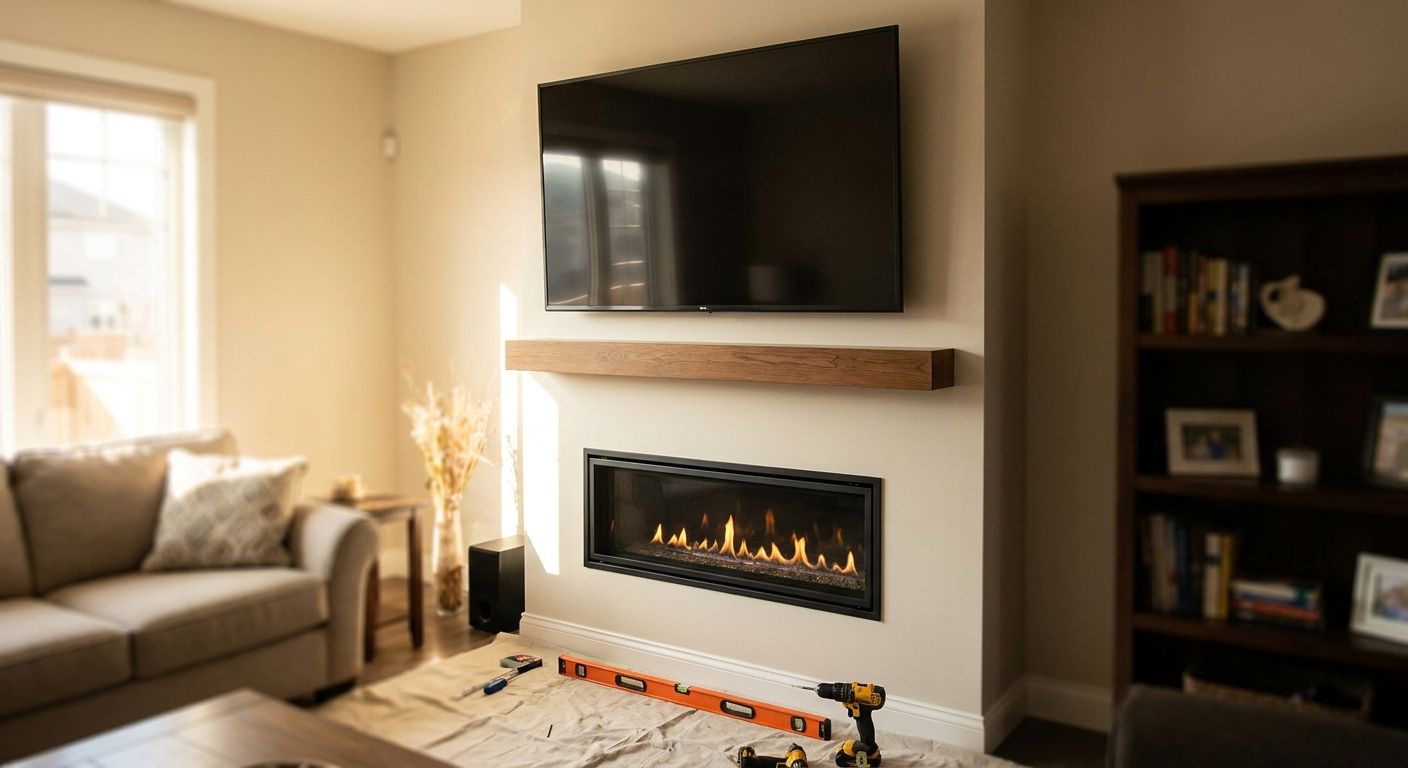
- Above-fireplace low-profile mounts need heat clearance and cable management planned before install, not after.
Why this matters
A mount is the wrong purchase to guess on because it's bolted to drywall, brick, or a stud pattern that doesn't change once the anchors are set. In a small living room, every inch of depth the bracket adds is an inch a couch, a lamp, or a walking path has to give up.
Most buyers shopping "best low profile tv mount" in 2026 are trying to solve one of two problems: a TV that sticks out too far over a small sofa, or a wall-mounted setup that looks bulky in a room with 8-foot ceilings. Both problems trace back to picking the wrong mount category, not the wrong brand.
How we ranked these mount types
The ranking below is based on wall clearance, install complexity, and how each mount type performs specifically in rooms under roughly 150 square feet — the size range where a few extra inches of depth actually changes how the room feels. Clearance figures reflect standard specs published across most VESA-compliant mount categories, not any single product line. Installation notes come from work completed on drywall, brick, and masonry walls across metro Atlanta homes.
The ranked list
1. Fixed low-profile mount — the safe pick
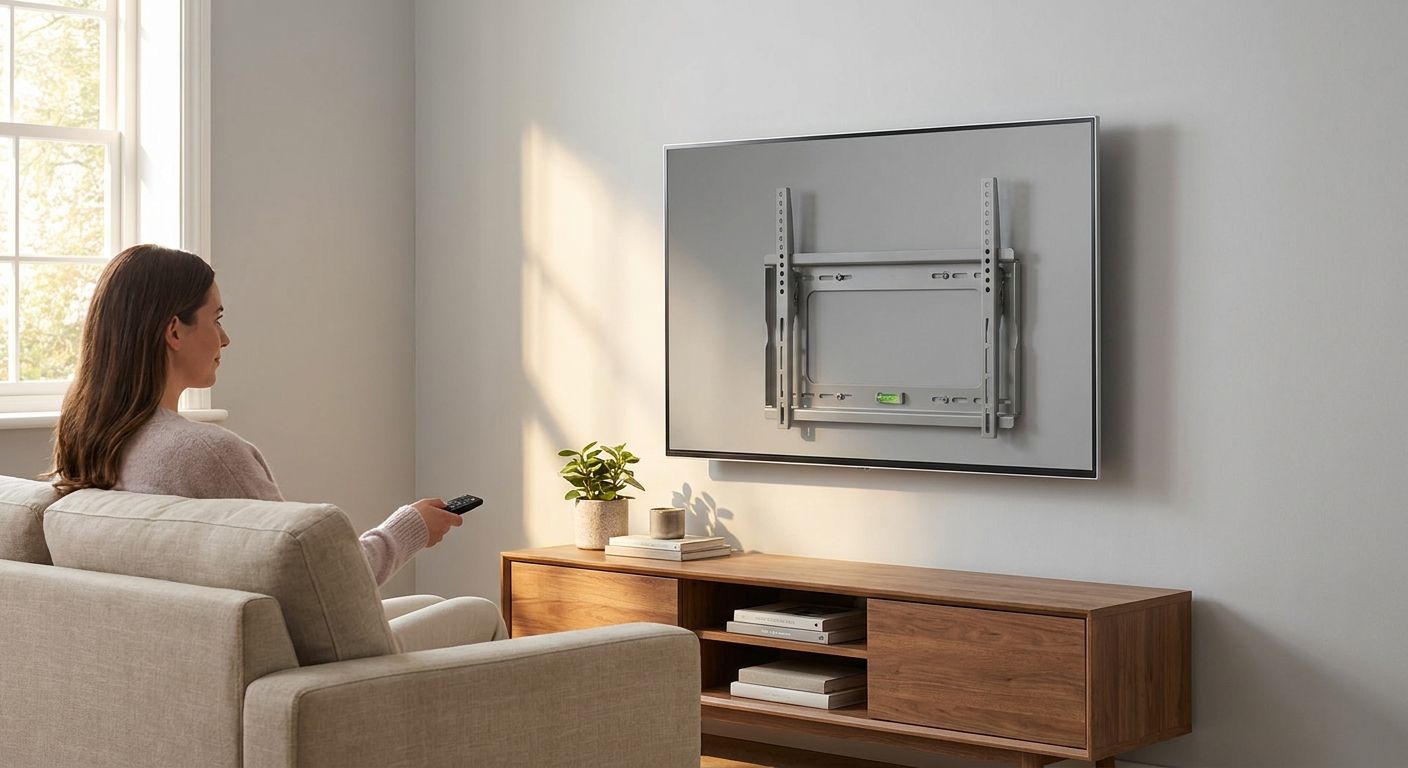
A fixed mount holds the TV flat against the wall with no tilt or swivel, and it's the tightest category available at 0.5 to 1 inch of wall clearance. That's the shallowest profile you can buy in 2026 without going to a recessed in-wall setup.
For a small living room where the TV sits at or near eye level already, a fixed mount is the right call — there's nothing to adjust, so there's nothing sticking out further than it needs to. The tradeoff is zero flexibility: once it's up, the viewing angle is fixed for good.
Verdict: Buy for small rooms where the TV location is already correct.
2. Low-profile tilting mount — the practical upgrade
Tilting mounts add a downward pivot, usually 5 to 15 degrees, while staying in the 1 to 2.5 inch clearance range. That small amount of tilt fixes the single most common small-room problem: a TV mounted a few inches too high because a low shelf or fireplace mantel was in the way.
This is the mount category most requests actually call for once the room gets measured, because most small living rooms end up with a TV higher than ideal and need the tilt to correct the viewing angle without adding real depth.
Verdict: Buy for rooms where the mount height was set by furniture, not by eye level.
3. Slim full-motion mount — the wildcard
Full-motion mounts pull the TV off the wall on an articulating arm, and even the "slim" versions marketed for tight spaces extend 15 to 24 inches when fully pulled out. That number matters because a 24-inch reach in a 12-foot-wide living room eats 15%-20% of the usable wall-to-couch distance.
The pitch for full-motion is flexibility — pull the TV toward a corner seat, angle it for a second viewing spot. In a genuinely small living room, that flexibility isn't worth the extra depth sitting against the wall when the arm is retracted, which is still 3-5 inches thicker than a fixed or tilt bracket even when closed.
Verdict: Skip for small living rooms; save full-motion for open floor plans or rooms with multiple seating zones.
4. In-wall recessed low-profile mount — the space-saver
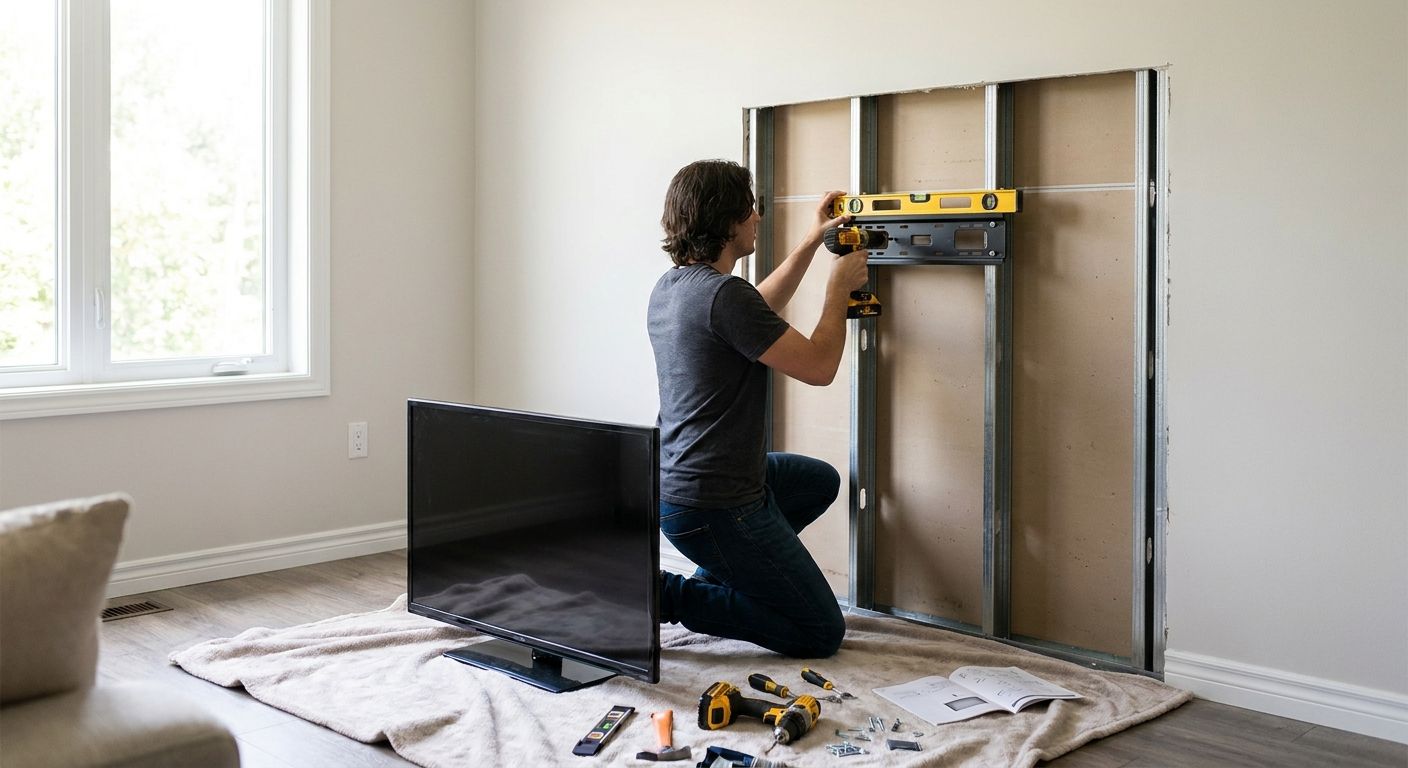
A recessed mount sets the bracket into the wall cavity between studs, which gets the TV essentially flush and often eliminates visible cable runs entirely. It's the shallowest option on this list by design, but it requires cutting into drywall and usually adding an outlet behind the TV.
That install complexity is why it ranks fourth, not first — homeowners get the deepest cut in visual bulk, but renters and condo owners frequently can't get approval to open a wall. It's a strong pick for owned homes, a non-starter for most rentals.
Verdict: Consider if you own the home and want zero visible mount profile; Skip if you're renting.
5. Above-fireplace low-profile mount — the specialty case
Mounting above a fireplace changes the math because heat clearance and cord concealment both come into play, and brick or stone surfaces need different anchors than drywall. A low-profile fixed or tilt mount still applies here, but the install itself is more involved than a standard wall.
If the living room's only open wall is above the fireplace, this is often the only real option — the step-by-step process for mounting over a brick fireplace covers the anchor type and heat clearance specifics that change the install.
Verdict: Consider when the fireplace wall is the only viable mounting location.
“If a mount extends more than 3 inches off the wall, it stops being low-profile in anything but the name on the box.”
Comparison table
| Mount Type | Wall Clearance | Best For | Verdict |
|---|---|---|---|
| Fixed low-profile | 0.5-1 in | TV already at eye level | Buy |
| Low-profile tilt | 1-2.5 in | TV mounted too high | Buy |
| Slim full-motion | 15-24 in | Open floor plans, multiple seats | Skip for small rooms |
| In-wall recessed | Flush | Owned homes, zero visible bulk | Consider |
| Above-fireplace | Varies by surface | Fireplace-wall-only rooms | Consider |
Where to buy and how to install it right
- Match the mount's VESA pattern to the TV's back panel before buying — most 32 to 55-inch TVs use 200x200mm or smaller patterns, while 65-inch-plus sets often need 400x400mm or larger, and a mismatch means the bracket doesn't fit no matter how good the clearance spec is.
- Buy from a retailer with a fit-based return policy, since stud spacing and wall type (drywall vs. brick vs. masonry) can rule out a mount that looked right online.
- Hire a licensed installer for anything above a fireplace or on brick/masonry, because low-profile brackets leave almost no margin for anchor error once the TV is hung.
Get your small living room mounted right
Licensed, insured installs across metro Atlanta with a 5-year warranty.
Condo and HOA living rooms are some of the tightest spaces installed in 2026, and the TV mounting work done in condo and HOA communities shows how much a 1-inch difference in mount depth matters when the room is 10x12.
Apartment and rental living rooms carry the same constraint plus a lease restriction — anyone renting should check the TV mounting guidance for apartments and rental properties before drilling anything, since a fixed or low-profile tilt mount is usually the only option a landlord will approve.
New homeowners furnishing a small living room for the first time in metro Atlanta run into this decision immediately after closing, and the new homeowner TV mounting page walks through the same fixed-vs-tilt decision against a fresh set of walls.
FAQ
What is the best low profile TV mount for a small living room?
A fixed or low-profile tilting mount is the best low profile TV mount for a small living room, sitting between 0.5 and 2.5 inches off the wall in 2026. Full-motion mounts, even slim versions, extend 15-24 inches and add too much depth for tight rooms.
Is a fixed mount or tilting mount better for a small room?
A fixed mount is better when the TV is already at eye level, while a tilting mount is better when the TV sits above a fireplace or shelf and needs a downward angle. Both stay under 2.5 inches of wall clearance.
How much wall clearance does a low profile TV mount need?
Fixed mounts need as little as 0.5 to 1 inch of clearance, and low-profile tilting mounts need 1 to 2.5 inches. Full-motion mounts need 15 to 24 inches when extended, which disqualifies them as truly low-profile in small rooms.
Can I mount a TV low profile above a fireplace in a small living room?
Yes, a fixed or tilting low-profile mount works above a fireplace, but heat clearance and the wall surface (brick, stone, or drywall) change the anchor type needed. A professional install matters more here than on a standard wall.
Do renters need a different type of low profile mount?
Renters should stick to fixed or low-profile tilting mounts that don't require cutting into drywall, since in-wall recessed mounts usually need landlord approval. Most lease agreements allow standard wall-mount anchors but not wall modifications.
Why are full-motion mounts not considered low profile?
Full-motion mounts extend 15 to 24 inches from the wall when pulled out and stay 3-5 inches thicker than fixed mounts even when retracted. That extra depth defeats the purpose of a low-profile mount in a small room.
How do I know if a low profile mount will fit my TV?
Check the TV's VESA hole pattern against the mount's supported range before buying — most 32 to 55-inch TVs use 200x200mm or smaller, while larger sets often need 400x400mm. A mismatched pattern means the mount won't fit regardless of its clearance spec.
Is professional installation worth it for a low profile TV mount?
Yes, especially for low-profile mounts, because the shallow clearance leaves little room to correct an anchor placed in the wrong stud or a bracket set at the wrong height. A professional install also handles outlet relocation for a cord-free finish.
One last thing
The mount that looks the most impressive in a showroom — full articulation, big swing arm — is almost always the wrong pick for a small living room in 2026. The rooms that photograph best after install are the ones where the bracket disappears, and that only happens under 2.5 inches of clearance.