Waiting rooms and reception areas get more eye time per square foot than almost any other commercial space — patients, clients, and customers stare at a blank wall for 10 to 40 minutes at a stretch. Getting tv mounting for waiting room right in 2026 means matching height, mount type, and cable routing to a room nobody personally controls, not a living room where one person picks the couch angle.
- A low-profile fixed mount at 42 to 48 inches to screen center is the safe pick for tv mounting for waiting room projects.
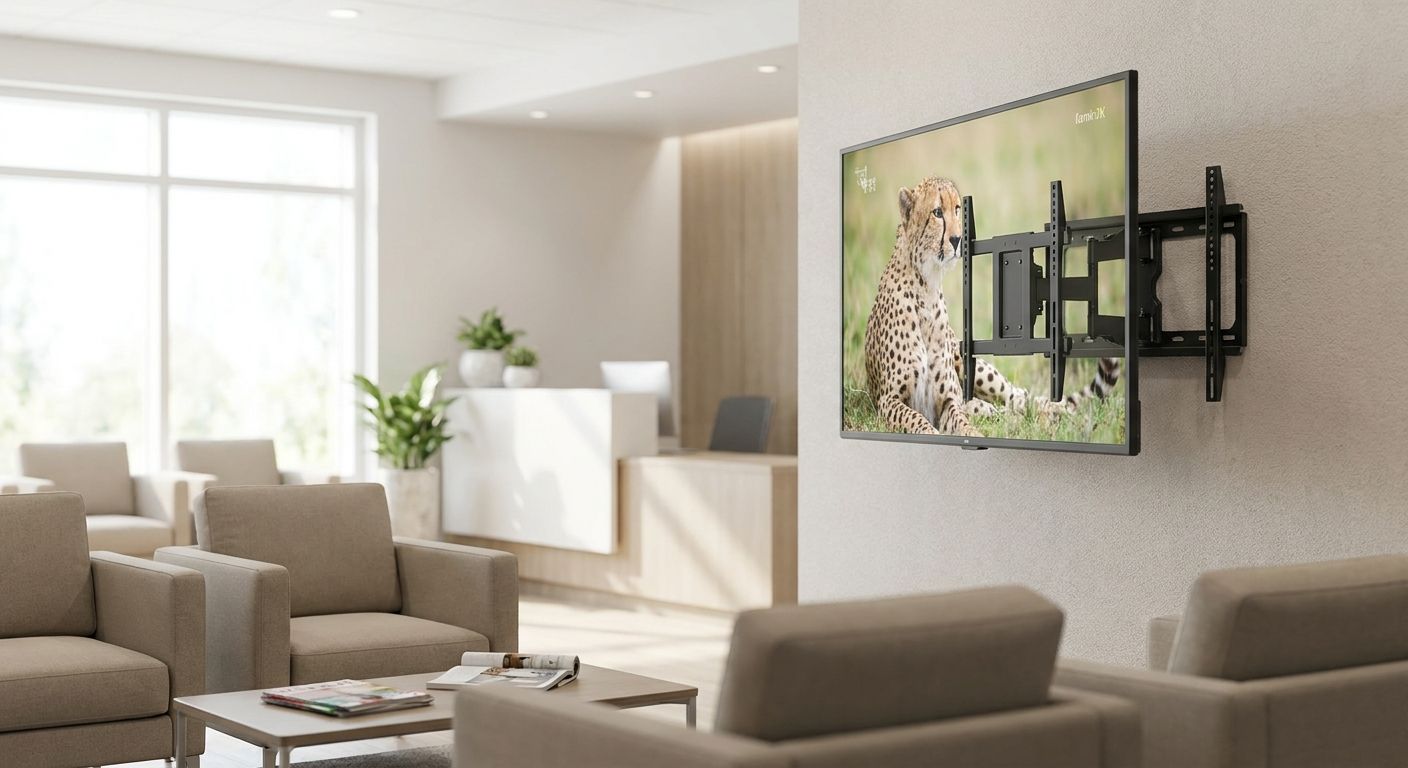
- Skip full-motion arms in narrow hallways and check-in lanes — snag risk outweighs flexibility in high-traffic commercial spaces.
- A 43- to 55-inch screen covers seating up to 12 feet away in most reception layouts without straining anyone's neck.
- Cord-free finishes with a relocated outlet cost more upfront but hold up better under public foot traffic through 2026.
Why This Matters
A crooked or too-high TV in a reception area reads as unfinished, no matter how nice the rest of the office looks. Patients in a medical waiting room, clients in a law firm lobby, and customers in a dealership showroom all look up at that screen more than they look at the front desk staff.
TV mounting for waiting room spaces also carries liability that residential jobs don't. A mount rated for a home living room isn't automatically rated for a public space where dozens of people pass under it every day, and a loose bracket in a commercial building is a different kind of problem than one in a bedroom. The TV Mount Men treats commercial reception jobs across metro Atlanta as their own category — different height rules, different hardware, different cable routing — not a scaled-up version of a home install.
Who This Is For
This guide is for office managers, practice administrators, and facilities staff booking TV mounting for medical and dental waiting rooms, law firm lobbies, auto dealership showrooms, salons, and corporate reception desks anywhere from Marietta to Alpharetta to Woodstock. If you're choosing a single TV for a front desk area, or outfitting a multi-chair waiting room with two or three screens, the criteria below apply the same way.
What to Look for in TV Mounting for Waiting Rooms
Viewing Height and Angle for Seated Traffic
Most waiting room seating puts eyes 42 to 48 inches off the floor, so screen center should land in that same range — not the 56-to-60-inch height common in home installs above a fireplace. A TV mounted too high forces neck strain on people sitting for 20 minutes at a time, which is exactly the opposite of what a calm waiting room should feel like.
Weight Rating and VESA Compatibility for Commercial Screens
Commercial reception TVs run 43 to 65 inches, and the mount needs a weight rating with margin above the screen's actual weight, not a bare minimum match. VESA hole patterns vary by manufacturer, so confirming compatibility before the screen ships avoids a return trip.
Cord-Free Finish and Outlet Placement
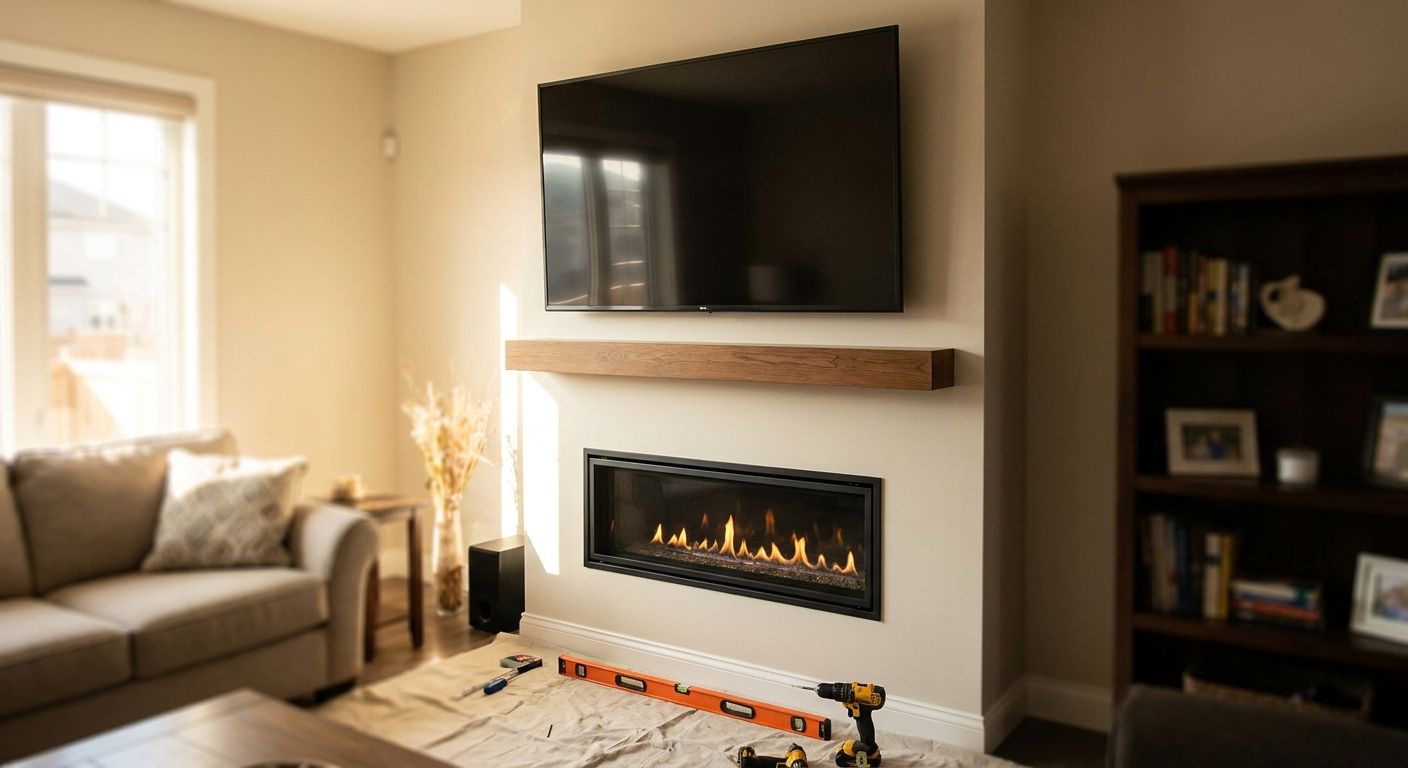
A reception area with a visible power cord and cable box wire looks unfinished the moment a client walks in. Installing a new outlet behind the TV — the same approach used on residential cord-free jobs — keeps the wall clean and keeps cords away from foot traffic near a front desk.
Mounting Surface: Drywall, Glass Partition, or Tile
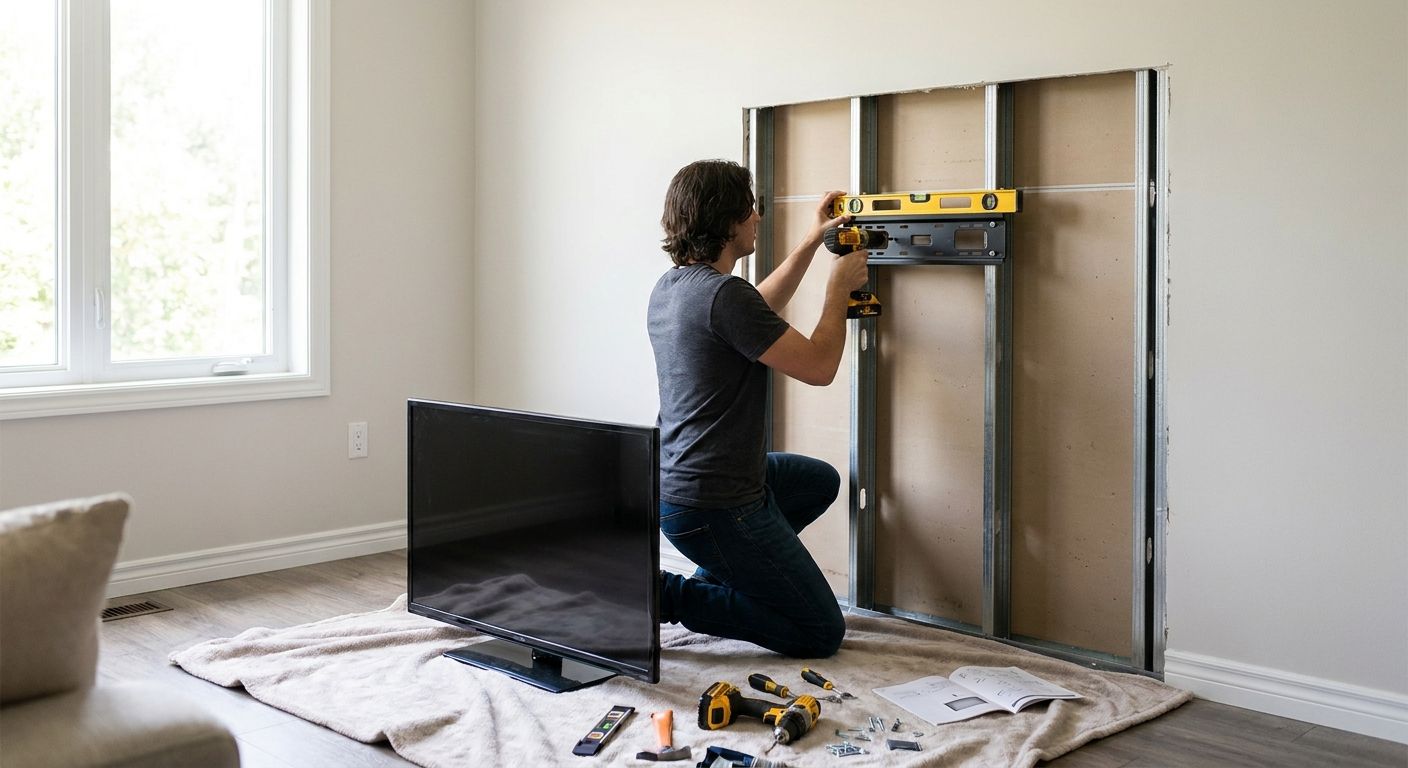
Medical and dental offices frequently mix drywall with glass partitions or tile backsplashes near a check-in counter, and each surface needs different hardware. A stud-mounted bracket that works fine on open drywall won't hold on a glass partition wall, and tile requires its own anchoring approach to avoid cracking.
Anti-Theft and Anti-Tip Hardware for Public Spaces
A home TV rarely needs anti-theft hardware. A TV in an unattended waiting room, especially one near an exterior entrance, benefits from locking brackets and anti-tip hardware that a residential-grade mount usually skips.
Get Your Waiting Room TV Quoted
Licensed and insured installs across metro Atlanta, backed by a 5-year warranty.
Top Setups for Waiting Room and Reception TV Mounting
The safe pick: fixed low-profile mount at the reception desk. A fixed bracket holding a 43- to 50-inch screen at 44 inches to center, rated to 100 lbs, is the setup that shows up most often in metro Atlanta medical and dental offices booked in 2026. No moving parts means nothing to loosen from repeated adjustment by staff. Verdict: Buy.
The workhorse: tilt mount above a check-in counter. A tilt bracket with a 15-degree down-angle handles a 55-inch screen mounted slightly higher than eye level, which suits retail and showroom check-in areas where staff stand rather than sit. The downward tilt cuts glare from overhead fluorescent lighting, a common complaint in commercial spaces. Verdict: Buy.
The multi-screen play: two 43-inch fixed mounts flanking an entry. Splitting content across two smaller screens instead of one large one keeps sightlines clear in narrow lobbies and reduces the single-point-of-failure risk if one unit needs service. It costs more in mounting labor than one big screen, so it only pays off in wider waiting rooms with split seating banks. Verdict: Consider.
The accessibility pick: 40-inch mount at a lower ADA-friendly height for senior-focused clinics. Practices serving older patients or those with mobility needs benefit from the lower height range already common in senior living and accessibility TV mounting, roughly 4 inches below standard reception height. It's a smaller screen than most offices default to, but it matches the seated eye line of a population that spends more time looking up at it. Verdict: Buy.
What to Avoid
- Full-motion arms in narrow corridors and check-in lanes. They look flexible in a showroom, but an extended arm at head height in a 4-foot-wide hallway is a liability, not a feature.
- 75-inch and larger screens in small waiting rooms. A screen sized for a home theater overwhelms a 10-by-12 reception area and forces seated viewers within 6 feet of the screen, closer than comfortable for that size.
- Standard drywall anchors on high-traffic public walls. A toggle-bolt or stud-mounted bracket is worth the extra 20 minutes of install time versus a plastic anchor rated for occasional residential use.
Verdict Comparison
| Criteria | Fixed Mount | Tilt Mount | Full-Motion Arm |
|---|---|---|---|
| Best for | Standard waiting rooms | Check-in counters, glare-prone rooms | Not recommended in narrow public spaces |
| Screen-center height | 42-48 in | 44-50 in | Varies, harder to standardize |
| Weight capacity fit | Up to 100 lbs typical | Up to 100 lbs typical | Often lower, more moving parts |
| 2026 verdict | Buy | Buy | Skip for lobbies |
FAQ
What's the best TV mounting height for a waiting room?
Screen center should sit 42 to 48 inches off the floor for seated viewing in most waiting rooms. That's lower than the typical home installation height, since reception seating puts eyes closer to the floor than a standing living room viewer.
Is a fixed mount or tilt mount better for reception areas?
A fixed mount works for most standard-height waiting rooms, while a tilt mount helps when the TV sits above eye level or fights glare from overhead lighting. Check-in counters with taller mounting points usually do better with a slight downward tilt.
How much does TV mounting for a waiting room cost in 2026?
Pricing depends on screen size, mounting surface, and whether a new outlet is added behind the TV for a cord-free finish. Getting an exact quote requires a look at the specific wall and screen size involved.
Can a TV be mounted on a glass partition in a reception area?
Glass partitions need different hardware than drywall or studs, and not every partition can safely support a wall-mounted TV. A site visit determines whether the partition itself or an adjacent structural wall is the right mounting point.
Do waiting room TVs need a cord-free finish?
It's not required, but a cord-free finish with a relocated outlet behind the TV keeps cables away from public foot traffic and looks more finished in a professional setting. Most commercial clients request it once they see the option.
What size TV works best for a small waiting room?
A 43- to 50-inch screen fits most waiting rooms under 150 square feet, matched to seating no more than 10 to 12 feet from the wall. Going larger in a tight room puts seated viewers uncomfortably close to the screen.
Is a full-motion mount ever right for a lobby?
Rarely — full-motion arms make more sense in wide-open spaces than in narrow hallways or check-in lanes where an extended arm becomes a snag hazard. A fixed or tilt mount covers almost every reception layout better.
How long does professional TV mounting take in a commercial space?
A single TV mount with an existing outlet nearby is typically a same-visit job, while adding a new outlet behind the TV extends the timeline. Multi-screen reception setups take longer depending on wall type and cable routing.
One Last Thing
The single most requested add-on on commercial waiting room jobs across metro Atlanta is the same one that shows up on residential jobs in Woodstock and Acworth: a new outlet installed directly behind the TV for a fully cord-free finish. Office managers ask for it after seeing a competitor's messy cable run, not before — worth specifying upfront instead of retrofitting later.