Mounting a TV in a senior living community or an accessible home means solving for sightlines, cord hazards, and grip strength, not just wall studs. This guide breaks down what changes when the resident is seated, in a wheelchair, or has limited dexterity — and where a standard installation puts someone at risk.
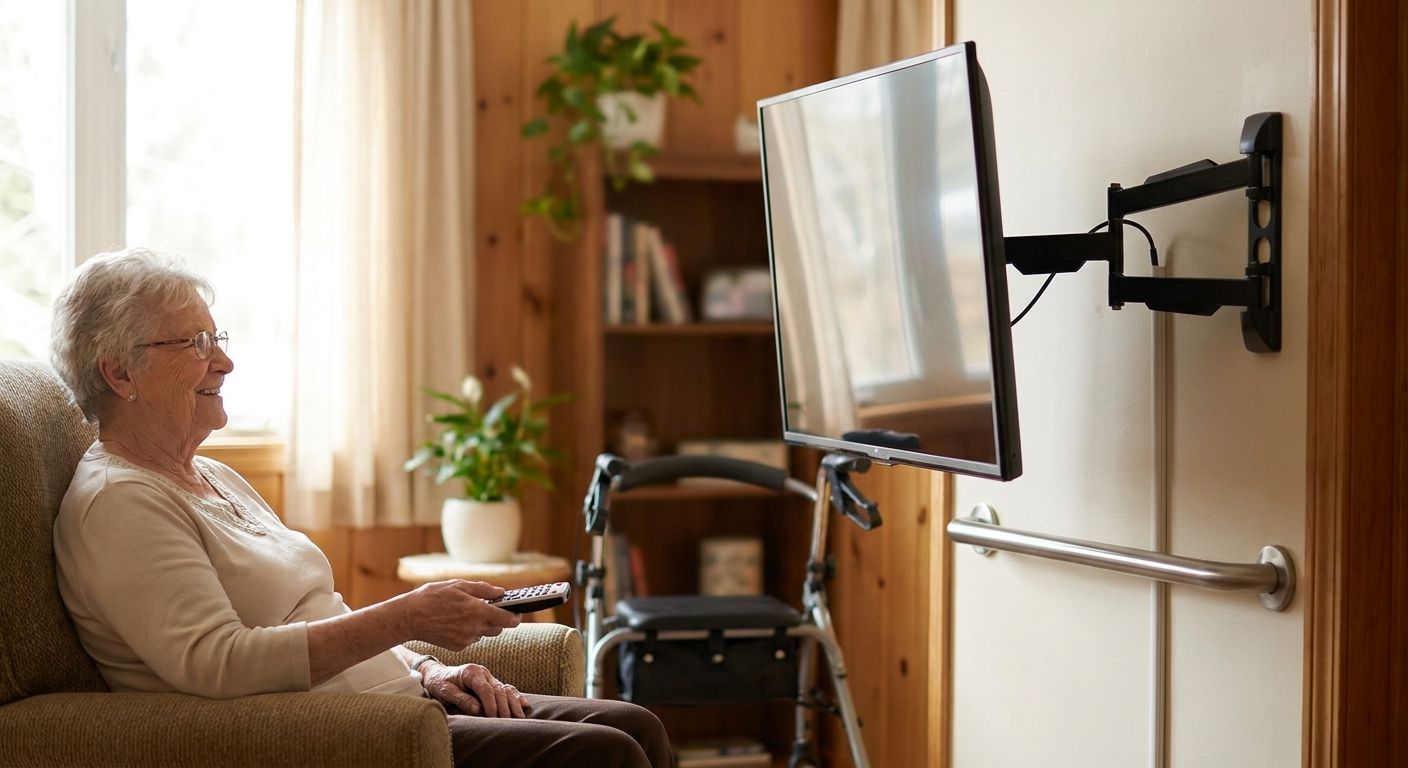
- Full-motion mounts at 42-48 inches to screen center serve seated and wheelchair viewers best in tv mounting for senior living.
- Fixed mounts save cost in private bedrooms but fail in shared activity rooms with mixed seating heights.
- Cord relocation behind the wall eliminates a documented trip hazard in assisted living hallways and common areas.
- Avoid swivel arms with stiff pull tension — arthritic hands can't operate them, so pick spring-assist or professionally preset angles.
- The TV Mount Men has completed 10,000+ installations across metro Atlanta with a 5-year workmanship warranty on every job.
Why this matters
A TV mounted at standing-adult eye level looks fine in a showroom and wrong in a recliner or wheelchair. Independent living apartments, assisted living common rooms, and memory care units all have different seating patterns, and the mount has to match the resident, not the wall.
The stakes are higher than in a typical living room install. Loose cords across a floor are a fall risk for residents using walkers or canes. A mount rated for 55 pounds that's holding a 65-inch panel over a headboard is a liability if a resident leans on it while transferring from a wheelchair. Getting the spec right up front avoids a callback and, more importantly, avoids an incident report.
Who this is for
This guide is built for facility managers at independent and assisted living communities, family members setting up a parent's apartment or bedroom for aging in place, and property managers of 55+ condo and HOA communities who need consistent installs across dozens of units. If you're outfitting one bedroom or an entire wing of common rooms in Atlanta, Woodstock, Acworth, or Rockmart, the criteria below apply the same way.
What to look for in TV mounting for senior living
Mounting height for seated viewing
Standard installs put the screen center at 60-65 inches from the floor, tuned for someone standing or on a standard sofa. For seated or wheelchair-bound residents, the comfortable range drops to roughly 42-48 inches to screen center — low enough that the neck stays neutral during hours of viewing. Get this wrong and a resident tilts their head back for every show, which adds up to real neck strain over a year of daily use.
Bracket weight rating with margin
Never spec a bracket at its exact weight limit. A 55-inch TV weighing 30-35 pounds needs a bracket rated well above that number, especially in rooms where a resident might grab the TV or the wall near it for balance. Extra rated capacity is cheap insurance against a bracket that loosens under stress it wasn't built for.
Cord and outlet placement
Visible cords running down a wall or across a floor are a documented trip hazard in facilities with residents using mobility aids. An in-wall cord kit or a new outlet installed directly behind the TV removes that risk entirely and gives the room a cleaner, less institutional look.
Mount type: fixed vs. tilt vs. full-motion
Fixed mounts are the right call for a single-resident bedroom where the seating position never changes. Full-motion articulating arms matter in shared spaces — a common room, a dining area, a rec room — where the TV needs to angle toward wherever chairs and wheelchairs land that day.
Operability for limited grip strength
Swivel and tilt mechanisms that need firm hand pressure to adjust are a problem for residents with arthritis or reduced grip strength. Spring-assist full-motion arms or a mount preset to a fixed angle during install solve this without asking anyone to wrestle with a stiff joint.
Surface type and reinforcement
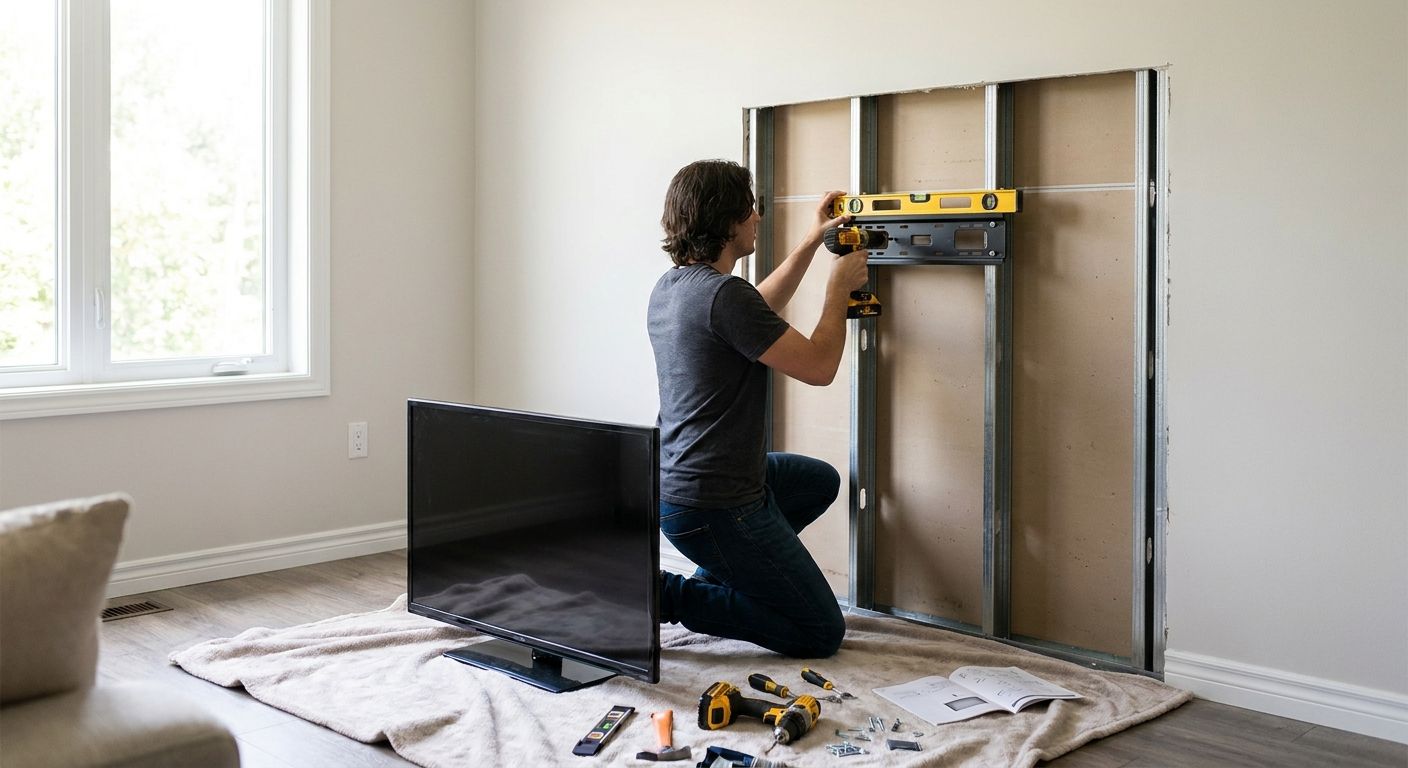
Drywall-over-stud is common in newer independent living units, but older assisted living buildings often mix in brick fireplaces, block walls, or plaster. Each surface needs a different anchoring approach, and getting it wrong means a mount that shifts within months instead of holding for years.
Top picks for senior living and accessibility installs
1. Full-motion articulating mount, 42-48 inch center height — the accessibility-first pick. Spec: extends 16-20 inches from the wall and tilts up to 15 degrees, letting one TV serve both a wheelchair position and a standing caregiver. Common rooms and shared lounges benefit most, where seating shifts throughout the day. Buy for any space with mixed or rotating seating.
2. Fixed low-profile mount in private bedrooms — the budget-safe pick. Spec: sits 1.5-2 inches off the wall, holds the screen flush and steady with zero moving parts to fail. This matches the constant-position format used in single-occupant bedroom installs, where the resident's chair or bed never moves. Buy for single-occupant bedrooms.
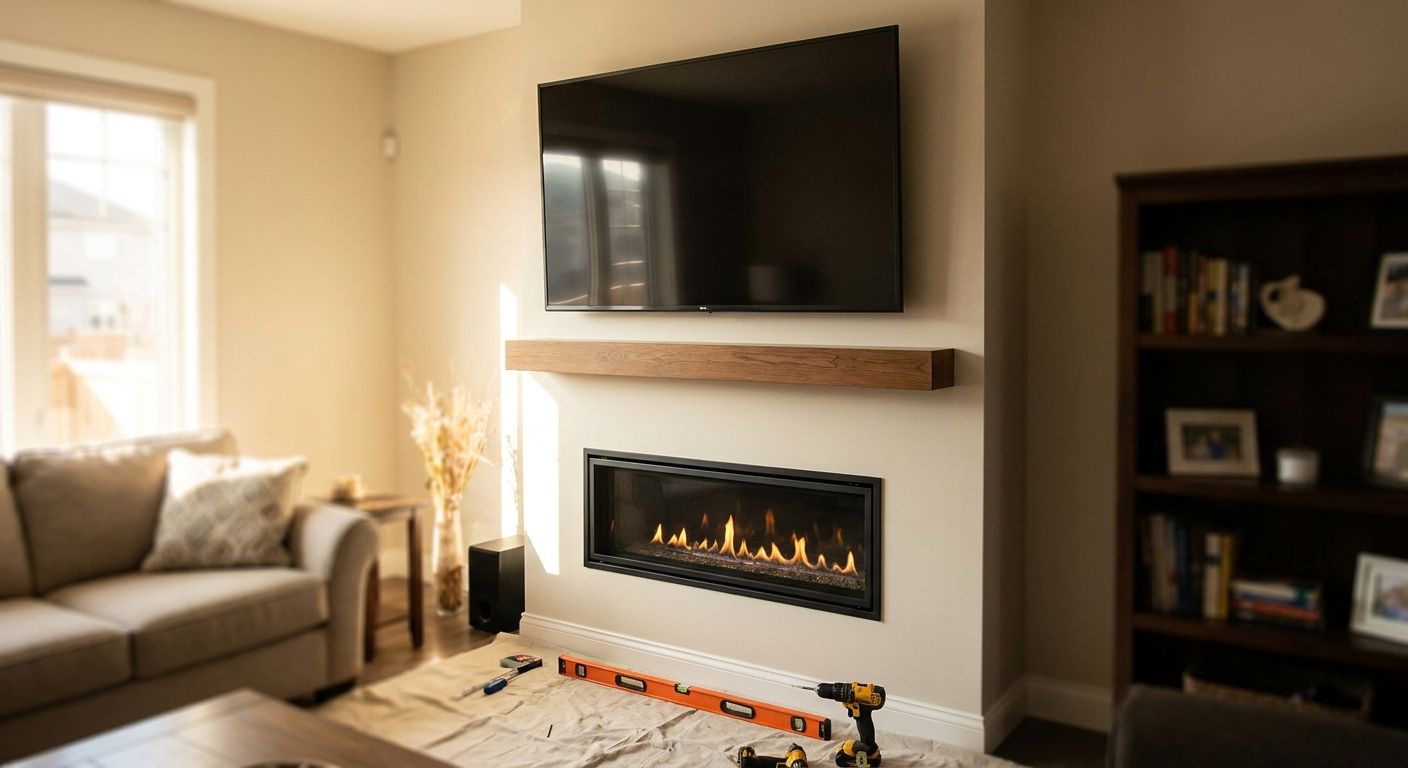
3. Above-fireplace tilt mount with cable concealment — the common-room upgrade. Spec: tilts down 5-8 degrees to correct the downward viewing angle a high fireplace mount creates, paired with an in-wall cord channel. Works well in a shared living room with a mantel-height fireplace, but needs a tilt arm, not a fixed bracket, to avoid neck strain from below. Consider — only worth it if the room genuinely lacks another mounting surface.
4. Outlet relocation add-on — the safety pick. Spec: a licensed electrician installs a new outlet directly behind the TV, eliminating any cord that crosses a walking path. This is the single highest-impact accessibility upgrade available and pairs with any mount type above. Buy for every install in a hallway-adjacent or high-traffic room.
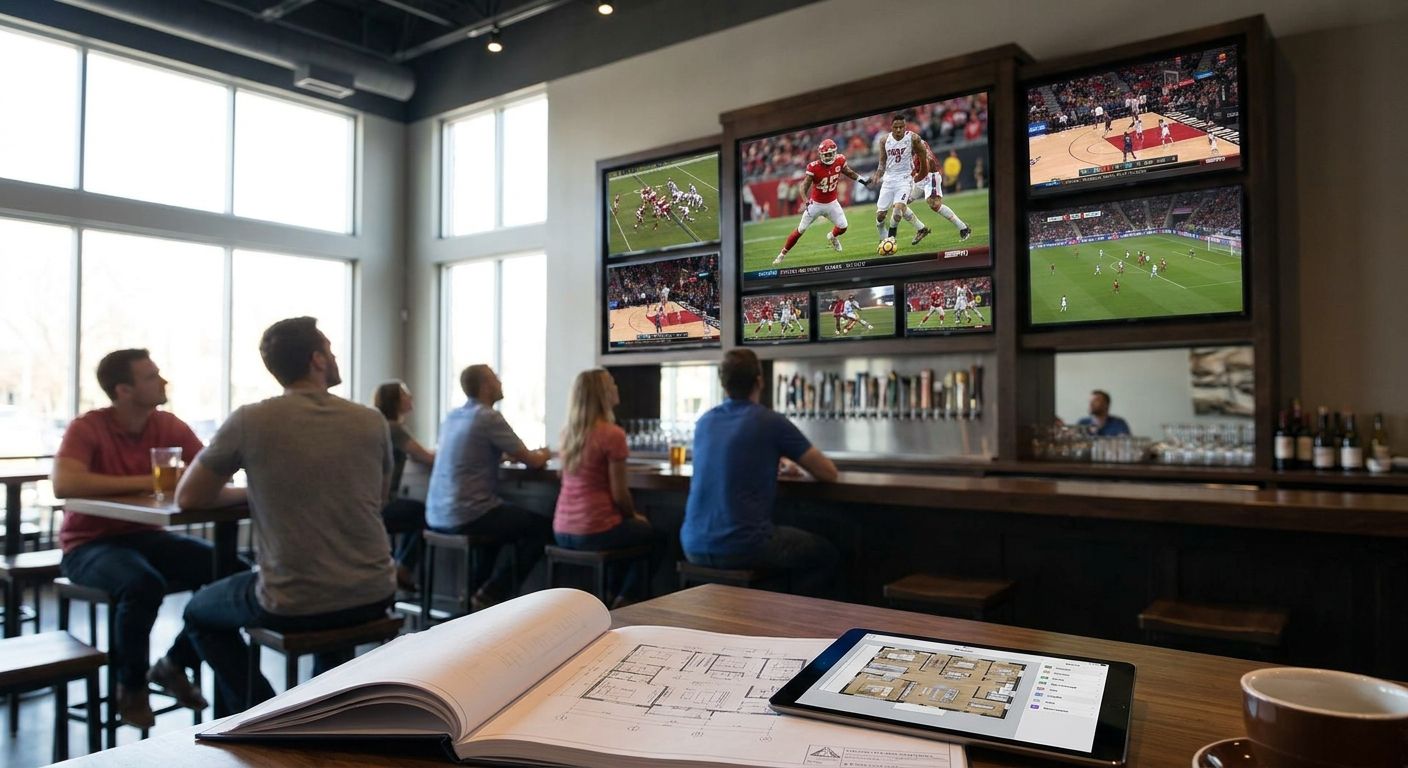
5. Shared activity room multi-angle setup — the group-space pick. Spec: one full-motion mount centered to serve a room with mixed table and lounge seating, matching the approach used in multi-screen and shared-venue mounting for spaces where the audience position varies. Buy for dining halls, activity rooms, and rec lounges.
Get a senior living TV mounting quote
Height, bracket rating, and cord layout assessed on site across metro Atlanta.
What to avoid
- High fireplace mounts without a tilt arm. A fixed bracket over a fireplace forces every seated viewer to look up and back, which is the opposite of what an accessible install needs.
- Swivel mounts with stiff, high-tension arms. They look premium in a showroom and become unusable for a resident with limited grip strength or arthritis within weeks.
- Cord management left exposed "for now." A visible cord run rarely gets fixed later and stays a fall hazard for the life of the install.
Verdict comparison
| Install type | Best for | Mount height | Verdict |
|---|---|---|---|
| Full-motion, 42-48" center | Shared/common rooms | 42-48 inches | Buy |
| Fixed low-profile | Private bedrooms | Per resident seating | Buy |
| Above-fireplace tilt | Living rooms with no other surface | Fireplace-dependent | Consider |
| Outlet relocation add-on | Any hallway-adjacent room | N/A | Buy |
| Multi-angle group setup | Dining/activity rooms | 42-48 inches | Buy |
Facility managers running installs across multiple units in a condo or HOA-style community should also check TV mounting for condos and HOA communities for guidance on wall types and association approval steps that come up in multi-unit buildings.
FAQ
What height should a TV be mounted for wheelchair viewing?
Mount the screen center at 42-48 inches from the floor for wheelchair or seated viewing in 2026 installs. This keeps the neck neutral instead of tilted back, which is the main complaint with standard 60-65 inch mounting heights.
Is a full-motion mount better than a fixed mount for senior living?
Full-motion mounts are better in shared or common rooms where seating position changes throughout the day. Fixed mounts work fine, and cost less, in private bedrooms where one resident always sits or lies in the same spot.
How much does TV mounting for senior living facilities cost in 2026?
Pricing depends on wall surface, TV size, and whether cord concealment or an outlet relocation is included. Get a specific quote based on the room and mount type before budgeting across multiple units.
Can a TV be mounted over a brick fireplace in an assisted living common room?
Yes, but it needs a tilt-down bracket to correct the viewing angle for seated residents, not a fixed mount. See the brick fireplace mounting guide for anchoring specifics on masonry surfaces.
What's the biggest accessibility mistake in TV mounting?
Leaving cords exposed across a floor or walking path is the most common and most dangerous mistake in senior living installs. An in-wall cord kit or a relocated outlet removes the hazard entirely.
Do swivel TV mounts work for residents with arthritis?
Standard swivel mounts often require more grip strength and pull force than someone with arthritis can manage comfortably. Spring-assist full-motion arms or a professionally preset fixed angle avoid the problem.
Is professional installation required for senior living TV mounts?
It's strongly recommended given the weight-rating margins and cord safety requirements involved. A licensed and insured installer also carries liability coverage that a DIY install does not.
One last thing
The detail that gets skipped most often isn't the mount, it's the outlet. Every install in this guide that includes a new outlet behind the TV removes a cord-related fall risk that a bracket alone can't fix, and it's the upgrade facility managers regret not adding after the fact rather than during the original install in 2026.