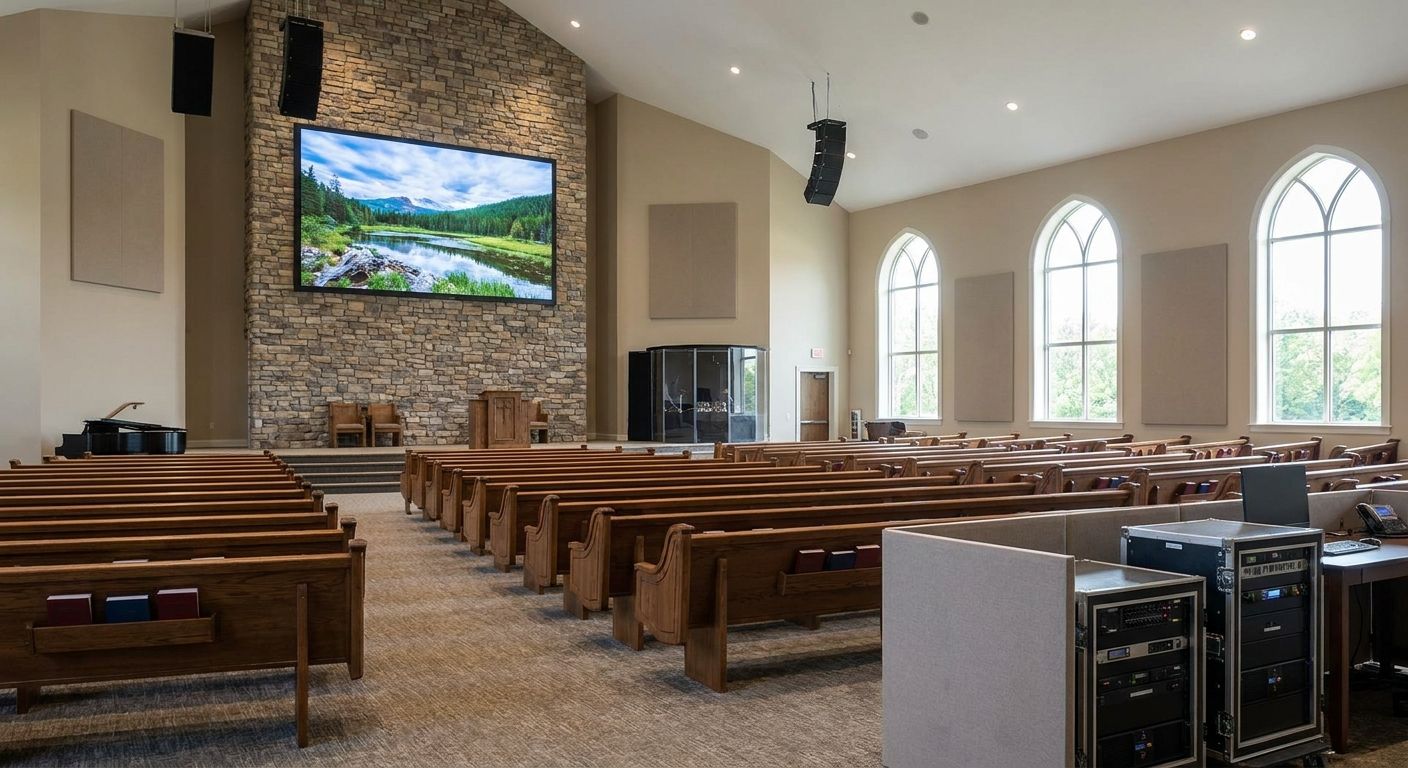
Church facilities and event venues need TV mounts that survive high ceilings, brick feature walls, outdoor courtyards, and screens far bigger than anything in a living room — and getting the bracket wrong on a 75-inch or 85-inch display over a stage means a callback, a cracked drywall anchor, or a screen that sags six months later.
- TV mounting for churches needs weight-rated brackets — full-motion mounts win for 75-inch-plus fellowship hall screens in 2026.
- Fixed low-profile mounts are the safe pick for sanctuary side walls; skip them for ceiling-drop lobby installs.
- Outdoor-rated mounts are mandatory for uncovered courtyard event screens — indoor brackets corrode in Georgia humidity.
- The TV Mount Men serves metro Atlanta churches and event venues with licensed, insured installs and a 5-year warranty in 2026.
Why this matters
A church sanctuary, fellowship hall, or event pavilion isn't a bedroom wall job. You're dealing with cinder block, brick veneer, drop ceilings, and screens that a hundred or more people need to see clearly from 40 feet back. Get the mount type wrong for the surface and the wall type, and you're looking at a repair job mid-service, not a quiet fix.
Metro Atlanta churches and event spaces have different mounting math than a home theater. Congregation size drives screen size. Wall material varies from room to room in the same building. And most of these installs happen on a tight window between Sunday services or before a Friday event — not whenever a contractor feels like showing up. The TV Mount Men has run 10,000+ installations across the region and carries a 5-year warranty on the work, which matters more in a building where the screen stays up for a decade, not two years.
Who this is for
This guide is for facilities managers, church administrators, and event coordinators handling TV installs in sanctuaries, fellowship halls, lobbies, nurseries, overflow rooms, and outdoor courtyards across metro Atlanta. If you're mounting one 55-inch screen in a small chapel, or six 75-inch displays across a multi-campus building with a livestream setup, the criteria below apply either way — the difference is scale, not the fundamentals. Start with the TV Mount Men home page if you need a quote scoped to multiple rooms in one visit.
What to look for in TV mounting for churches and event spaces
Screen size versus viewing distance
A 55-inch screen reads fine in a 20-person chapel but disappears in a 300-seat sanctuary. Match diagonal size to the farthest seat: general commercial AV guidance puts comfortable viewing at roughly 1.5 to 2.5 times the screen's diagonal in inches, in feet. A 75-inch display should be the back-row minimum for rooms deeper than 40 feet.
Wall and surface type
Churches mix drywall, cinder block, brick veneer, and stone feature walls in the same building — sometimes on the same floor. Brick and stone need masonry anchors and a different bracket load path than drywall studs. If your lobby has an exposed brick or stone accent wall, that's a different install than the sanctuary side wall ten feet away.
Weight capacity and VESA compatibility
A 75-inch or 85-inch commercial-grade panel can weigh 60 to 90 pounds. The mount's rated capacity has to clear that weight with margin, not sit right at the limit. Undersized brackets are the single most common cause of sagging screens in large-format installs.
Cable management and power
A sanctuary or event space with visible cords behind the altar or stage looks unfinished no matter how clean the mount job is. New outlet runs behind the display and in-wall cable channels keep the finish professional, and they matter more here than in a residential job because these rooms get photographed and livestreamed.
Multi-room and multi-purpose flexibility
A fellowship hall doubles as a wedding venue, a youth group room, and a potluck space. The mount has to work for a seated congregation watching a sermon and a standing crowd at a reception. Full-motion brackets that swing and tilt earn their cost in rooms with more than one use case.
Scheduling around services and events
Installs need to land outside service hours and event bookings. A facilities team juggling Sunday morning, Wednesday night, and rented-out Saturday events needs an installer who can work early mornings or weekday afternoons without disrupting the calendar.
Top picks for church and event space mounting
Low-profile fixed mount — the reliable pick. Sits within an inch of the wall and holds screens flat for sanctuary side walls and hallway signage. Rated for up to 100 pounds on standard drywall studs, this is the mount you use when the screen won't need to angle for different seating zones. Buy for any fixed-position display where everyone views it straight-on.
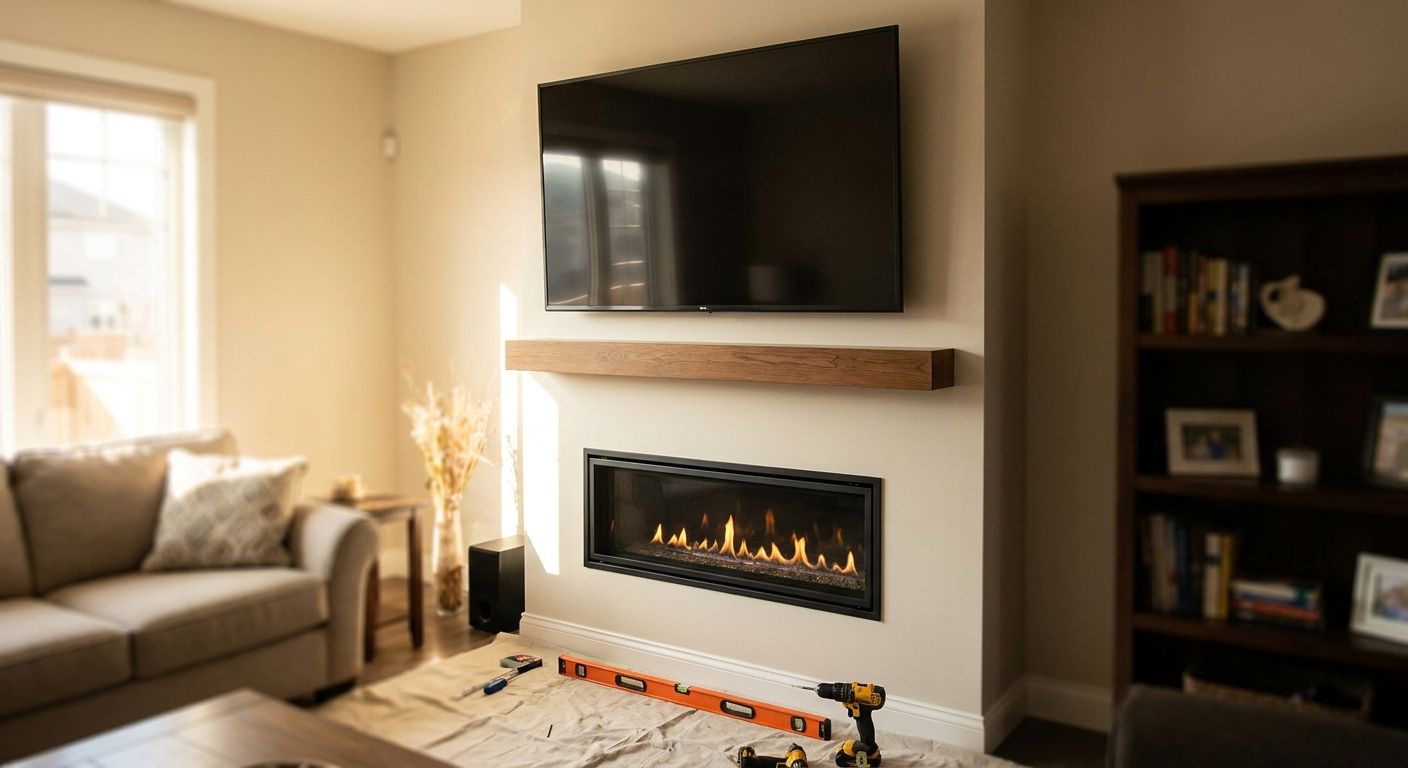
Heavy-duty tilt bracket for brick or stone feature walls — the specialist pick. Lobby and vestibule walls in older church buildings are often brick or stone veneer, which needs masonry anchors instead of drywall toggles. A tilt bracket rated to 130 pounds handles the load while letting the screen angle down slightly for standing viewers. If your building has an exposed masonry wall like a fireplace surround, the mounting approach is the same one covered in mounting a TV over a brick fireplace. Buy for any masonry wall install.
Full-motion articulating mount for fellowship halls — the flexibility pick. Multi-purpose rooms need a screen that swings toward the stage for a sermon and rotates flat against the wall when the space converts for a banquet. These mounts run 125-pound capacity ratings and give roughly 90 to 130 degrees of swing depending on the arm length. The setup logic mirrors what works in flexible multi-use rooms covered in TV mounting for man caves and home theaters, where one screen serves more than one seating arrangement. Consider this for any room that changes function week to week.
Weatherproof outdoor mount for courtyards and pavilions — the outdoor pick. Uncovered or partially covered outdoor event spaces need weather-rated hardware, not an indoor bracket pushed outside. Corrosion-resistant mounts rated for 90 pounds hold up through Georgia's humidity and summer storm season, where a standard indoor bracket will rust within a season. The same outdoor-rated approach applies to residential patio installs detailed in TV mounting for outdoor patios and porches. Consider for any courtyard, pavilion, or partially open event space.
Ceiling-drop mount for overhead sanctuary displays — the wildcard. When wall space is limited or the screen needs to hang above a stage, a ceiling-drop mount rated to 150 pounds and anchored into structural framing (never drywall alone) puts the display where sightlines actually need it. This is the most structurally demanding option and the one most likely to be attempted with the wrong hardware. Consider only when a wall mount genuinely isn't an option, and only with structural anchoring confirmed first.
Get a church or venue TV quote
Scope multiple rooms in one visit — sanctuary, lobby, and fellowship hall.
What to avoid
- Under-rated fixed mounts on 75-inch-plus displays. A bracket rated under 77 pounds looks fine at install and sags within months under a heavier commercial panel. Skip anything without a clearly published weight rating that clears your screen's actual weight.
- Drywall-only ceiling mounts. Drop ceilings and suspended grid systems are not structural. Any ceiling install needs to anchor into joists or dedicated blocking, not the ceiling tile grid.
- Indoor brackets pushed into outdoor use. Standard indoor mounts lack the corrosion resistance for courtyards and covered patios exposed to Atlanta's humid summers. What survives a living room wall doesn't survive an outdoor pavilion.
Verdict comparison
| Setup | Best For | Weight Capacity | Verdict |
|---|---|---|---|
| Low-profile fixed mount | Sanctuary side walls, hallways | up to 100 lbs | Buy |
| Heavy-duty tilt bracket | Brick or stone lobby walls | up to 130 lbs | Buy |
| Full-motion articulating mount | Fellowship halls, multi-use rooms | up to 125 lbs | Consider |
| Weatherproof outdoor mount | Courtyards, covered pavilions | up to 90 lbs | Consider |
| Ceiling-drop mount | Overhead sanctuary displays | up to 150 lbs | Consider |
| Basic under-rated fixed mount | Any 75-inch-plus display | under 77 lbs | Skip |
FAQ
What's the best TV mount for a church sanctuary?
A low-profile fixed mount rated for at least 100 pounds works best for sanctuary side walls where the screen holds one fixed position. Full-motion mounts make sense only if the room needs the screen angled for multiple seating zones.
Can you mount a TV on a brick wall in a church lobby?
Yes, brick and stone walls need masonry anchors and a tilt bracket rated for at least 130 pounds rather than standard drywall toggles. The load path into masonry is different from drywall stud mounting.
How big should a TV be for a fellowship hall?
Match diagonal size to the farthest seat, generally 1.5 to 2.5 times the screen's diagonal in inches translated to viewing distance in feet. Rooms deeper than 40 feet typically need a 75-inch display minimum.
Is it better to mount a TV on the ceiling or wall in a church?
Wall mounting is preferred whenever wall space allows it because it's structurally simpler and easier to service. Ceiling-drop mounts work only when anchored into joists or blocking, never into drywall or a suspended ceiling grid alone.
How much does TV mounting cost for a church or event venue?
Cost depends on screen size, wall material, cable management, and number of rooms — request a quote scoped to your specific building since multi-room jobs price differently than a single install.
Do outdoor event spaces need a different TV mount?
Yes, uncovered or partially covered courtyards and pavilions need weatherproof, corrosion-resistant mounts rated around 90 pounds rather than standard indoor brackets, which corrode in humid climates within a season.
Can TV mounting be scheduled around church service times?
Yes, installs are typically scheduled outside Sunday services and event bookings, often early mornings or weekday afternoons to avoid disrupting the calendar.
Does TV mounting for churches include hiding the cables?
In-wall cable channels and new outlet runs behind the display are standard for a finished look, especially in rooms that get livestreamed or photographed.
One last thing
The detail most facilities managers miss until it's too late: a fellowship hall that hosts weddings and receptions on weekends needs a different mount than the same room used only for Sunday school. If your multi-purpose room changes seating layout more than once a month, spend the extra cost on a full-motion arm now — swapping a fixed mount for an articulating one later means patching and re-anchoring the same wall twice, in 2026 pricing that's a second install, not an upgrade.