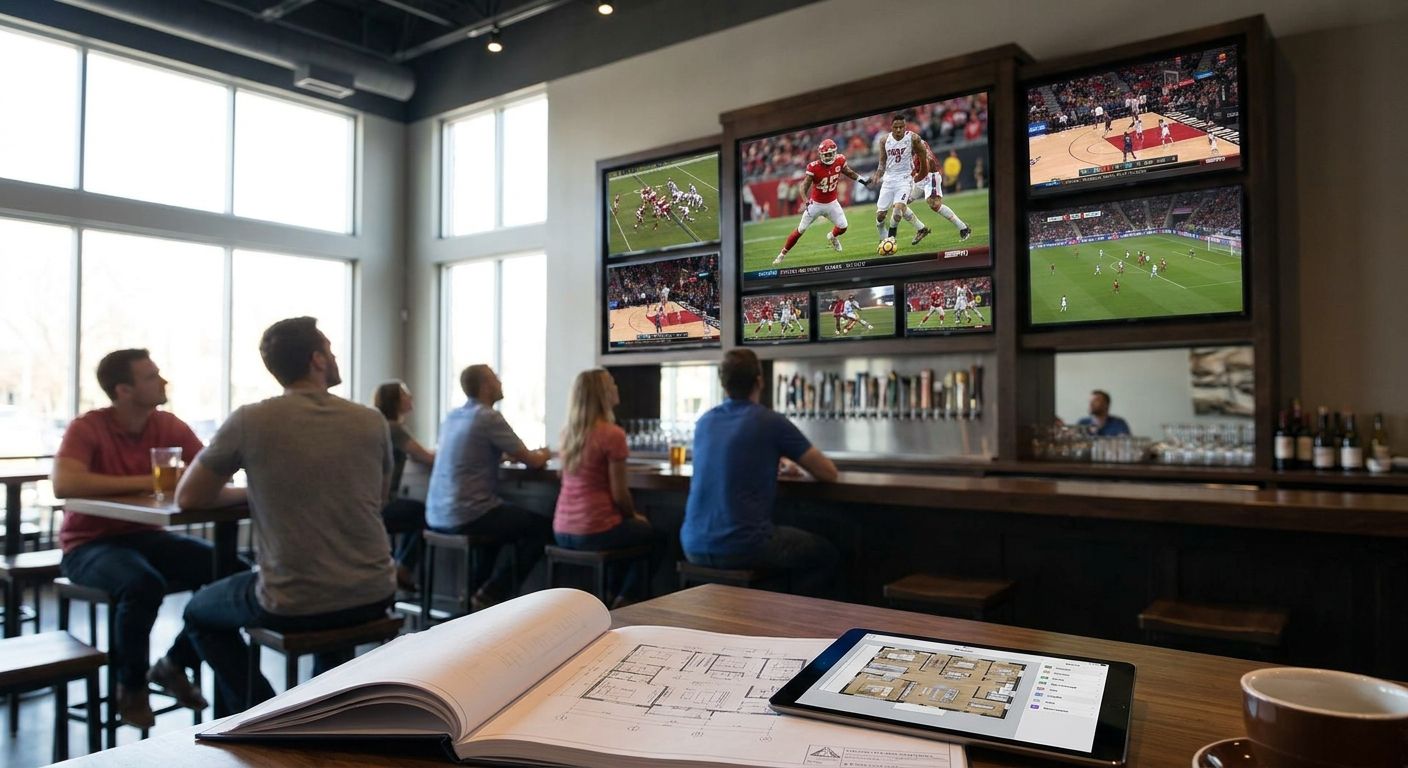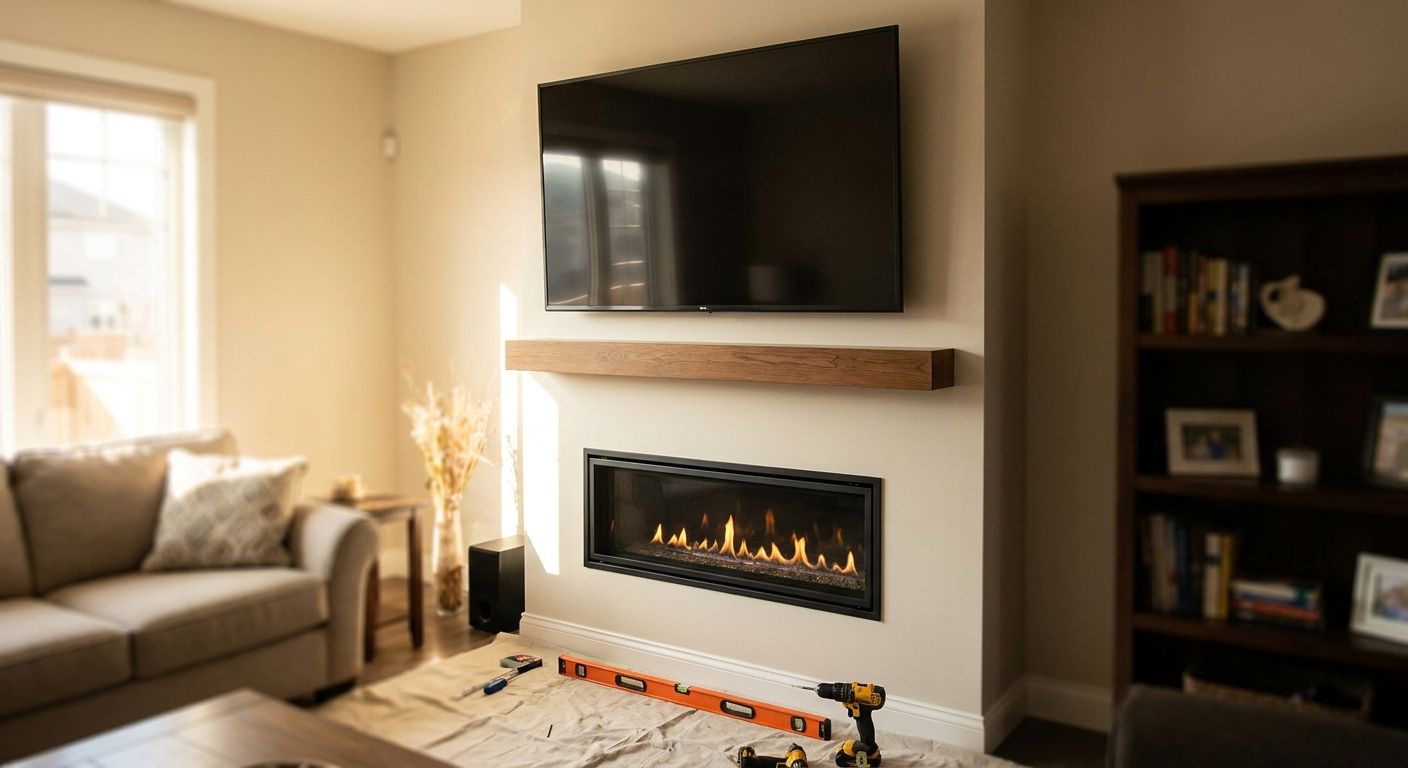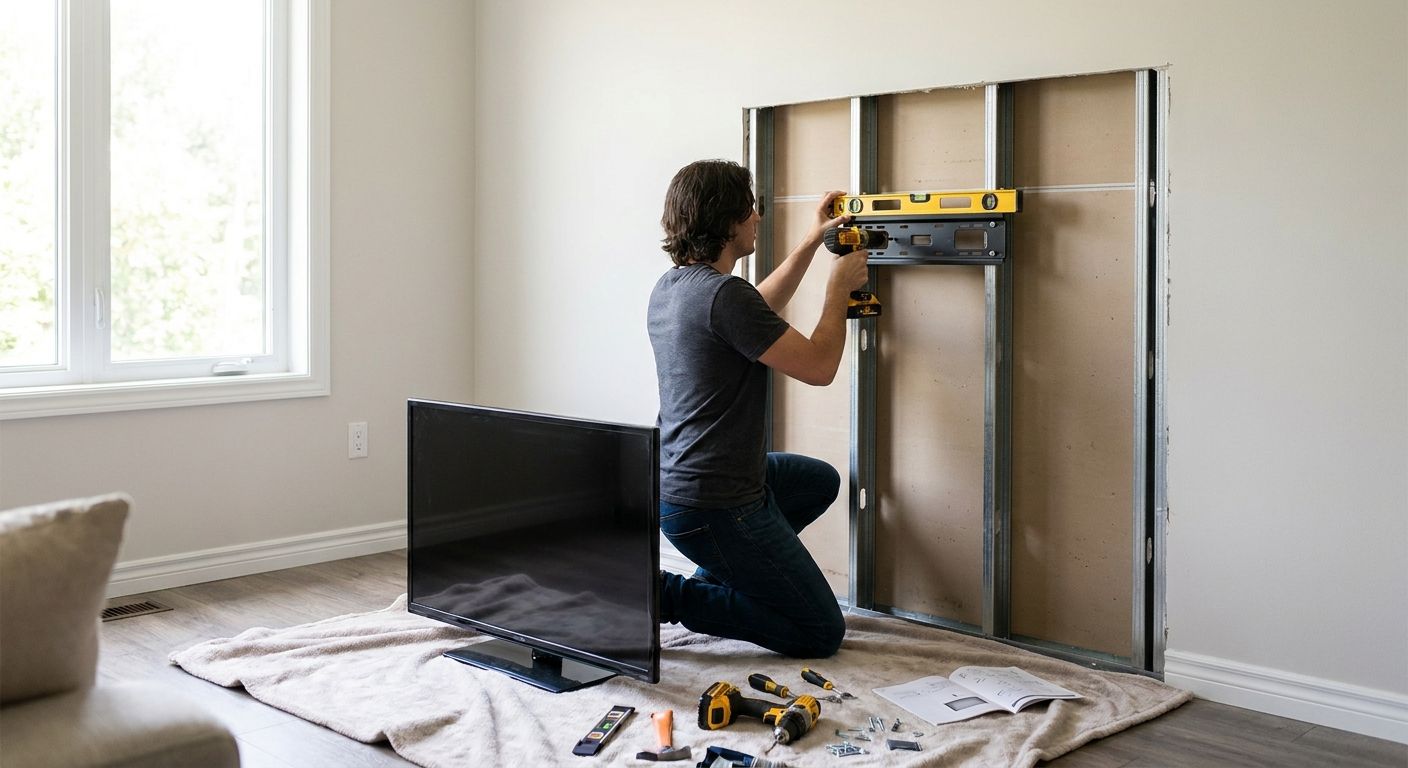
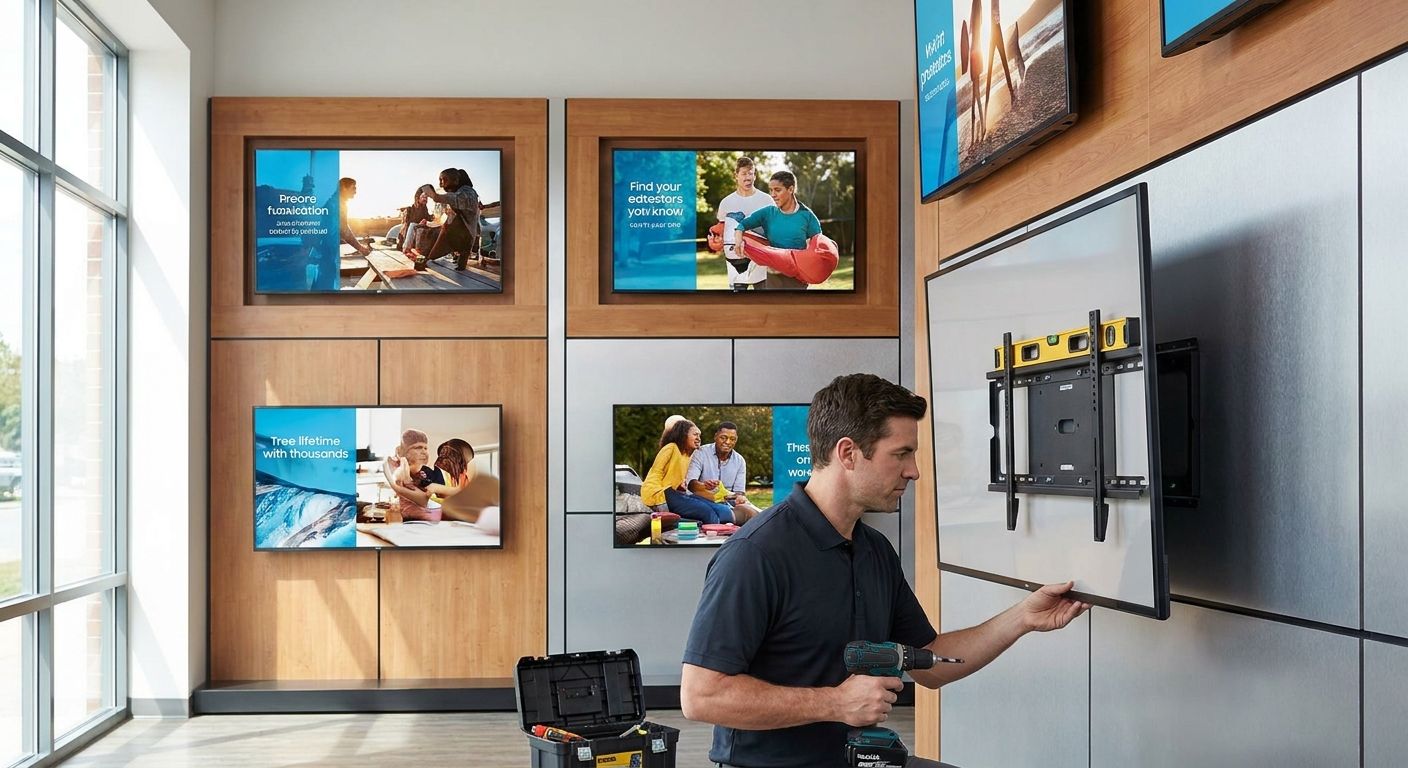
Retail floors and showrooms put TVs through more abuse in a month than a living room sees in five years — foot traffic, HVAC dust, theft risk, and sightlines that change every time a fixture gets moved. The TV Mount Men installs commercial displays across metro Atlanta retail and showroom spaces in 2026, and the mounting hardware that works in a house rarely survives a storefront.
- Fixed low-profile mounts are the safe pick for checkout-counter displays exposed to foot traffic.
- Full-motion tilt-swivel mounts win for showroom floor TVs that need to angle toward multiple sightlines.
- Locking anti-theft mounts are non-negotiable for tv mounting for retail stores in open-access areas.
- Standard drywall anchors fail in high-traffic retail within months; commercial installers use stud or toggle-bolt anchoring rated for repeated vibration.
Why this matters
A TV that falls off a wall in a living room is a bad day. A TV that falls in a retail aisle during business hours is a liability claim, a closed section of floor, and a customer with a lawyer's number saved. Retail and showroom mounting has to account for foot traffic vibration, tamper access, and viewing angles that serve a moving crowd instead of one couch.
Most store owners default to the same bracket a big-box retailer sells for home theaters. That bracket is rated for a stationary wall in a quiet room, not a checkout line or a demo floor with 200 people walking past it daily. The TV Mount Men treats retail mounting as commercial work — different anchoring, different hardware class, different install standards — because the failure mode is different.
Who this is for
This guide is for store owners, showroom managers, and facilities leads planning tv mounting for retail stores anywhere in metro Atlanta — boutiques adding a product demo screen, electronics showrooms building a comparison wall, and multi-location retailers standardizing signage across locations in 2026. If you're mounting a single TV in a private office or break room, the bar is lower; this is written for public-facing, high-traffic, or high-value displays.
What to look for in TV mounting for retail stores
Anti-theft and tamper resistance
Any display within arm's reach of the public needs a locking mount, not a standard tilt bracket. Locking mounts require a key or hex tool to remove the TV from the plate, which stops both casual theft and accidental knock-loose from carts or racks. Skip this on a checkout-counter TV and you're replacing it within the year.
Anchoring rated for foot traffic vibration
Drywall anchors sized for residential use loosen faster under the low-frequency vibration of foot traffic, HVAC cycling, and door slams that retail floors generate all day. Commercial installs anchor into studs or use toggle bolts rated well above the TV's weight, with the mount plate torqued to spec rather than hand-tightened. This is the single biggest reason retail TVs come loose within six months of a DIY install.
Viewing angle across multiple sightlines
A showroom floor has customers approaching from three or four directions, not one couch angle. A full-motion mount with 90-plus degrees of swivel lets one display serve an entrance, a browsing aisle, and a register line without three separate TVs. Fixed mounts only work when the display faces one predictable line of sight, like a queue or a single storefront window.
Wall and surface type
Retail buildings mix drywall, cinder block, brick feature walls, and glass storefronts — sometimes in the same space. Each surface needs different hardware: toggle bolts for hollow block, masonry anchors for brick, and specialty standoff mounts for glass. Assuming drywall hardware works everywhere is how mounts fail within the first quarter.
Cable management and code compliance
Exposed cords across a retail floor are a trip hazard and a fire-code flag if they cross an egress path. Cable channels, in-wall power kits, and conduit runs keep cords off the floor and keep the install compliant with local fire code — something a homeowner install rarely accounts for.
Lease and landlord terms
Most retail spaces are leased, and the lease often restricts what can be attached to walls, ceilings, or storefront glass. Confirm what's allowed before drilling — the same landlord-approval question that comes up in condo and HOA mounting projects applies just as often to retail tenants.
Get a retail mounting quote
Commercial-grade brackets, locking hardware, and code-compliant cable runs across metro Atlanta.
Top picks for retail and showroom displays
The safe pick — fixed low-profile mount for checkout counters. A fixed mount holds the TV within 1.5 inches of the wall with zero tilt or swivel, which means nothing to grab and nothing to loosen over time. Best for register displays, menu boards, and any screen viewed from one consistent angle. Buy for checkout and queue-line displays where traffic is heavy but the viewing angle never changes.
The flexible pick — full-motion tilt-swivel mount for showroom floors. A full-motion arm gives 90 to 180 degrees of swivel and 15 to 20 degrees of tilt, letting one display cover an entrance, an aisle, and a demo table without duplicating hardware. It costs more up front and needs a stud or toggle-bolt anchor point rated for the extended arm's leverage. Buy for open showroom floors with multiple approach angles; Skip it for a fixed queue line where the extra range never gets used.
The wildcard — ceiling-mounted video wall for demo areas. Electronics showrooms and comparison walls increasingly run two to four displays as a synced video wall, ceiling-dropped to clear floor fixtures below. It's the same alignment discipline as a multi-display home theater setup, just scaled to commercial power and mounting hardware. Consider it if the demo area is a real sales driver; Skip it for a single-product boutique where one screen already does the job.
The durability pick — locking mount rated for high-traffic zones. Locking, anti-theft mounts hold up in the same high-traffic, high-vibration conditions installers plan for in home gym mounting jobs — constant foot movement, occasional bumps, public access. Buy for any display within reach of customers on an open floor.
What to avoid
- Big-box residential brackets rated for one-time home installs. They look identical to commercial hardware in the box but aren't torque-rated for repeated vibration, and the warranty rarely covers commercial use.
- Adhesive or drywall-only anchors on feature walls. They hold for weeks, then fail exactly when the floor is busiest — usually during a sale event.
- Skipping the lease review. The same restrictions that trip up apartment and rental-property installs show up in retail leases too, and a landlord dispute over wall damage costs more than the mount itself.
Verdict comparison
| Mount type | Best for | Anchoring needed | Verdict |
|---|---|---|---|
| Fixed low-profile | Checkout, queue lines | Stud or toggle bolt | Buy |
| Full-motion tilt-swivel | Showroom floors, multiple sightlines | Reinforced stud anchor | Buy |
| Ceiling video wall | Demo areas, comparison walls | Ceiling joist mount | Consider |
| Locking anti-theft | Open floor, public access | Stud or masonry anchor | Buy |
| Residential fixed bracket | Any retail floor | Drywall anchor only | Skip |
FAQ
What's the best TV mount for a retail store?
A locking, full-motion mount anchored into studs or masonry is the best choice for most retail floors in 2026 because it resists both theft and vibration loosening. Fixed mounts work only when the viewing angle never changes, like at a checkout counter.
Is a full-motion mount better than a fixed mount for a showroom?
Yes, for a showroom floor with multiple approach angles, a full-motion mount serves more customer sightlines from one display. A fixed mount is better only for single-angle spots like a register line or narrow hallway.
How much does tv mounting for retail stores cost in 2026?
Pricing depends on wall type, mount type, and whether cable concealment or a new outlet is needed, so get a location-specific quote rather than a flat number. Commercial anti-theft hardware and ceiling video walls run higher than a single fixed mount.
Can you mount a TV on a glass storefront?
Yes, with a specialty standoff mount designed for glass rather than a standard wall bracket. Standard drywall or masonry hardware doesn't work on glass and risks cracking the pane.
Do retail TV mounts need to be locked or theft-resistant?
Any display within customer reach in an open retail floor should use a locking mount that requires a key or hex tool to remove. This is standard for checkout counters, demo tables, and open showroom floors.
How long does a commercial TV mounting job take?
A single fixed or tilt mount typically takes under two hours; multi-display video walls and in-wall cable runs take longer depending on wall type and power access. Business-hours scheduling can be arranged to minimize floor disruption.
Does a retail lease affect where TVs can be mounted?
Often yes — many commercial leases restrict what can be attached to walls, ceilings, or storefront glass. Confirm landlord terms before drilling, the same step required for condo, HOA, and rental-property installs.
One last thing
The detail most retail owners skip is torque spec, not mount selection — a full-motion arm rated for 100 pounds still fails if the lag bolts aren't torqued into an actual stud, and that's the single most common callback The TV Mount Men sees on retail floors in 2026. Pick the right bracket first, then make sure whoever installs it is checking anchor points with a stud finder, not eyeballing drywall.