A man cave or home theater lives or dies on the mount, not the TV. The wrong bracket puts glare on the screen, wrong height wrecks your neck by the third quarter, and a fixed mount on a wall built for wide-angle seating turns a 75-inch screen into a compromise every time.
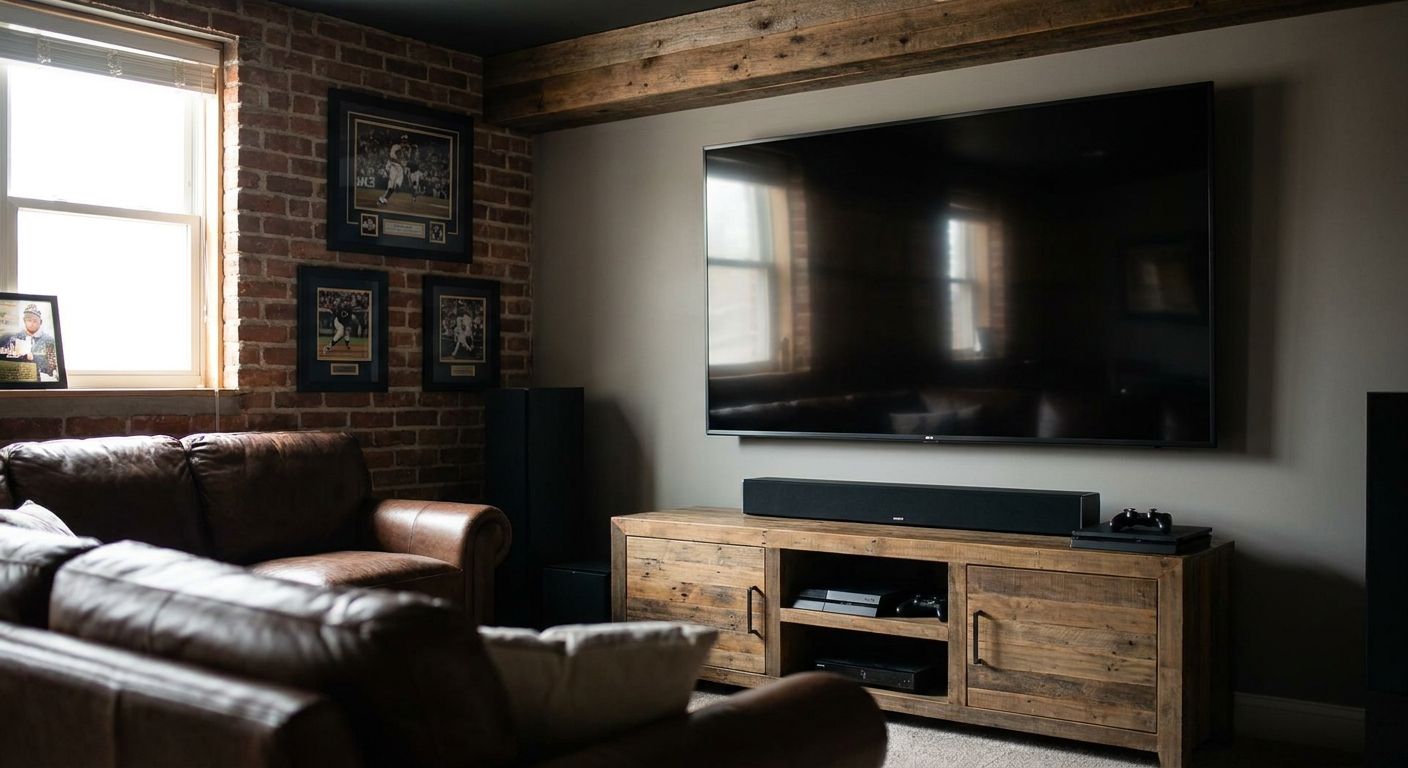
- Fixed mounts on drywall work for single-sightline man caves under 65 inches — Buy for budget builds.
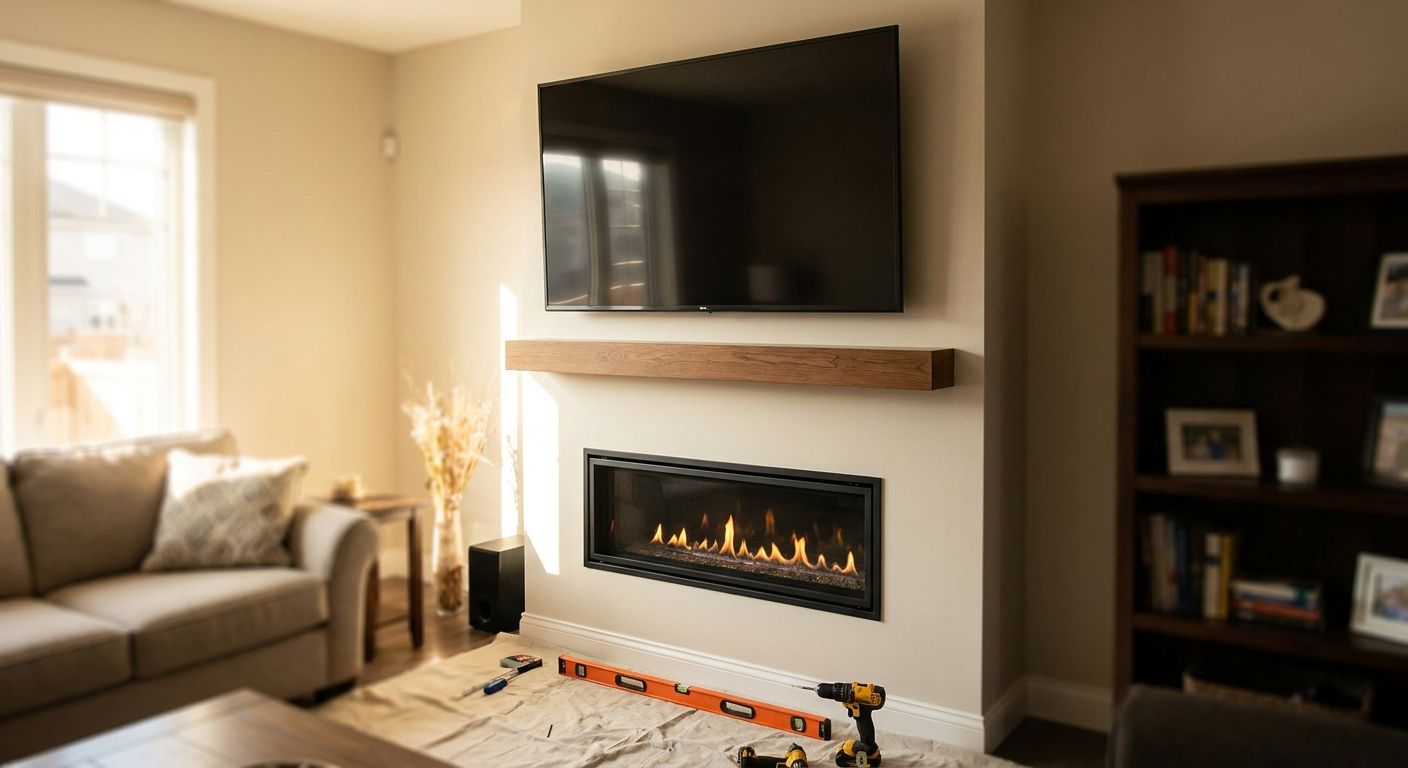
- Above-fireplace tilt mounts fix downward glare in sunken living rooms and basements — Buy when the fireplace is the focal wall.
- Full-motion articulating mounts win in sectional seating or wet bar layouts with multiple viewing angles — Consider for rooms wider than 14 feet.
- TV mounting for man cave builds over 85 inches needs a stud-anchored or heavy-duty bracket rated past 130 lbs — Buy only from a licensed installer.
Why this matters
A man cave gets built once and lived in for years, so the mounting decision made in 2026 is the one you're stuck with through every game day, movie night, and re-watch of a series you've already seen twice. Get the mount type wrong and you're either re-drilling drywall or living with a TV tilted at the wrong angle for your couch.
Most of the calls The TV Mount Men gets from Atlanta homeowners building out a basement or garage theater room aren't about the TV itself — they're about the wall. Brick fireplaces, exposed studs, unfinished drywall, and outlet placement all change which mount actually works.
Who this is for
This guide is for anyone finishing a dedicated viewing room — a basement man cave, a converted garage, or a formal home theater — where the TV is the centerpiece and the seating is fixed. If you're mounting a TV in a kitchen or a spare bedroom where a simple tilt bracket does the job, you don't need this level of planning. If you're building a room around a 65-inch or larger screen with a bar, a sectional, or theater seating, the mount type and wall prep decide whether the room feels finished or improvised.
What to look for in TV mounting for man cave builds
Wall type and stud spacing
Drywall over standard 16-inch stud spacing is the easiest surface to work with, but brick, stone veneer, and concrete block fireplaces need masonry anchors rated for the TV's weight class. A man cave built around a fireplace wall almost always means a mount that can handle brick without cracking mortar joints.
Mount type: fixed, tilt, or full-motion
Fixed mounts hold the TV flat against the wall and work when the seating is centered and at eye level. Tilt brackets angle the screen down 5 to 15 degrees, which matters when the TV sits above a fireplace mantel. Full-motion articulating mounts extend and swivel the screen, which is the right call for L-shaped sectionals or bar seating where viewers aren't sitting dead-center.
Viewing height and distance
The center of the screen should land close to seated eye level, which for most theater seating is 42 to 48 inches from the floor. Man caves with a fireplace often push the TV higher than that, which is exactly why a tilt bracket matters more here than in a bedroom install.
Cable management and outlet placement
A cord-free finish means running an in-wall power kit and low-voltage cable channel behind the mount before the bracket goes up, not after. Man caves with exposed brick or stone need surface raceways instead, since fishing cable through masonry isn't an option.
Bracket weight rating
A 55-inch TV typically weighs 25 to 40 lbs; a 75-inch to 85-inch TV can run past 70 lbs before you add a soundbar mount. Buy a bracket rated at least 30 percent above the TV's listed weight, especially on full-motion arms that put more stress on the wall plate than fixed mounts do.
Sound and speaker integration
If a soundbar or center-channel speaker is going under the TV, the mount needs enough drop or extension to clear the speaker without blocking the tweeters. This gets overlooked constantly in man cave builds where the soundbar gets added after the TV is already up.
Get your man cave mount planned right
Licensed, insured installation with a 5-year warranty across metro Atlanta.
Top picks for man caves and home theaters
The safe pick: fixed mount on drywall
For a single-sightline man cave with a couch centered on the wall, a fixed mount on drywall over 16-inch studs is the cheapest, most stable setup you can install. It works for TVs up to 65 inches without added strain on the wall plate, and it keeps the screen flush for the cleanest look. Verdict: Buy — it's the right call for straightforward layouts and holds up fine through 2026 and well beyond.
The showpiece: above-fireplace tilt mount
Mounting above a fireplace is the single most requested setup for man cave builds, and it needs a tilt bracket angled 10 to 15 degrees down to cut glare from overhead lighting. On brick or stone, this means masonry anchors instead of standard wall studs, and the height usually lands higher than the 42-to-48-inch ideal, which is why the tilt matters more here than anywhere else in the room. If you're planning this exact setup, the how-to guide for mounting over a brick fireplace walks through the anchor spacing and heat clearance in more detail. Verdict: Buy for finished fireplace walls, Consider if the mantel sits above 60 inches and neck strain becomes a real concern.
The command center: full-motion articulating mount
Sectional couches, wet bars, and wraparound seating all put viewers off-center from the TV, which is exactly the problem a full-motion mount solves. These brackets extend 18 to 24 inches off the wall and swivel up to 180 degrees, letting the screen angle toward whoever's actually watching. Verdict: Consider — worth the added cost in rooms wider than 14 feet, overkill in a straight-shot layout.
The oversized flex: heavy-duty tilt mount for 85-inch-plus screens
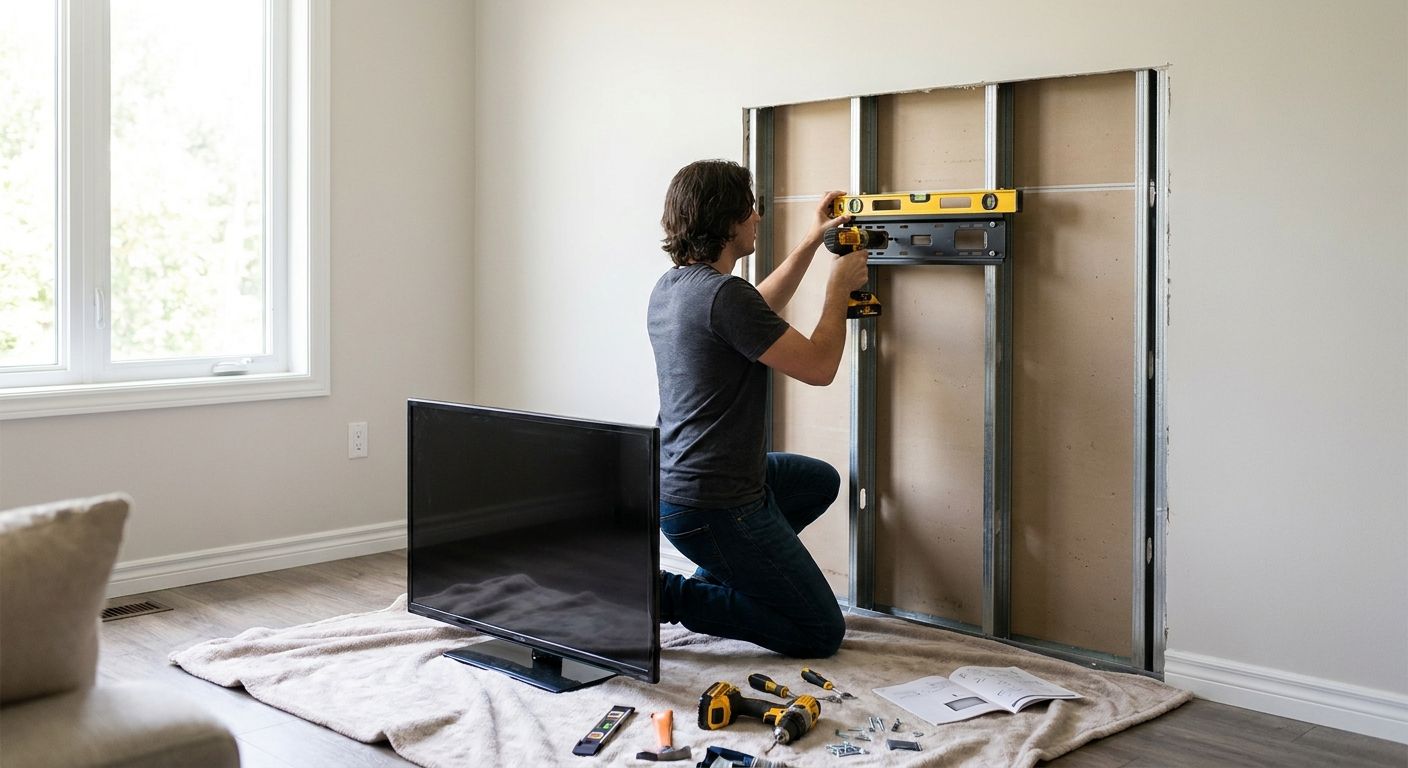
A 100-inch class TV mounted with a heavy-duty tilt bracket needs a wall plate rated well past 130 lbs and stud-anchored hardware, not standard drywall toggles. This is the setup that turns a basement into an actual theater room, and it's also the one where a DIY install goes wrong fastest — a bracket rated for 80 lbs holding a 95-lb screen is a matter of when, not if, it fails. Verdict: Buy, but only with a bracket rated for the actual panel weight and a licensed installer confirming stud placement.
What to avoid
- Cheap tilt brackets under-rated for the TV. A bracket that looks identical to a heavy-duty model but skips the weight rating is the most common failure point in man cave installs over 65 inches.
- Drywall anchors instead of stud mounts on TVs over 50 inches. Anchors hold picture frames, not 40-lb screens with a soundbar bolted underneath.
- Skipping the outlet relocation. A cord dangling down a finished fireplace wall undoes the entire point of a showpiece install.
Setup comparison
| Setup | Best Wall Type | Ideal TV Size | Mount Type | Verdict |
|---|---|---|---|---|
| Safe pick | Drywall, 16" studs | Up to 65" | Fixed | Buy |
| Showpiece | Brick, stone, or drywall fireplace | 55"-75" | Tilt | Buy |
| Command center | Drywall, open floor plan | 65"-85" | Full-motion | Consider |
| Oversized flex | Stud-anchored drywall | 85"-100"+ | Heavy-duty tilt | Buy (pro install only) |
FAQ
What's the best TV mount for a man cave?
A fixed mount works for centered seating under 65 inches, while a full-motion mount is the better call for sectionals or wet bar layouts with off-center viewing angles. The right choice depends on whether everyone in the room watches the screen from the same spot.
Is a full-motion mount worth it for a home theater?
Yes, in rooms wider than 14 feet or with seating that isn't centered on the wall. In a straight-shot layout with one couch facing the TV, a fixed mount does the same job for less money.
How high should a TV be mounted in a man cave?
The center of the screen should land close to 42 to 48 inches from the floor for seated eye level. Above-fireplace installs usually sit higher than that, which is why a tilt bracket matters more in those rooms.
Can you mount a TV over a brick fireplace safely?
Yes, with masonry anchors rated for the TV's weight and a tilt bracket angled to cut glare from the higher mounting position. Standard drywall hardware won't hold in brick or stone.
How much weight can a wall mount hold in a man cave?
Standard brackets hold 40 to 70 lbs, while heavy-duty tilt mounts for 85-inch-plus screens are rated past 130 lbs. Buy a bracket rated at least 30 percent above the TV's actual weight, especially with a soundbar attached underneath.
Is professional TV mounting worth it over DIY for a home theater?
For TVs over 65 inches or any fireplace wall, yes — stud location and anchor type matter more than most DIY installs account for. A licensed and insured installer also backs the work with a warranty, which a DIY mount doesn't come with.
Does cable management matter for a man cave TV setup?
Yes, an in-wall power kit and cable channel behind the mount give a cord-free finish that a surface-mounted power strip never will. On brick or stone walls, a surface raceway is the workaround since fishing cable through masonry isn't practical.
One last thing
The detail most man cave builds skip is the outlet behind the TV, not the bracket. A tilt mount rated for 130 lbs means nothing if the cord still runs down the wall to a floor outlet — the finished look people actually notice comes from the power kit installed behind the mount, not the hardware holding the screen up.
TV mounting for man cave and home theater rooms in metro Atlanta comes down to matching the bracket to the wall and the seating, not picking the biggest TV the budget allows. Licensed and insured installation with a 5-year warranty backs every job across 10,000-plus installations and 300-plus five-star reviews, which is the difference between a mount that lasts through 2026 and one that needs a redo in eighteen months.