Condo and HOA TV mounting comes down to one variable most guides skip: the wall isn't fully yours to drill into, and the board might inspect it later. This guide breaks down which mounts pass HOA review in metro Atlanta condos, which walls need different hardware, and which setups cost you at move-out.
- Fixed low-profile brackets on drywall over studs are the safe tv mounting for condos pick in 2026 — book it.
- HOA bylaws and shared/party walls decide bracket type before TV size does.
- A 100-inch TV went up with a tilt bracket in a Woodstock, GA basement; 40-inch fixed mounts worked in Rockmart and Carrollton bedrooms — both approaches translate to condo layouts.
- Skip full-motion arms in rental or HOA-governed condos — the bigger anchor footprint costs more to patch when you move out.
Why this matters
A condo wall is rarely a simple stud-and-drywall cavity. It might be a shared party wall, a concrete block wall between units, or a fireplace surround the HOA lists as a common element. Mount the wrong bracket into any of those and you're either violating the governing documents or paying to patch it before you sell.
The TV Mount Men has handled installs across metro Atlanta on every wall type condos throw at a crew — drywall over studs, brick, and masonry — and licensed, insured work with a 5-year warranty is what protects you when a board asks who did the drilling. The TV Mount Men works these jobs across the metro, and that experience is what separates a clean condo install from a wall repair bill.
Who this is for
This is for condo owners and renters in HOA-governed buildings across metro Atlanta who need a TV mounted without triggering a violation notice or damaging a wall they don't fully control. If you own a single-family home with no HOA, most of the wall-type and modification-policy sections below don't apply — go with whatever bracket fits your TV size and skip ahead to the top picks.
What to look for in TV mounting for condos
HOA modification rules and wall damage policies
Check the governing documents before any hardware goes up — some HOAs classify exterior-facing or shared walls as common elements you can't drill without written approval. Skipping this step is the single most common reason condo owners get a violation letter after an otherwise clean install.
Wall type behind the TV
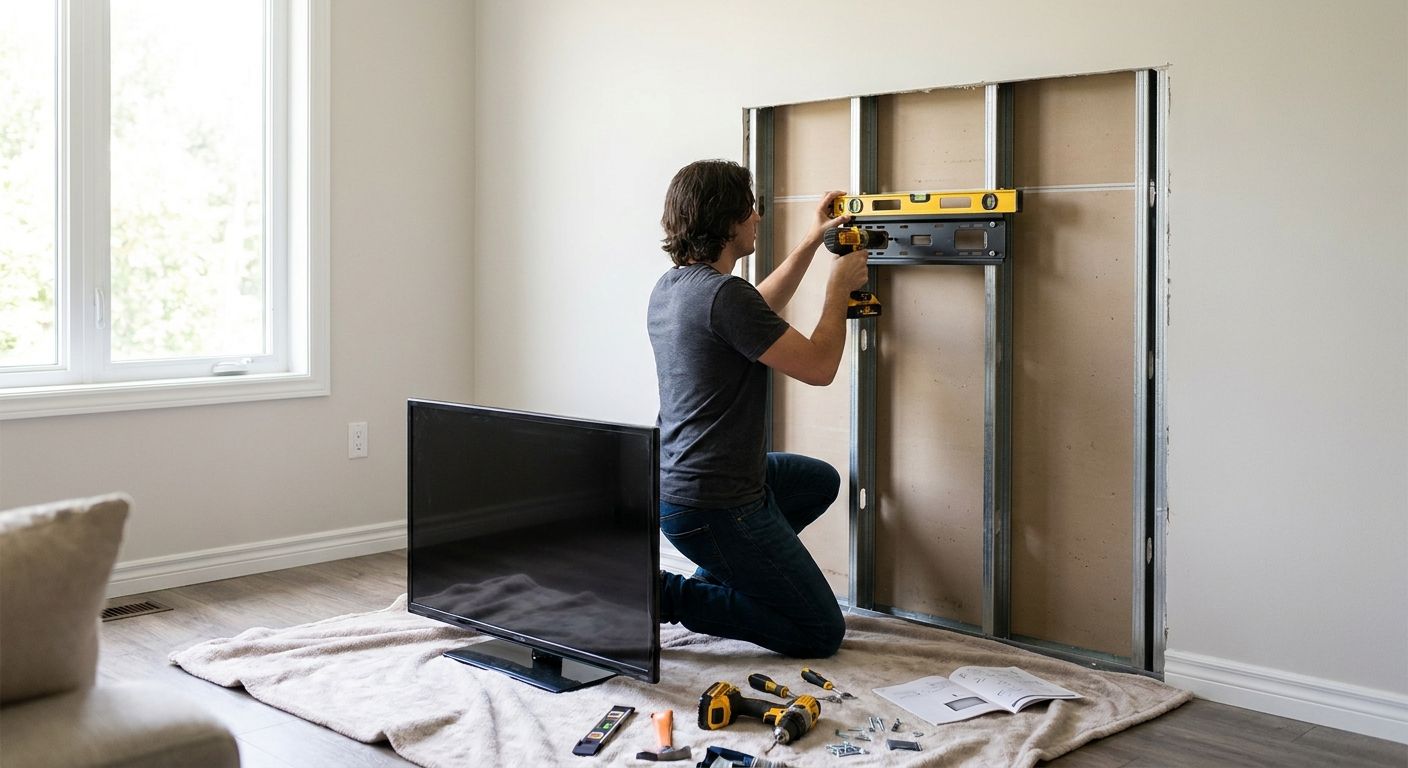
Drywall over wood studs takes standard toggle or stud-mounted hardware. Concrete block, poured concrete, or brick party walls need masonry-rated anchors, which is a different job entirely and should be flagged before scheduling.
Cord concealment for shared or inspected units
Exposed cords running across a wall are the visual flag most HOA boards cite in inspections. An in-wall cord kit or a new outlet installed behind the TV keeps the finish clean and avoids that complaint entirely.
Mount type for small floor plans
Condos run smaller than single-family living rooms, so a bulky full-motion arm eats floor space it doesn't have room to spare. A fixed or low-profile tilt bracket keeps the TV close to the wall in a room where every foot counts.
Weight limits and anchor points on shared walls
A shared wall carries load for both units, so the anchor points matter more than in a standalone home. Matching bracket weight rating to TV size isn't optional here — it's the difference between a secure mount and a callback.
Reversibility at move-out
Renters and condo owners planning to sell need holes that patch cleanly. A fixed bracket with four to six anchor points patches faster and cheaper than a full-motion arm with a wider footprint.
Top picks for condo TV mounts
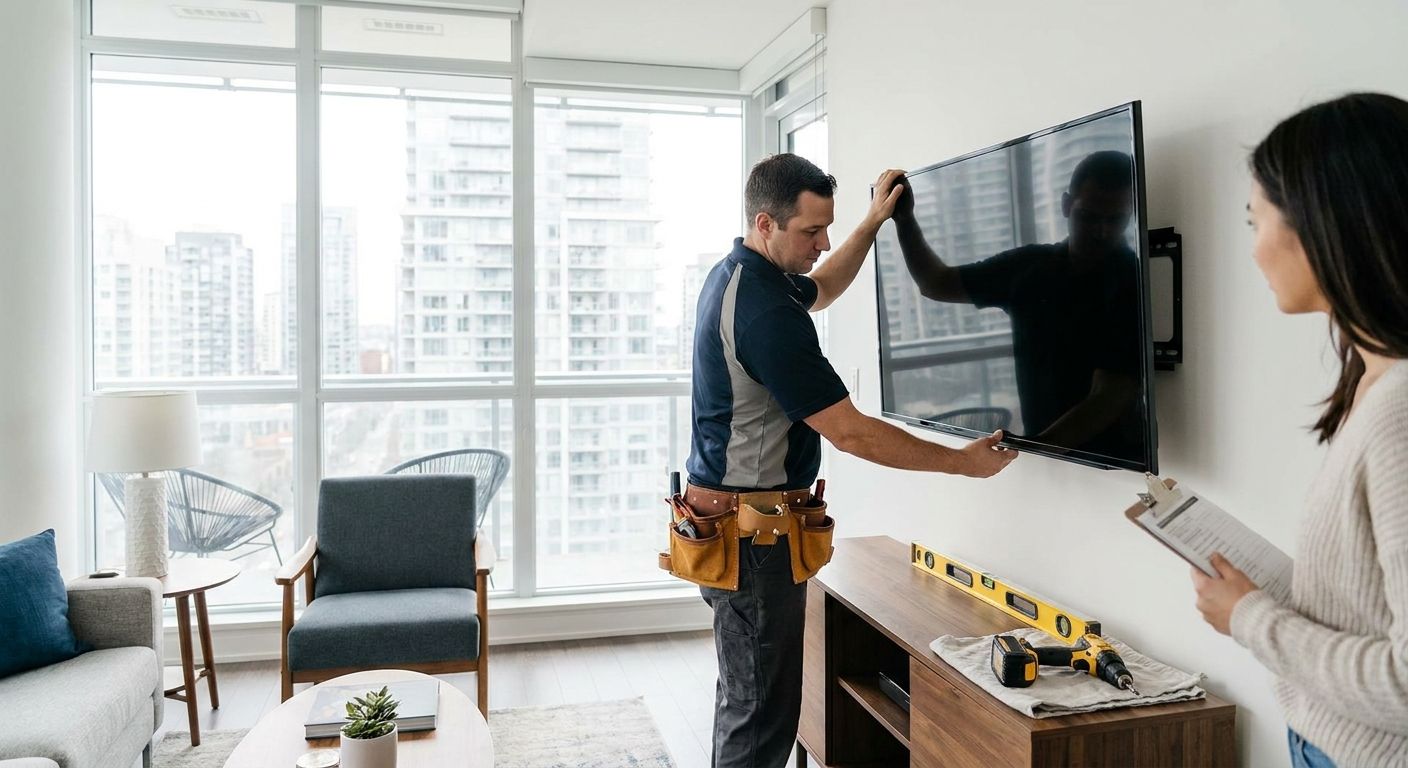
Fixed low-profile bracket — the safe pick. TV sits close to the wall with no tilt or swivel hardware to inspect, which is exactly what most HOA boards want to see. This is the bracket used on compact bedroom installs like the 40-inch fixed mounts done in Rockmart and Carrollton, GA — small footprint, clean finish, minimal anchor points. Book it for any condo bedroom or secondary living space.
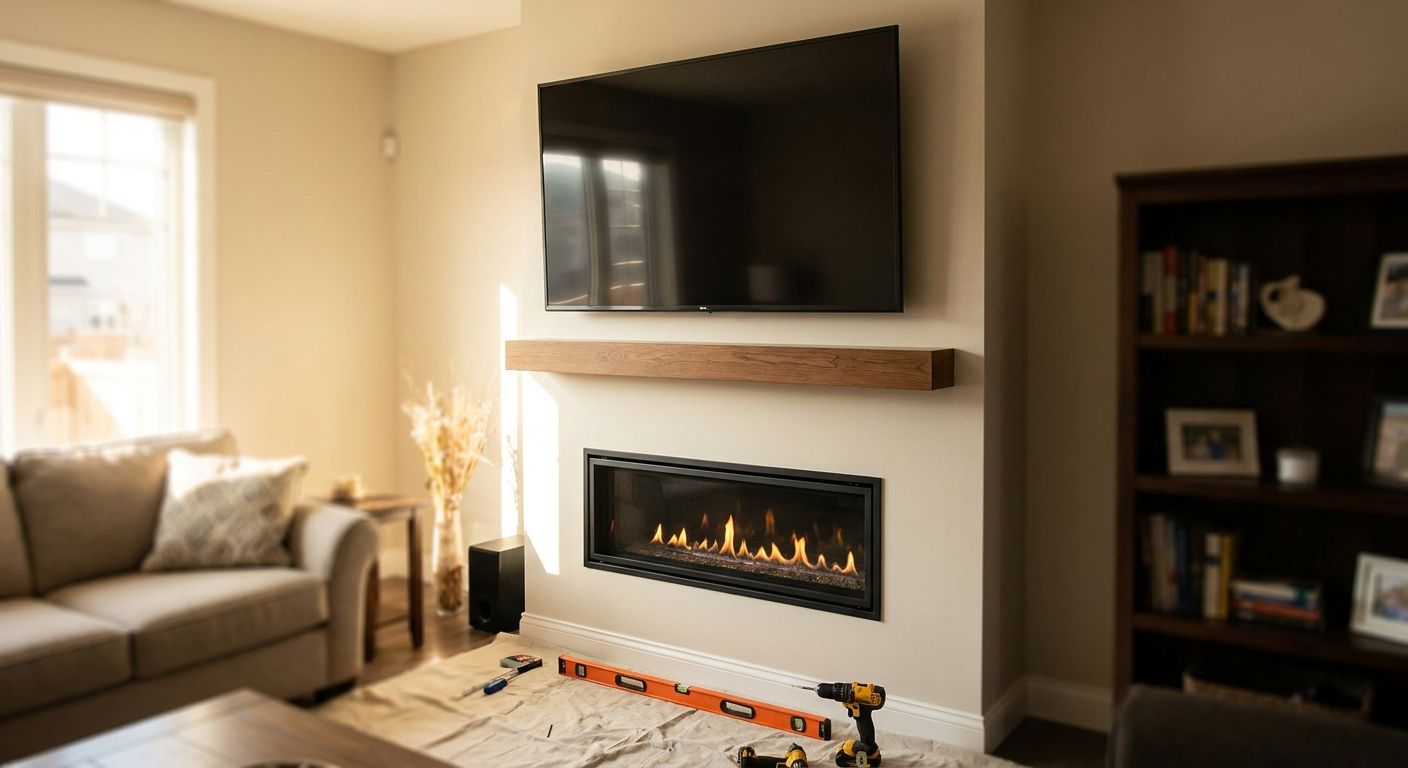
Tilt bracket for fireplace focal walls — consider. Condos that put the fireplace at the center of the living room need a bracket that tilts the screen down without extending it off the wall — the same approach used on a 100-inch TV mount in a Woodstock, GA basement with a new outlet run behind it for a cord-free finish. Fireplace walls in condos are frequently brick or masonry, so this pick only works with masonry-rated anchors, not standard stud hardware. Consider it if your living room centers on a fireplace and the wall isn't classified as a common element.
Masonry anchor kit for concrete or block party walls — consider. Condos built with poured concrete or block walls between units can't take a standard stud finder to the job — the anchors need to bite into masonry, not drywall. This is a different install than a wood-frame wall and should be scoped as one. Consider it only after confirming the wall material; guessing here is how brackets come loose.
Full-motion articulating arm — the wildcard, skip for renters. It swings the TV away from the wall for cross-room viewing, which sounds good until you're the one patching a wider anchor pattern at move-out. In an HOA-governed unit where the wall isn't fully yours, the extra footprint and extra approval risk outweigh the viewing-angle benefit. Skip it unless you own the unit outright and plan to stay long-term.
Get a condo mounting quote
Licensed, insured installs across metro Atlanta with a 5-year warranty.
What to avoid in condo TV installs
- Drilling into a shared or party wall without checking the governing documents first. Some HOAs treat these as common elements, and unauthorized drilling can trigger a violation notice regardless of how clean the install looks.
- Standard drywall anchors on brick or concrete block walls. They won't hold TV weight long-term on masonry, and the failure mode is the TV coming off the wall, not a loose screw.
- Cords stapled or run exposed across the wall to save on an outlet install. This is the first thing most condo boards flag during a walk-through, and it's avoidable with a proper cord-concealment kit or a new outlet behind the TV.
Verdict comparison
| Mount type | Wall profile | Best for | Verdict |
|---|---|---|---|
| Fixed low-profile | Flush to wall | Bedrooms, small living rooms | Book it |
| Tilt bracket | Slight downward angle | Fireplace focal walls | Consider |
| Masonry anchor kit | Depends on bracket used | Concrete or block party walls | Consider |
| Full-motion arm | Extends off wall | Owner-occupied, long-term stay | Skip for renters |
FAQ
What's the best TV mounting option for condos?
A fixed or low-profile tilt bracket on drywall over studs is the best tv mounting for condos option in 2026 because it keeps the wall footprint small and patches cleanly at move-out. Full-motion arms work only for owners staying long-term in units they fully control.
Do I need HOA approval to mount a TV in an Atlanta condo?
Check the governing documents before drilling, since some HOAs classify shared or exterior-facing walls as common elements requiring written approval. Interior walls inside your own unit are usually fine without a formal request.
Can a TV be mounted on a shared party wall?
Yes, but shared party walls often need masonry-rated anchors instead of standard stud hardware, especially in buildings with concrete or block construction. Confirm the wall material before scheduling the install.
Is mounting a TV over a fireplace different in a condo?
Yes — fireplace surrounds in condos are frequently brick or masonry and count as a different job than a standard drywall mount. A 100-inch TV mounted with a tilt bracket in a Woodstock, GA basement used this exact approach with a new outlet run behind it.
Will mounting a TV damage my condo wall?
A fixed bracket with four to six anchor points patches easily when you move out, while a full-motion arm leaves a wider pattern that costs more to repair. Choosing the right bracket up front avoids the bigger patch job later.
Do condo walls need special anchors compared to houses?
Concrete block or poured concrete party walls, common in some condo buildings, need masonry-rated anchors instead of the toggle bolts used on standard drywall over studs. Confirming wall type before the install prevents a bracket that won't hold long-term.
How is cord concealment handled in a condo TV mount?
An in-wall cord kit or a new outlet installed behind the TV keeps cords out of sight, which matters more in condos where exposed cords are a common HOA inspection flag. Both options were used on past installs, including a 100-inch mount in Woodstock, GA.
Should renters mount a TV in a condo differently than owners?
Renters should stick to fixed low-profile brackets with minimal anchor points since the wall needs to return to its original condition at move-out. Owners planning to stay long-term have more room to consider full-motion arms.
One last thing
The wall material decides the bracket before the TV size does — a 100-inch TV and a 32-inch TV can both go on the same fixed bracket type if the wall behind them is drywall over studs, but swap that wall for concrete block and the hardware changes completely regardless of screen size. Confirm wall type first in 2026, pick the bracket second.