Garages and workshops throw curveballs that living rooms never do: cinder block walls, exposed studs, temperature swings past 100°F in summer, and dust that clogs vents in a season. Tv mounting for garage spaces means picking hardware and placement that survives conditions no living-room mount ever sees.
- Full-motion mounts on 16-inch stud centers handle the vibration and dust of a working garage — fixed mounts crack drywall anchors faster in unconditioned spaces.
- Tv mounting for garage walls over cinder block or metal studs needs different anchors than drywall — verify wall type before buying a bracket.
- The TV Mount Men has completed 10,000+ installations across metro Atlanta in 2026, including garage man-cave and workshop setups.
- Garage TVs exposed to open bay doors need the same weather logic as a patio install — skip it and the panel fails within a year.
Why this matters
A TV bought for a den doesn't automatically work in a garage. Unconditioned space in Georgia swings from freezing mornings to 100°F+ afternoons in July, and that thermal cycling is hard on both the panel and the adhesive behind wall anchors. Add dust from woodworking or a car project, plus the vibration of a garage door opener 15 feet away, and a mount rated for a bedroom wall starts to loosen within a year or two.
Getting tv mounting for garage right in 2026 comes down to three things: knowing what's actually behind the wall, picking a bracket rated for the environment, and routing cords so they survive contact with tools, bikes, or a workbench. The TV Mount Men has mounted TVs in garages converted to man caves, home gyms, and workshop breakrooms across metro Atlanta, and the failure points are consistent enough to plan around.
Who this is for
This guide is for anyone converting a garage bay into usable living space — a man cave for game days, a home gym with a TV for workout streaming, a workshop with background noise while you work, or a finished bonus room that happens to share a wall with the car. If your garage is fully conditioned and finished like an interior room, standard drywall guidance applies. If it's a working garage with exposed studs, block walls, or seasonal temperature swings, the calculus changes.
What to look for in tv mounting for garage spaces
Wall material and structural backing
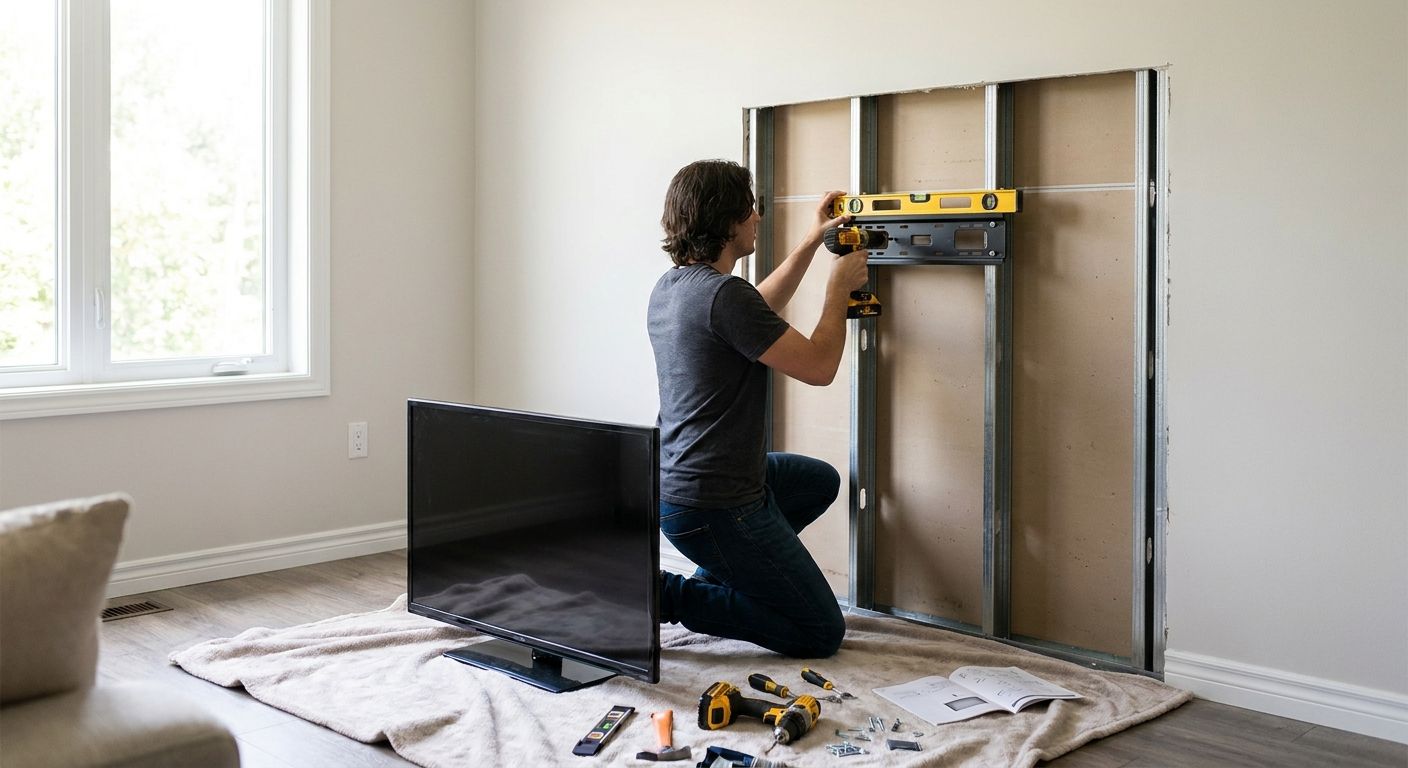
Garages rarely have the same wall assembly as the rest of the house. Cinder block, exposed 2x4 or 2x6 studs, and metal framing are all common, and each one needs a different anchor strategy — masonry screws for block, lag bolts into studs for wood framing, and toggle bolts rated for metal studs. Guessing wrong here is the single most common reason a garage-mounted TV comes off the wall.
Mount type: fixed, tilt, or full-motion
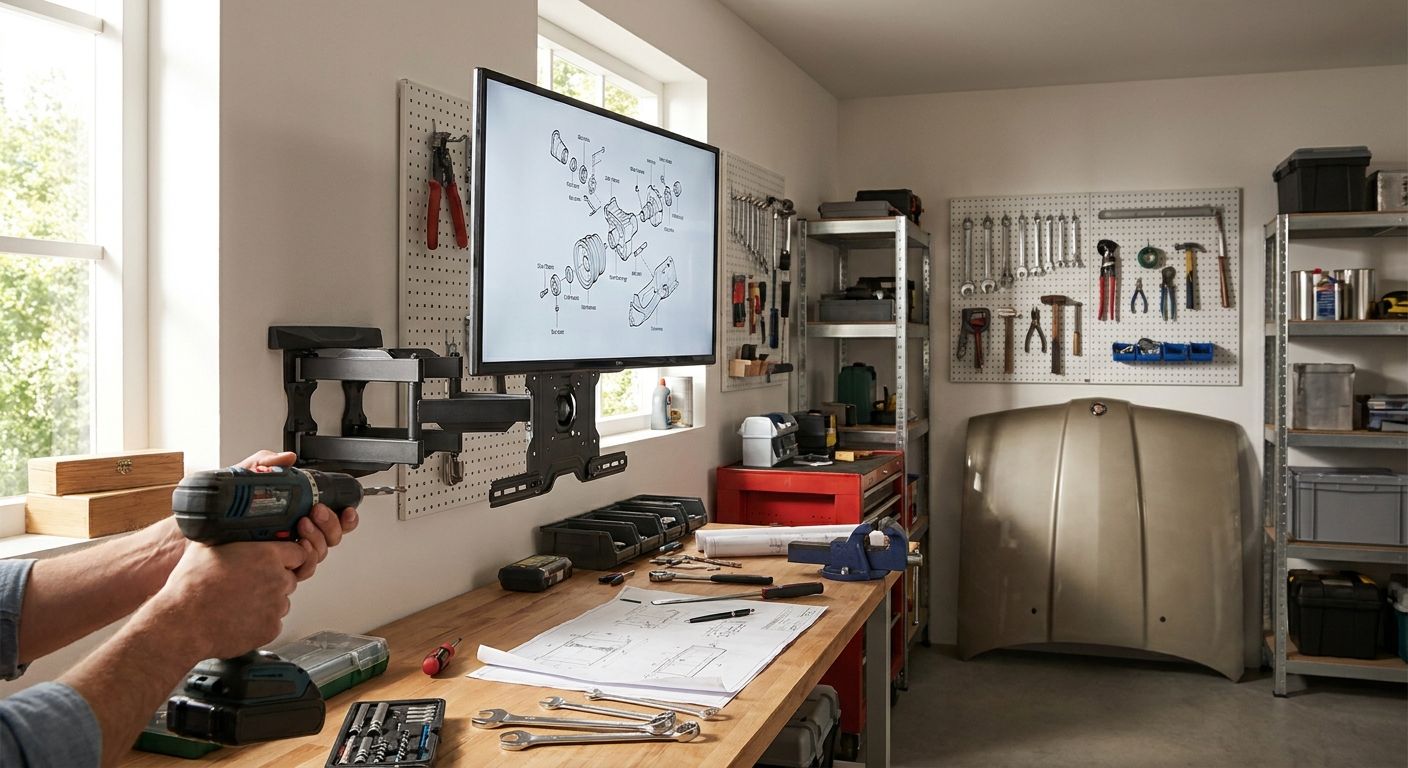
A fixed mount works fine in a finished man cave where the seating is set. A workshop or home gym benefits from a tilt or full-motion arm so the screen adjusts as you move around the space. Full-motion mounts rated to handle screens up to 100 lbs give the range most garage setups need, since VESA patterns on 55-inch to 75-inch TVs typically fall well under that ceiling.
Temperature and humidity exposure
Unconditioned garages hit temperature extremes that stress both the TV panel and the mount's adhesive backing plate, if one is used instead of through-stud bolting. If the garage isn't insulated or climate-controlled, through-stud mounting beats any adhesive-assisted bracket, and the TV itself should be a model rated for wider operating temperature ranges when the manufacturer specifies one.
Cord management and outlet placement
Workshop garages have extension cords, air compressors, and power tools already fighting for outlet space. Running a dedicated outlet behind the TV — the same approach used on drywall installs in living spaces — keeps cords out of reach of moving equipment and off the floor where they're a trip hazard near a workbench.
Viewing height and clearance from impact zones
Mount height in a garage isn't just about eye level — it's about staying clear of garage door tracks, ceiling-mounted storage racks, and the swing path of a car door. A TV mounted at 60 to 65 inches to center typically clears both sightlines and hazard zones in a two-car bay.
Get a garage TV mount quote
Licensed and insured installers serving metro Atlanta garages and workshops.
Top picks by garage use case
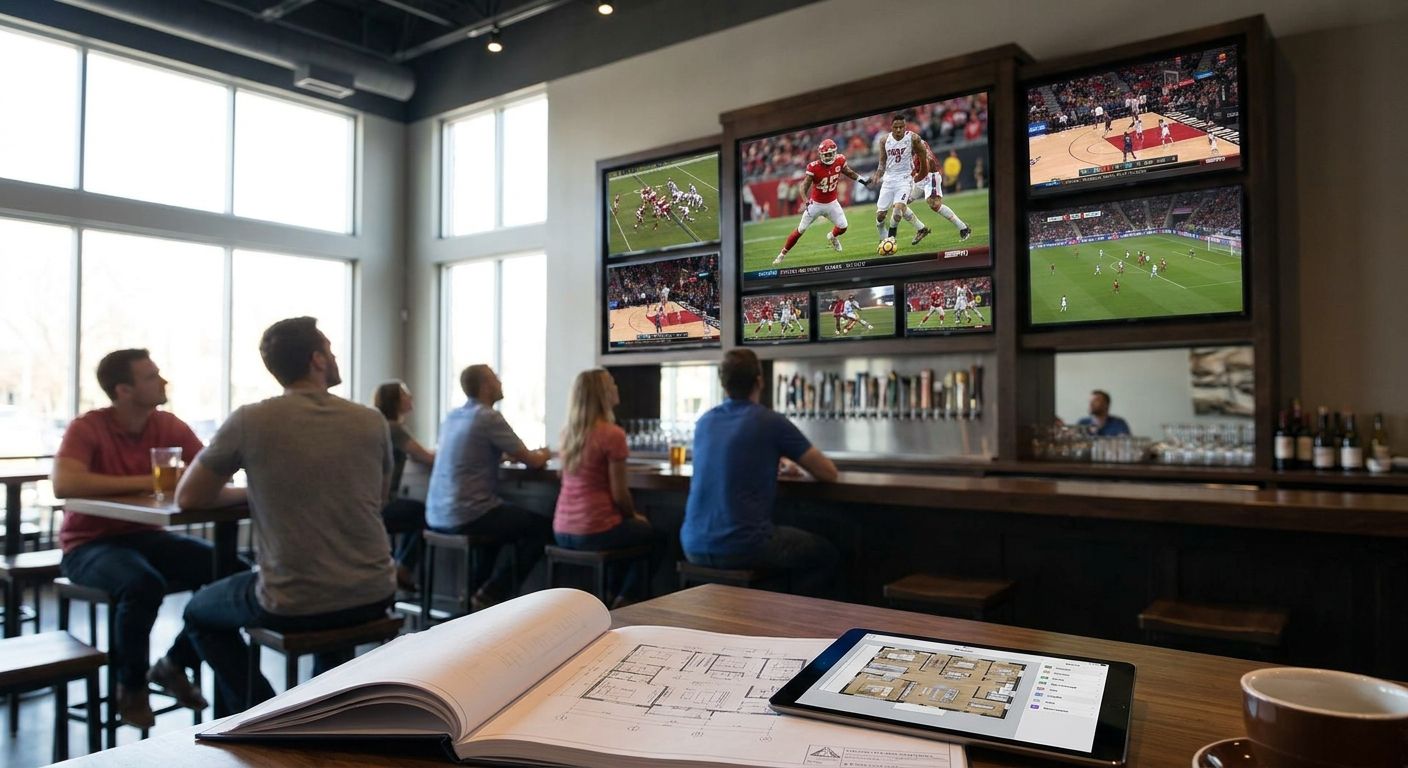
The man-cave conversion — the safe pick. A finished garage bay turned into a dedicated viewing room usually takes a 65-inch to 75-inch TV on a tilt or full-motion bracket bolted into studs behind drywall, the same setup used in man cave and home theater installs. One spec that matters: mount at 42 to 48 inches to center if seating is low, closer to 60 inches if it's a standing bar setup. Buy — this is the most predictable install in the garage category.
The home-gym garage — the practical pick. Garages converted into workout space need a full-motion arm so the screen tilts and swivels toward a treadmill or weight bench, similar logic to home gym TV installs. A 43-inch to 55-inch screen at 65 inches to center clears most equipment. Buy if the gym layout is fixed; Consider a shorter arm if equipment gets rearranged often.
The open-bay game day setup — the wildcard. If the garage door stays open for game days or gatherings, the TV faces the same humidity and dust exposure as an outdoor install — the environment closer to patio and porch mounting than to a sealed interior room. This calls for a TV rated for higher humidity tolerance or a fully enclosed cabinet when the TV isn't in use. Consider — works, but skip it if the bay stays open more than a few hours at a time in Georgia summer humidity.
The workshop background TV — the budget pick. For a small screen mounted for background noise while working on a project, a 32-inch fixed mount on a stud or metal-stud toggle bolt is enough. No tilt arm needed since nobody's adjusting the angle mid-project. Buy for the low cost and simplicity; Skip the full-motion arm here — it's spending money on a feature the use case doesn't need.
What to avoid
- Adhesive-only mounting brackets on block or brick walls. They hold in a temperature-controlled room; a garage's swings past 100°F in summer and near-freezing in winter will loosen the bond within a season or two.
- Skipping a dedicated outlet behind the TV. Running an extension cord across a garage floor near a workbench or car bay is a trip and fire hazard, not a shortcut.
- Mounting directly over a garage door track or opener rail. It looks like open wall space until the door cycles and the TV is in the impact path.
Verdict comparison
| Setup | Mount type | Screen size | Verdict |
|---|---|---|---|
| Man-cave conversion | Tilt or full-motion, stud-mounted | 65"–75" | Buy |
| Home-gym garage | Full-motion arm | 43"–55" | Buy |
| Open-bay game day | Full-motion, humidity-rated | 55"–65" | Consider |
| Workshop background | Fixed, toggle-bolt | 32" | Buy (skip full-motion) |
FAQ
What's the best way to handle tv mounting for garage walls made of cinder block?
Masonry anchors rated for the mount's weight class are the standard fix for cinder block, since standard drywall toggle bolts won't grip. A licensed installer checks the block condition first, since older or cracked block needs a different anchor depth.
Is a full-motion mount better than a fixed mount for a garage?
Full-motion mounts work better in garages used as gyms or workshops where the viewing angle changes, while fixed mounts are fine for a man cave with set seating. The choice depends on whether the room layout stays static.
How much does tv mounting for garage installs typically cost in 2026?
Cost depends on wall type, mount style, and whether a new outlet is needed behind the TV, since garage walls often require different anchors than interior drywall. Get a quote based on the specific wall material and TV size.
Can a TV stay mounted in an unheated garage year-round in Georgia?
Many TVs handle Georgia's temperature swings fine when mounted with through-stud bolting rather than adhesive brackets, but manufacturer operating temperature ranges vary by model. Checking the TV's spec sheet before a permanent install avoids early panel failure.
Does a garage TV need weatherproofing if the door stays open often?
A garage with the door open regularly faces humidity and dust exposure closer to an outdoor patio setup than a sealed room. A TV rated for higher humidity tolerance or a protective cabinet extends its life in that environment.
What size TV fits a two-car garage bay for a man cave?
A 65-inch to 75-inch TV fits comfortably in most two-car garage bays once seating distance is factored in. Mounting height between 42 and 60 inches to center covers both seated and standing viewing setups.
Do garage TV mounts need a dedicated outlet?
A dedicated outlet behind the TV keeps cords away from tools, vehicles, and foot traffic, which matters more in a garage than in a living room. It also gives a cleaner, cord-free finish similar to drywall installs elsewhere in the house.
Is metal stud framing common in garages, and does it change the mount?
Metal stud framing shows up in some garage additions and finished bonus rooms, and it requires toggle bolts rated for metal rather than standard wood-stud lag bolts. Confirming stud type before drilling avoids a failed anchor point.
One last thing
The detail most people skip: garage door openers vibrate the surrounding wall every time the door cycles, and that vibration loosens screws over months, not years. A stud-bolted bracket with a locking mechanism handles it; an adhesive strip or drywall-anchor-only mount doesn't, and it's the quiet reason a garage TV that seemed fine for a year suddenly tilts.