College move-in in Atlanta means one wall, one TV, and usually zero drywall — most dorm buildings at Georgia schools are built on cinderblock or concrete block, and that changes everything about how a TV gets mounted. This guide covers TV mounting for dorm room walls, off-campus apartments, and student housing common areas, with the mount type, wall approach, and verdict for each.
- TV mounting for dorm room walls needs masonry anchors, not drywall toggles — cinderblock is standard in most Georgia dorms. Buy with housing approval.
- Off-campus apartments and condos take drywall mounts; The TV Mount Men installs both without voiding a lease. Buy.
- Fixed or low-profile tilt mounts beat full-motion arms in dorm rooms under 130 square feet — arm swing hits desks and lofted beds.
- Student housing common areas and basement game rooms need cord management planned before install day, not after.
Why this matters
A TV mounted wrong in a dorm room does two things: it voids a housing deposit and it falls. Cinderblock dorm walls hold a TV fine when the anchor is rated for masonry, but the same anchor kit that works on drywall in an apartment strips out of block within a semester. Getting the wall type right before drilling is the entire job — everything else (bracket choice, cable routing, TV size) is secondary.
The TV Mount Men has installed TVs across metro Atlanta on drywall, brick, and block, and the dorm/college housing category is its own animal because the wall material, the lease terms, and the room footprint are all fixed constraints nobody gets to change.
Who this is for
This guide is for parents and students setting up a dorm room or off-campus apartment ahead of a move-in weekend, and for property managers running student housing complexes near campuses like Georgia Tech, KSU, or Emory who need mounts installed across multiple units without damaging leased walls. If the room has a cinderblock wall, a lofted bed, and a housing office that requires pre-approval, this is written for that exact situation.
What to look for in TV mounting for dorm room and college housing
Wall material — cinderblock vs. drywall
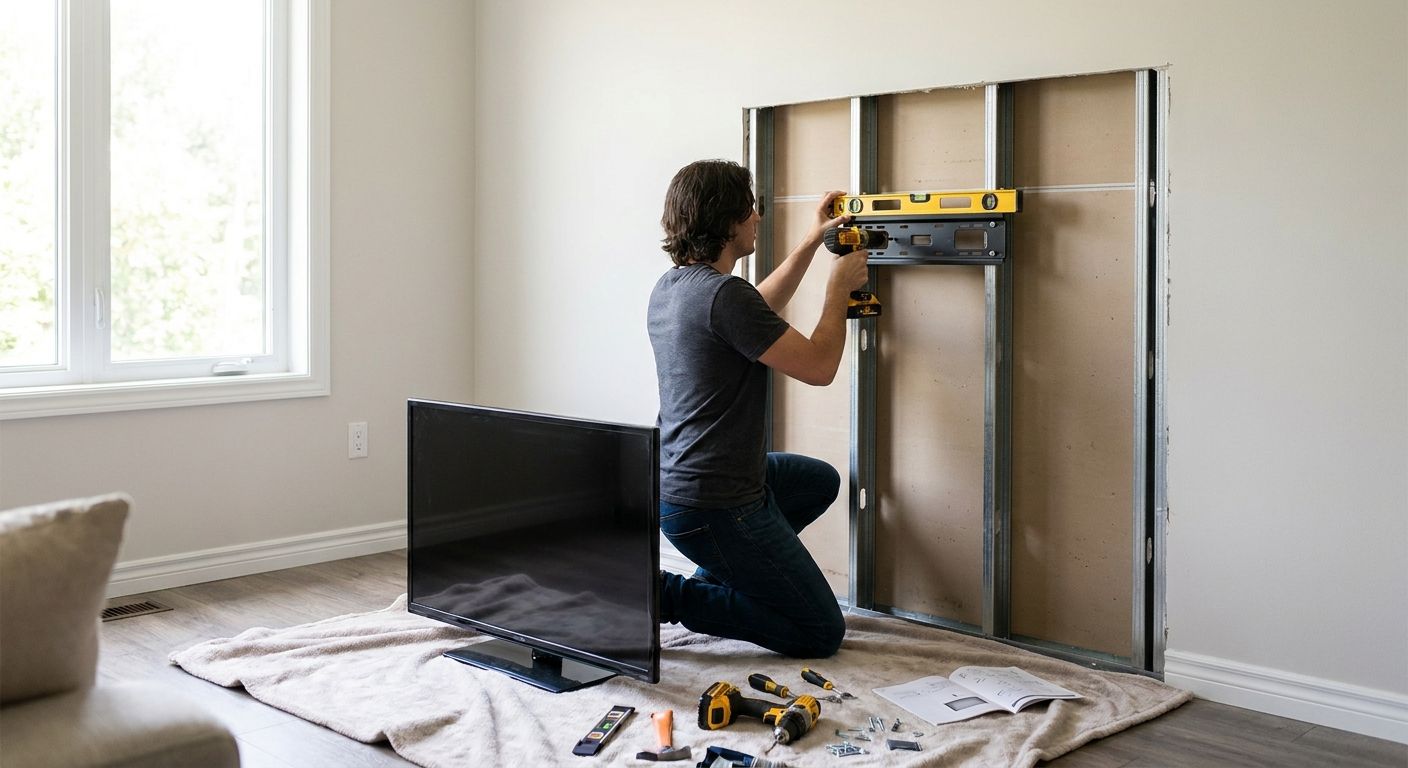
Most dorm buildings built before the 2010s use exposed or furred-out cinderblock, while newer dorms and nearly all off-campus apartments use standard drywall over studs. Cinderblock needs a masonry bit and sleeve or wedge anchors; drywall needs studs or heavy-duty toggles. Guessing wrong means a bracket that pulls loose the first time someone bumps the TV.
Lease and housing office rules
Dorms and most off-campus leases have damage clauses that specifically call out wall penetrations. A professional install that patches and documents the work protects the deposit; a DIY job with the wrong anchor usually doesn't. Check the housing office's mounting policy before scheduling — some Atlanta-area schools require written approval, others just require move-out patching.
Mount type for a small footprint
Dorm rooms run small, often under 130 square feet shared between two people, so a full-motion arm that swings 15-20 inches off the wall competes with desks, lofted bed frames, and closet doors. A fixed or low-profile tilt mount keeps the TV within a few inches of the wall and out of the way.
Cable and outlet management in shared rooms
Two roommates means two power strips, two gaming consoles, and one outlet behind the desk. A clean install routes the power and HDMI cable inside the wall or through a cord cover so cables don't run across a shared floor. This matters more in dorms than anywhere else on this list because there's no privacy to hide a messy setup.
TV size versus room layout
Most college TVs run 24 to 43 inches — small enough to clear a lofted bed frame and still be readable from a twin XL mattress across the room. Anything larger than 43 inches in a standard dorm room usually ends up too close to the seating position to watch comfortably.
Move-in timeline and scheduling
Move-in weekends are the busiest days of the year for campus-area installers, and dorm buildings often restrict install access to specific hours. Booking two to three weeks ahead of the semester start avoids the scramble that hits every August and January.
Best mount setups for Atlanta college housing
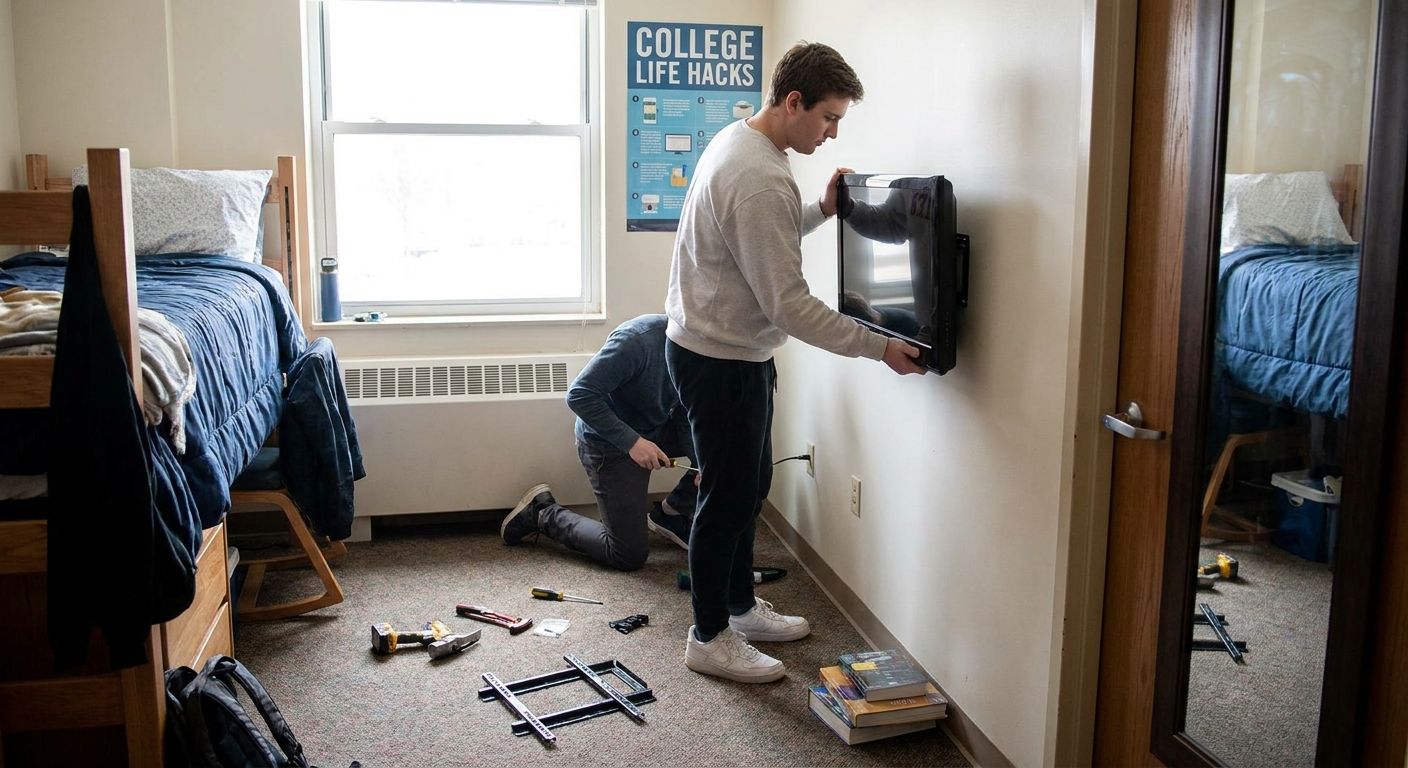
On-campus dorm room (cinderblock wall) — the standard install. Masonry sleeve anchors rated for concrete block hold a fixed or tilt bracket without touching the room's furniture footprint. Get written approval from the housing office first, then schedule the install around the building's access hours. Verdict: Buy, once housing approval is in hand.
Off-campus apartment or rental house — the flexible pick. Drywall studs give more anchor options than block, so a tilt or full-motion mount both work depending on the room layout. TV mounting for apartments and rental properties covers the lease-safe patching approach landlords expect at move-out. Verdict: Buy.
Off-campus condo or townhome (shared student lease) — the shared-lease pick. These units often carry HOA rules on top of the lease, especially around exterior-facing walls or shared hallways. TV mounting for condos and HOA communities walks through what most HOAs allow before drilling starts. Verdict: Consider — confirm the HOA's interior-wall policy first.
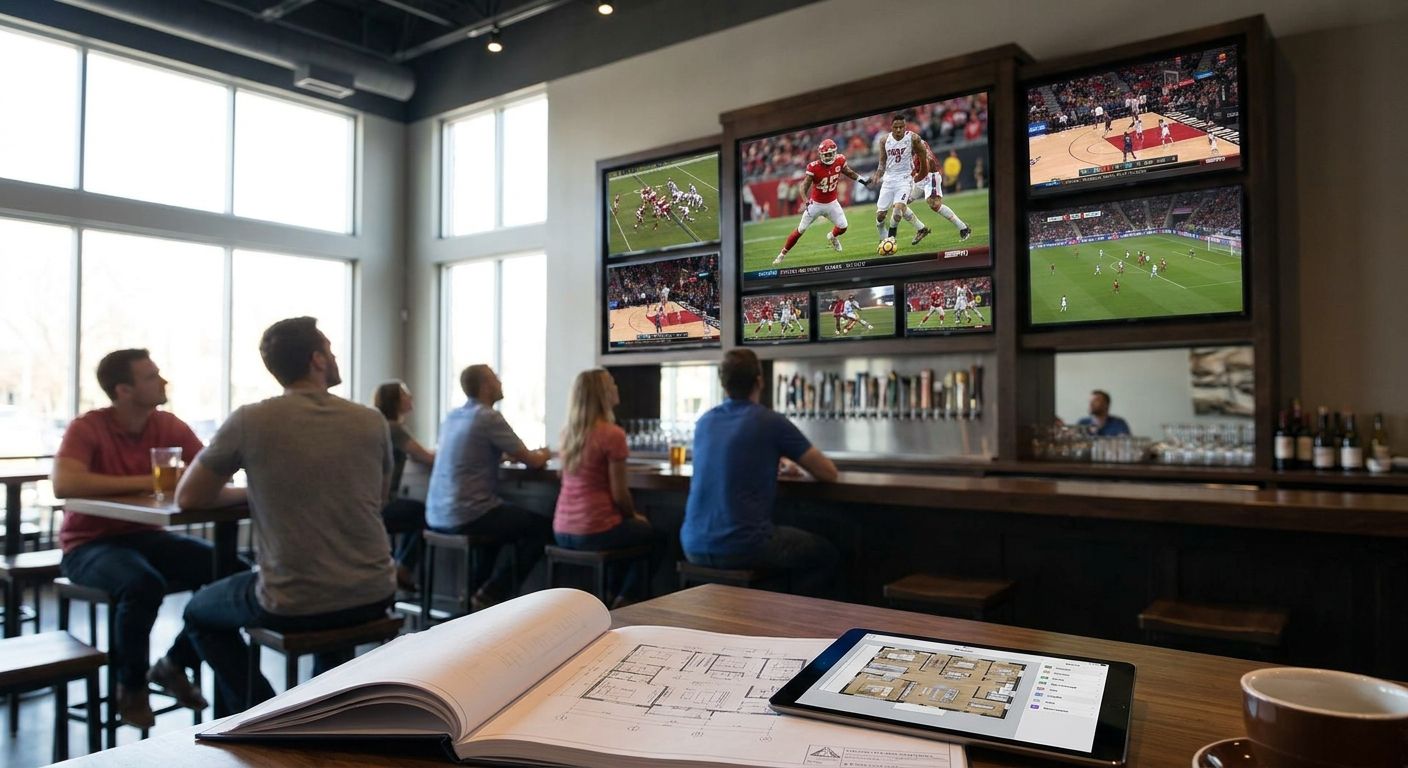
Student housing complex common area or clubhouse — the group pick. Rec rooms and clubhouse lounges in purpose-built student housing usually need more than one screen and a layout that survives heavy daily use. This is a multi-screen job, not a single-TV mount, and it needs sign-off from the property manager before scheduling. Verdict: Consider, coordinate with the leasing office.
Off-campus house basement game room — the upgrade pick. Finished basements in off-campus student houses near Atlanta-area campuses are common, and a framed stud wall down there takes a full-motion mount without the block-wall limitations of a dorm. Verdict: Buy, for houses with a finished lower level and standard stud framing.
What to avoid
- Adhesive or tension mounts on cinderblock. They hold for a few weeks, then shift under the TV's weight as the adhesive gives — cinderblock needs a drilled masonry anchor, not stick-on hardware.
- Full-motion arms in rooms under 130 square feet. The swing arc runs straight into a lofted bed ladder or desk hutch in most dorm layouts.
- Drywall toggle bolts on furred-out block walls. Some renovated dorms have a thin layer of drywall or furring strips over the actual cinderblock — a toggle bolt anchors to the thin layer, not the block behind it, and pulls out.
Book a college move-in TV mount
Licensed and insured install, 5-year warranty, scheduled around campus move-in hours.
Verdict comparison table
| Housing type | Wall type | Recommended mount | Verdict |
|---|---|---|---|
| On-campus dorm room | Cinderblock/concrete block | Fixed or low-profile tilt | Buy, with housing approval |
| Off-campus apartment | Drywall over studs | Tilt or full-motion | Buy |
| Off-campus condo/townhome | Drywall, HOA rules apply | Tilt | Consider, confirm HOA policy |
| Student housing common area | Drywall or block | Multi-screen fixed | Consider, coordinate with property manager |
| Off-campus house basement | Framed stud wall | Full-motion | Buy |
Across more than 10,000 installations and 300+ five-star reviews, The TV Mount Men treats every dorm and college housing job the same way: confirm the wall, confirm the lease terms, then mount once.
FAQ
What's the best TV mount for a dorm room?
A fixed or low-profile tilt mount rated for masonry anchors is the best TV mount for a dorm room, since most Georgia dorm walls are cinderblock and full-motion arms compete for space with lofted beds and desks.
Can you mount a TV on a dorm room wall without drilling?
No reliable option exists for a TV over roughly 32 inches without drilling into the wall, since adhesive and tension mounts shift on cinderblock. A drilled masonry anchor with a professional patch at move-out is the safer route.
Is TV mounting allowed in Georgia college dorms?
It depends on the housing office's policy, which varies by school and building. Most require written approval before any wall penetration and expect the hole patched at move-out.
How much does TV mounting cost for a dorm room in 2026?
Cost depends on wall type, TV size, and whether a new outlet is needed behind the mount. Request a quote for an exact 2026 number based on the specific dorm or apartment wall.
What size TV fits a dorm room?
Most college TVs run 24 to 43 inches, which clears a lofted bed frame and stays readable from a twin XL mattress across a standard dorm room.
Do off-campus apartments allow TV mounting?
Most off-campus apartment leases allow TV mounting on drywall as long as the holes are patched at move-out. Confirm the lease's damage clause before scheduling.
Can a TV mounting company install across a whole student housing complex?
Yes, a licensed and insured installer can schedule multiple units or a clubhouse common area in one visit once the property manager signs off on wall access.
Is a full-motion or fixed mount better for a dorm room?
Fixed or tilt mounts work better in most dorm rooms because a full-motion arm's swing arc runs into furniture in rooms under about 130 square feet.
One last thing
The detail most people miss on move-in day: some renovated Georgia dorm buildings hide a layer of drywall or furring strips directly over the original cinderblock, so a stud finder reads the thin surface layer, not the block behind it. A masonry check before drilling — not just a stud finder pass — is what separates a mount that survives the semester from one that doesn't.